Online shopping has become a normal part of my life. I can find almost anything on the internet, compare prices, read reviews, and place an order without leaving my home. However, I have also learned that not every online store deserves my trust. Some websites are genuine businesses, while others are created to take money from customers without delivering anything useful.
For beginners, it can be difficult to know whether an online store is legitimate or a scam. A website may look professional and still be unreliable. That is why I believe it is important to spend a few minutes checking a store before making a purchase. In this article, I will explain the simple things I personally look for when deciding whether an online store is safe.
Check the Website Address Carefully
The first thing I check is the website address. A legitimate store should have a clear and professional domain name that matches the business name.
I pay attention to strange spellings, unnecessary numbers, and unusual words in the domain. For example, if a popular brand normally uses one specific website address and another website uses a very similar address with extra letters, I become cautious.
I also check whether the website uses HTTPS. The small padlock symbol in the browser generally indicates that the connection is encrypted. However, I do not treat HTTPS as proof that a store is legitimate. Scam websites can also use secure connections. It is only one part of the overall check.
Look for Real Contact Information
A genuine business should usually provide ways for customers to contact it. I look for a physical address, email address, telephone number, or customer support page.
If a store only has a contact form and provides no other useful information, I become more careful. This does not automatically mean the website is fraudulent, but it gives me a reason to investigate further.
I also check whether the contact information appears consistent throughout the website. A professional business normally makes it reasonably easy for customers to ask questions or request help.
Read the About Us Page
The About Us page can tell me a lot about an online store. I look for information about the company, what it sells, where it operates, and how long it has been in business.
Some suspicious websites have very generic About Us pages that provide almost no useful information. Others may contain awkward writing, copied descriptions, or claims that are difficult to verify.
I do not expect every small business to have a long history, but I do expect the company to explain who it is and what it does.
Search for Independent Reviews
One of the most useful things I do before buying from an unfamiliar store is search for reviews outside the website itself.
I search the store name along with words such as customer reviews, complaints, experiences, or scam. This can help me discover what previous customers have experienced.
I prefer independent reviews because reviews displayed only on the store’s own website may not give the complete picture. I also avoid trusting one extremely positive or extremely negative review. Looking at several sources gives me a better understanding.
If many customers report the same problem, such as orders never arriving or refunds being refused, I take those warnings seriously.
Be Careful With Prices That Look Too Good
A very low price can be tempting. I understand the excitement of finding something I want at a huge discount, but an unusually cheap price is also something I investigate.
If a product normally costs $200 and an unfamiliar website is selling it for $40, I ask myself why the price is so different. There could be a genuine sale, but there could also be a problem with the seller.
I compare the price with several established stores. If the difference is enormous and there is no reasonable explanation, I usually avoid taking the risk.
Saving money is important, but losing money to a fraudulent store is not a saving.
Examine Product Descriptions
I also pay attention to the product descriptions. Legitimate stores generally provide useful information about the products they sell.
I look for specifications, sizes, materials, features, photographs, delivery information, and other details relevant to the product.
If a product page contains very little information, strange sentences, or exaggerated promises, I become cautious. Poorly written content alone does not prove that a store is fake, but several warning signs together can be important.
Check the Return and Refund Policy
Before purchasing something expensive, I always think about what would happen if the product arrived damaged or was completely different from the description.
That is why I check the return and refund policy. A trustworthy store should clearly explain whether returns are accepted, how long customers have to request them, who pays return shipping, and when refunds are issued.
If the policy is missing, confusing, or extremely difficult to understand, I would rather not place an order.
A clear return policy shows that the seller has thought about what happens after the sale, not just how to collect money.
Look at the Payment Options
Payment methods can also tell me something about an online store.
I prefer payment methods that provide some level of buyer protection. Depending on the country and payment provider, credit cards or established payment services may offer dispute options if something goes wrong.
I become especially cautious when an unfamiliar store insists that customers send money through methods that are difficult to reverse or dispute.
I never share sensitive financial information through email, social media messages, or suspicious links. I always make sure I am paying through the actual store’s secure checkout page.
Check the Store’s Social Media Presence
Many genuine businesses maintain social media accounts. I sometimes check these accounts to see whether the company has a real history of interacting with customers.
I look at how old the account is, whether customers leave comments, and whether the business responds to questions. I also look for consistent branding and regular activity.
A social media account does not automatically prove that a business is trustworthy because fake accounts can also be created. Still, it can provide another useful piece of information.
Search the Business Name
When I am unsure about a store, I search its name on the internet.
I look for news reports, customer complaints, discussions, reviews, and other information. Sometimes a simple search can reveal important warnings.
I also check whether the store name is connected to a completely different business. If the website claims to be a large established company but there is almost no information about it anywhere else, I become suspicious.
The goal is not to find a perfect business with no complaints. Even good companies receive complaints. I am mainly looking for patterns and serious warning signs.

Do Not Trust Fake Urgency
Some online stores use messages designed to make shoppers buy immediately. You might see messages saying that only one item remains, that a sale ends in five minutes, or that hundreds of people are currently viewing the product.
Sometimes these messages are genuine marketing tools, but they can also be used to pressure customers into making quick decisions.
I personally prefer to slow down when a website is trying to rush me. If I am unsure, I leave the website and do some research first. A legitimate opportunity should not require me to ignore basic safety checks.
Check the Website Design, But Do Not Depend on It
A professional design can make a store look trustworthy, but I never judge a website only by its appearance.
Scammers can create attractive websites using professional templates, high quality images, and convincing product descriptions.
At the same time, a small genuine business may have a simple website because it does not have a large design budget.
For me, website design is only one small part of the decision. I care more about the company’s information, reputation, policies, payment methods, and customer experiences.
Be Careful With New or Unknown Stores
There is nothing automatically wrong with buying from a new online store. Every successful business had to start somewhere.
However, if a store is completely unknown to me, I take extra precautions. I research the company before buying and avoid making a large purchase on my first order.
If I decide to try a new store, I may start with a small purchase. This gives me an opportunity to see whether the seller delivers the product, communicates properly, and handles the order professionally.
Never Ignore Your Instincts
Sometimes everything looks normal, but something still feels wrong. I have learned not to ignore that feeling.
Maybe the website has strange wording. Maybe the price is unbelievably low. Maybe the contact information looks suspicious. Maybe the payment process seems unusual.
One warning sign may not mean much by itself, but several warning signs together should make me stop.
There are thousands of online stores available, so I do not feel the need to take unnecessary risks. If I cannot verify a store properly, I simply look for another seller.
Final Thoughts
Checking whether an online store is legitimate does not have to be complicated. I believe a few minutes of research can prevent a lot of frustration later.
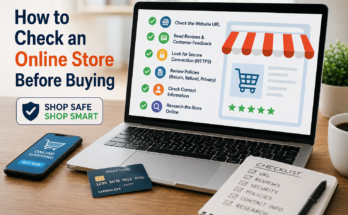
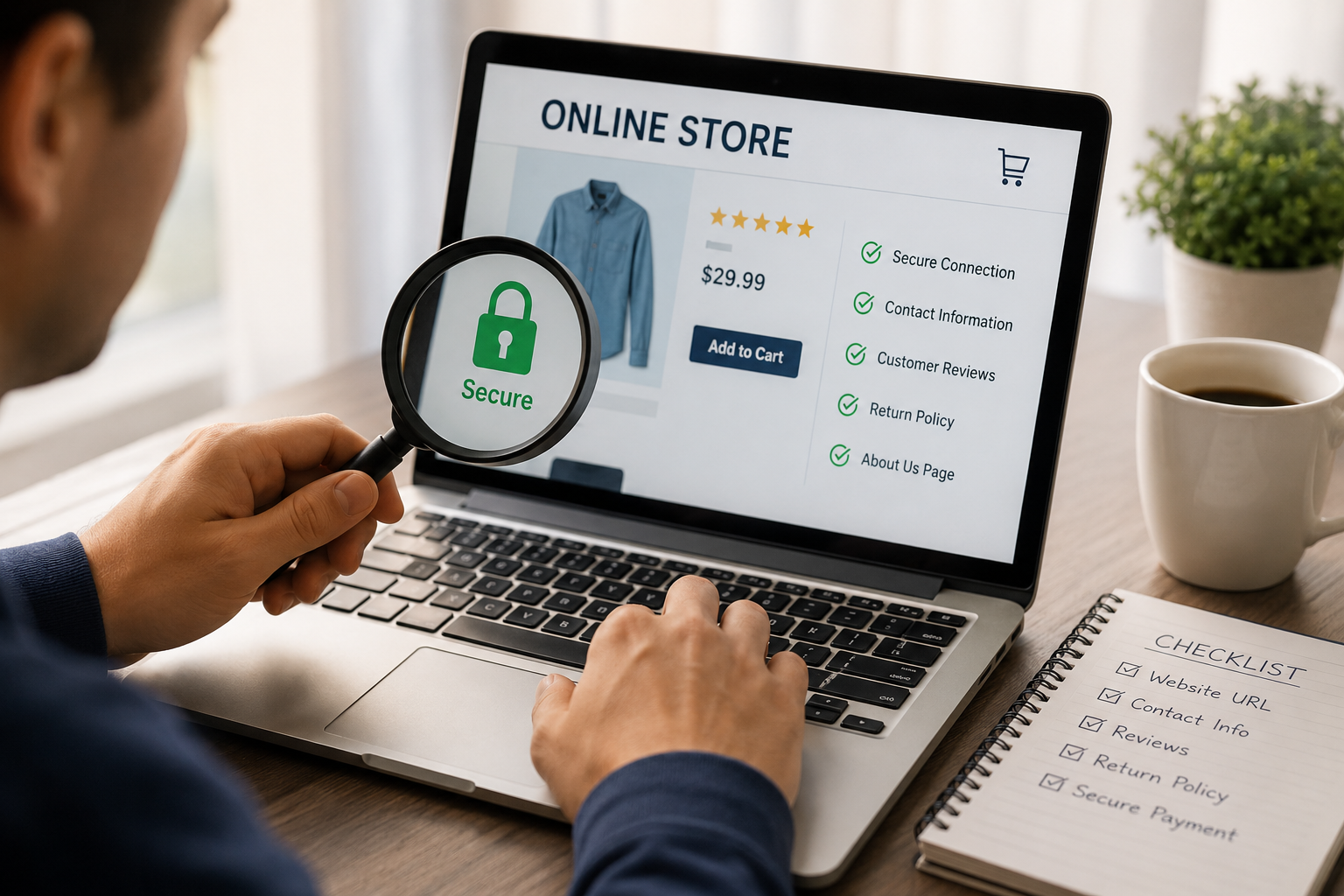
Before I buy from an unfamiliar store, I check the website address, contact information, company details, independent reviews, prices, product descriptions, return policy, and payment options. I also search for complaints and avoid websites that pressure me into making a rushed decision.
The most important lesson for me is that a professional looking website does not automatically mean a business is trustworthy. I look at the complete picture instead of relying on one feature.
Online shopping can be convenient, affordable, and enjoyable when I take sensible precautions. I do not need to be an internet security expert to make better shopping decisions. I simply need to slow down, ask a few questions, and research the seller before handing over my money.
In my opinion, the safest online shopper is not the person who never shops online. It is the person who knows when to pause, investigate, and walk away from a deal that does not feel right.