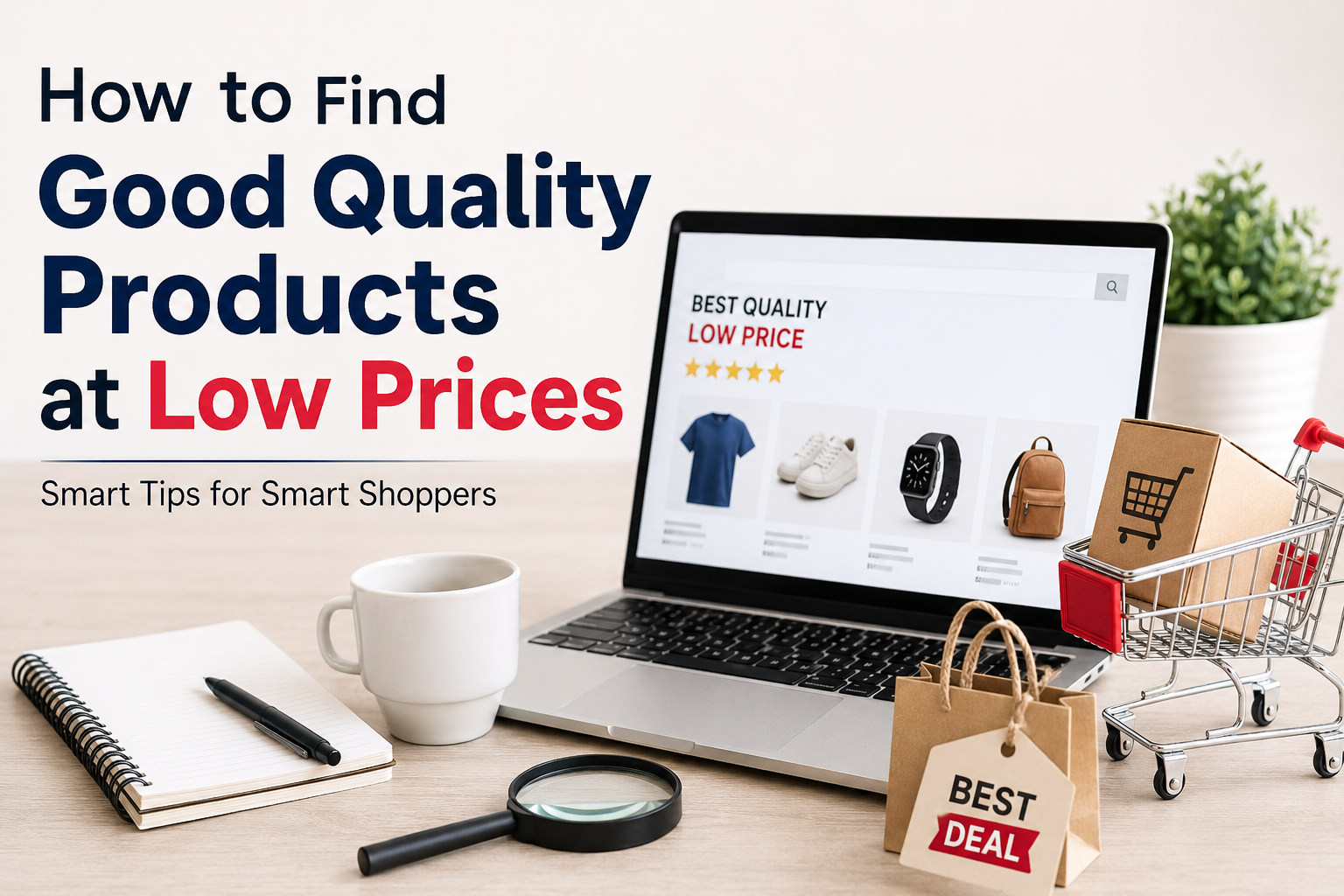
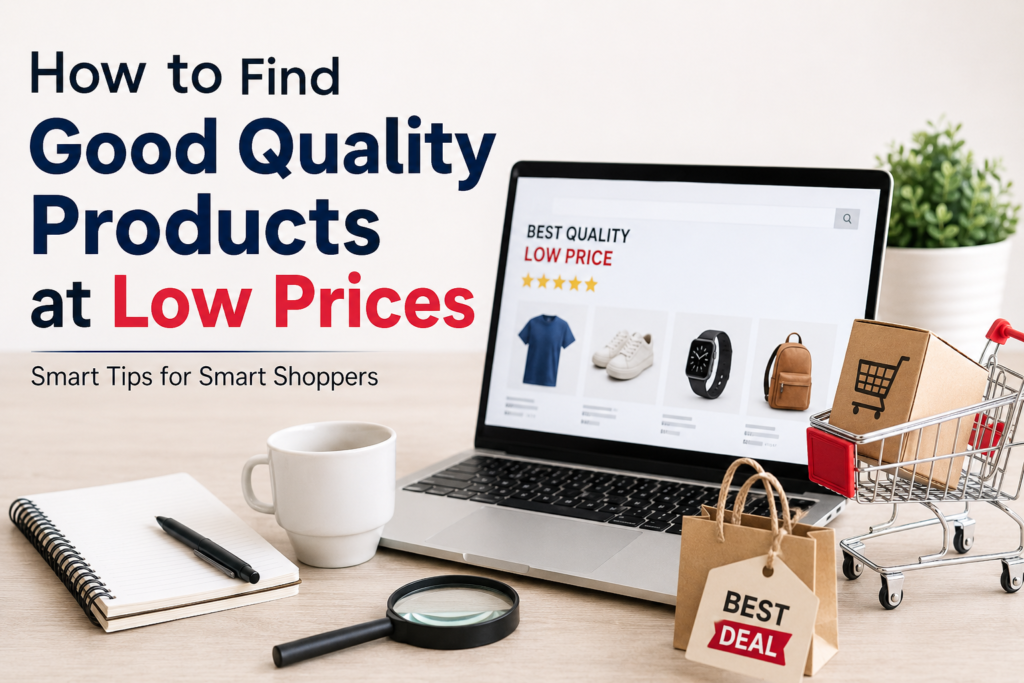
Finding good quality products at low prices is something I have always considered an important shopping skill. Whether I am buying clothes, electronics, home items, beauty products, or everyday essentials, I do not want to spend more money than necessary. At the same time, I have learned that choosing the cheapest product is not always the best decision. Sometimes a low price can mean poor materials, weak performance, or a product that needs to be replaced quickly.
For me, smart shopping is about finding the right balance between quality and price. A good deal is not simply a product with a low price tag. It is a product that gives me useful features, reliable quality, and reasonable value for the money I spend.
In this article, I will share the methods I use to find good quality products without spending too much.
Start by Knowing What You Actually Need
Before I start looking for a product, I first decide what I actually need. This simple step can save a surprising amount of money.
When I shop without a clear idea of what I want, I am more likely to choose products because they look attractive or because they are advertised as special deals. This can lead to unnecessary purchases.
I usually make a short list of the features that matter most to me. For example, if I am buying a backpack, I may care about strong material, comfortable straps, useful storage space, and durability. I may not care about having a famous brand name or unnecessary decorative features.
Knowing my priorities helps me avoid paying extra for things I do not really need.
Compare Prices Before Buying
One of the easiest ways to find a better price is to compare several sellers. I never assume that the first price I see is the best price.
The same product can sometimes have different prices at different online stores. Even when the price looks similar, shipping charges, taxes, discounts, and return policies can change the total cost.
I like to check several stores before making a final decision. I also look at the total amount I will actually pay rather than focusing only on the advertised product price.
Price comparison is especially useful for electronics, clothing, household products, and other items that are sold by many retailers.
Read Customer Reviews Carefully
Customer reviews are one of my favorite ways to learn about a product before buying it. Product descriptions usually tell me what a seller wants me to know, while customer reviews can tell me how the product performs in real situations.
However, I do not look only at the star rating. I read several positive and negative reviews to understand common experiences.
If many customers mention that a product breaks easily, has poor material, or does not match its description, I take those comments seriously. On the other hand, if customers consistently mention good construction, useful features, and long lasting performance, I feel more confident.
I also pay attention to recent reviews because product quality can sometimes change over time.
Look at Product Specifications
Another habit that helps me avoid poor purchases is checking the specifications carefully.
For example, if I am buying an electronic device, I look at important details such as battery capacity, storage, size, compatibility, warranty, and included accessories. If I am buying clothing, I check the material, measurements, and care instructions.
Specifications help me understand what I am actually getting.
A product can look attractive in pictures but still have poor specifications. Taking a few minutes to check the details can prevent disappointment later.
Do Not Always Choose the Cheapest Option
This is probably one of the most important lessons I have learned about shopping.
The cheapest product is not necessarily the best bargain. If I buy a very cheap item and it stops working after a short time, I may have to spend money again. A slightly more expensive product that lasts much longer can actually be cheaper in the long run.
For this reason, I try to think about value instead of just price.
I ask myself whether the product is likely to last, whether it performs its main purpose properly, and whether the seller provides reasonable support if something goes wrong.
This approach helps me make better decisions without automatically choosing expensive products.
Check Materials and Build Quality
When possible, I look closely at the materials used to make a product.
For clothing, I check the fabric. For furniture, I look at the construction and materials. For bags, I check the stitching, zippers, handles, and lining. For electronics, I consider the overall construction and the reputation of the manufacturer.
Small details can tell me a lot about quality.
I have found that products with careful construction often provide better value than products that simply look impressive in advertisements.
Shop During Sales
Sales can be a useful way to find quality products at lower prices, but I do not buy something simply because it has a discount label.
Before a major sale, I try to understand the normal price of the product. This helps me determine whether the discount is actually worthwhile.
Seasonal sales can also be useful. For example, clothing may become cheaper at the end of a season, while certain household products may have discounts during special shopping periods.
The key for me is to combine a real need with a genuine discount.
Consider Less Famous Brands
A famous brand can provide confidence, but I do not believe that every good product needs to come from a famous company.
There are many smaller brands that offer useful products at reasonable prices. Sometimes customers are paying extra mainly for the brand name rather than significantly better quality.
When considering a lesser known brand, I spend more time checking reviews, specifications, warranty information, and seller reputation.
If these things look reliable, I am comfortable considering the product.
Check the Seller Before Ordering
The product itself is not the only thing I evaluate. I also check the seller.
A reliable seller should provide clear product information, understandable policies, and a reasonable return process. I also look at customer feedback about delivery, packaging, product authenticity, and customer service.
This is particularly important when shopping online because I cannot physically inspect the product before ordering.
A good product from an unreliable seller can still become a frustrating shopping experience.
Look for Warranty and Return Options
Warranty and return policies can add significant value to a purchase.
When I buy an expensive item, I pay particular attention to the warranty. A product with reasonable warranty coverage can give me more confidence than a cheaper product with no support.
I also check the return policy before ordering. I want to know whether I can return the product if it arrives damaged, defective, or significantly different from its description.
These policies are easy to ignore when I am excited about a low price, but they can become extremely important later.
Use Coupons and Discount Codes Wisely
Coupons and discount codes can reduce the final price, especially when combined with an already reasonable product price.
I usually search for available discounts before completing an online purchase. However, I do not allow a coupon to convince me to buy something I do not need.
Saving money on an unnecessary purchase is still spending money.
For me, the best discount is one that applies to something I already planned to buy.
Check the Total Cost
A product may appear inexpensive until additional costs are added.
Shipping, taxes, installation fees, accessories, or other charges can increase the final amount significantly.
Before placing an order, I check the final checkout price. This gives me a more accurate comparison between different sellers.
Sometimes a product with a slightly higher listed price can actually be cheaper after shipping and other costs are included.
Avoid Buying Only Because of Advertising
Advertising can make almost any product look exciting. I try to separate marketing from actual product quality.
Words such as premium, ultimate, professional, advanced, and special do not automatically mean that a product is worth its price.
Instead, I look for measurable information, customer experiences, specifications, and practical benefits.
I ask myself a simple question: would I still want this product if I had not seen the advertisement?
If the answer is no, I usually move on.
Think About Long Term Value
When I compare products, I think about how much use I will get from them.
For example, a slightly more expensive pair of shoes may be better value if they remain comfortable and durable for a long time. A reliable kitchen appliance may be worth paying a little more for if it works well for years.
This way of thinking helps me avoid repeatedly buying cheap replacements.
The real cost of a product is not always its purchase price. Sometimes durability and performance matter much more.
Take Your Time Before Expensive Purchases
For inexpensive everyday items, I may make a quick decision. But when I am buying something expensive, I give myself more time.
I compare products, read reviews, check specifications, look at alternatives, and think about whether I really need the item.
Sometimes waiting for a few days helps me realize that I do not need the product at all. Other times, research helps me discover a better product at a lower price.
Taking time is one of the simplest ways to become a smarter shopper.
Final Thoughts
Finding good quality products at low prices does not require complicated shopping techniques. In my experience, it mainly requires patience, comparison, and careful attention to details.
I try not to focus only on the lowest price. Instead, I look at quality, reviews, materials, specifications, seller reputation, warranty, return options, and the total cost.
I also remind myself that a good deal should provide real value. Buying something cheaply is not a success if the product does not work well or needs to be replaced quickly.
The best approach is to understand what I need, research my options, compare prices, and avoid making decisions based only on advertisements or discount labels.
With these habits, I believe anyone can become a smarter shopper and find products that offer both good quality and reasonable prices. It may take a few extra minutes to research before buying, but those minutes can save money and prevent many disappointing purchases in the future.