Online shopping has made life much easier for me. I can compare products, check prices, read reviews, and place an order without leaving home. However, I have also learned that not every online store deserves my trust. Some websites are genuine businesses, while others may sell poor quality products, copy popular brands, collect personal information, or simply take money without delivering anything.
For this reason, I always believe it is better to spend a few minutes checking an online store before buying something. A little research can save you from losing money and dealing with unnecessary stress. In this article, I will share the things I personally look for before making a purchase from an unfamiliar online store.
Check the Website Address Carefully
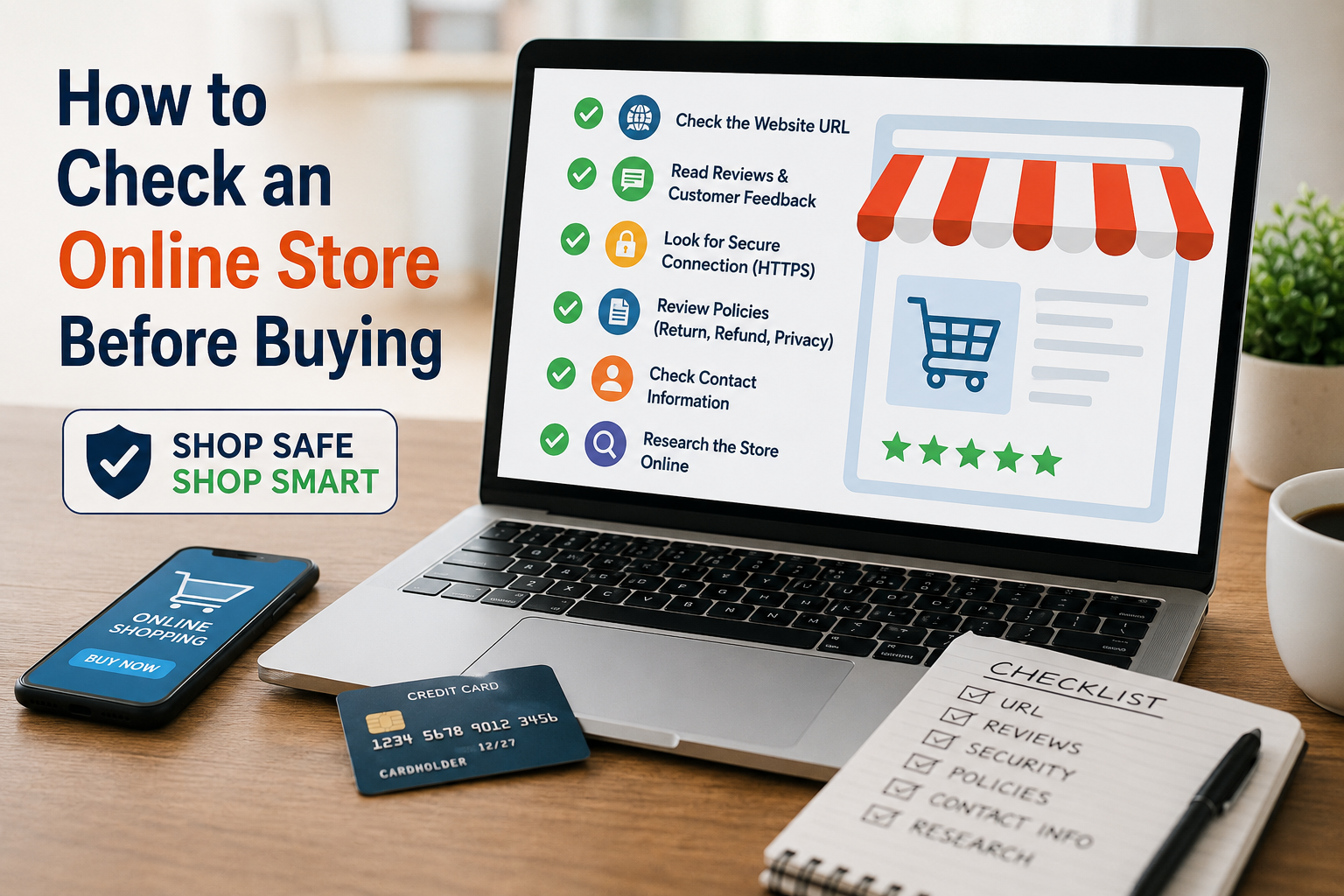
The first thing I check is the website address. I do not immediately trust a store just because it looks professional. Scammers can create websites that look surprisingly similar to legitimate stores.
I carefully read the domain name and make sure there are no strange spellings, unnecessary numbers, or unusual words. Sometimes a fake website may use a name that looks almost identical to a popular brand.
I also check whether the website uses HTTPS. A secure connection is important when entering personal or payment information. However, I do not consider HTTPS alone proof that a store is legitimate. A fraudulent website can also have a secure connection.
The website address is simply the first thing I check, not the only thing.
Look at the Store Information
A trustworthy online store should provide basic information about the business. I usually look for an About Us page, contact information, customer service details, and information about where the business operates.
If a store has almost no information about who runs it, I become more cautious. A professional business normally has some way for customers to contact them.
I especially look for a real email address and other useful contact options. If the only available contact method is a random form with no business information, I consider that a warning sign.
This does not automatically mean the store is fake, but it tells me that I should investigate further before spending money.
Read the Return and Refund Policy
One of the most important things I check before buying is the return and refund policy.
Sometimes people focus so much on the product price that they forget to find out what happens if the product arrives damaged, incorrect, or completely different from the description.
I read the store’s return policy carefully. I want to know how many days I have to request a return, who pays return shipping, whether refunds are available, and whether certain products are excluded.
If the policy is confusing, extremely restrictive, or impossible to find, I become careful. A legitimate store should make its basic customer policies reasonably easy to understand.
Search for Independent Reviews
I never depend completely on reviews displayed on the store itself. While those reviews can be useful, they may not always provide the complete picture.
Before purchasing from a new store, I search for the store name along with words such as customer reviews, complaints, scam, refund, or customer experience.
I prefer to look at feedback from different sources rather than relying on one website. If several customers report the same problem, I take those reports seriously.
At the same time, I do not assume every negative review means a store is fraudulent. Even good businesses can receive complaints. What matters to me is the overall pattern.
Be Careful With Extremely Low Prices
A very low price can be tempting. I understand the feeling because everyone wants a good deal. However, an offer that looks too good to be true deserves extra attention.
If a product normally costs a certain amount everywhere else but one unfamiliar store is selling it for a tiny fraction of the usual price, I ask myself why.
There could be a genuine sale, clearance promotion, or special offer. But there could also be a counterfeit product, hidden charges, or a fraudulent listing.
I compare the price with several established stores before making a decision. If the difference is unusually large, I investigate the seller more carefully.
Check Product Descriptions
I also pay attention to the product description. A legitimate store should provide useful and reasonably detailed information about what it is selling.
I look at the product specifications, size, material, features, included items, warranty information, and other details that matter to my purchase.
Poorly written descriptions, copied text, strange grammar, and vague product information do not automatically prove that a store is fake. However, several of these signs together can make me more cautious.
I also compare product images with images from other stores. If the same images appear everywhere but the seller provides very little original information, I investigate before buying.
Examine the Payment Methods
Before entering payment information, I check which payment methods the store accepts.
I prefer payment methods that provide some level of protection for customers. I become cautious when a website insists on unusual payment methods or asks me to send money directly without normal purchase protections.
I also avoid sharing more personal information than necessary. A store should not need unnecessary sensitive information just to sell me an ordinary product.
If a payment page suddenly redirects me to a strange website or asks for information that does not seem relevant to the purchase, I stop and investigate.
Check the Store’s Social Media Presence
Another thing I sometimes check is the store’s social media presence.
A real business may have active profiles where customers interact with the company. I look at how long the account has existed, whether posts appear genuine, and whether customers are asking questions or reporting problems.
I do not consider having social media accounts proof that a store is legitimate. Fake businesses can create social profiles too. However, genuine activity can provide additional information about the company.
I also look at how the store responds to complaints. A business that communicates professionally with customers gives me more confidence than one that ignores every problem.
Look for Hidden Costs
Sometimes an online store may appear cheap until I reach the checkout page. This is why I always review the final price before paying.
I check shipping charges, taxes, service fees, customs charges when applicable, and any other additional costs.
If the final price is significantly higher than the original advertised price, I decide whether the purchase is still worthwhile.
I also check the expected delivery time. A product that looks inexpensive may not be a good deal if shipping takes much longer than expected or involves complicated additional charges.
Check the Store’s Reputation
For an unfamiliar online store, I like to search its name on a search engine before purchasing.
I look for information from customers, consumer websites, discussion forums, and other independent sources. I am especially interested in repeated complaints about missing orders, counterfeit products, poor customer service, or difficulties receiving refunds.
I also check how long the business appears to have been operating. A newly created store is not necessarily dishonest, but I may take additional precautions because there is less history available.
The more independent information I can find, the easier it becomes for me to make a sensible decision.
Do Not Let Pressure Make the Decision
One of the biggest warning signs for me is pressure.
Some websites display messages saying that only one item remains, that a sale will end in a few minutes, or that hundreds of people are buying the product right now.
Sometimes these messages are legitimate. However, I do not allow countdown timers or urgent messages to force me into a decision.
If I feel pressured, I leave the website and think about the purchase. A genuine opportunity should still be worth considering after I take a few minutes to investigate it.
Taking your time is one of the simplest ways to avoid impulsive online shopping mistakes.
Trust Your Overall Impression
After checking all these things, I consider the overall picture.
One small problem does not necessarily mean a store is fraudulent. For example, a new business may have very few reviews. A small store may not have a large social media following. A genuine international seller may have different shipping arrangements.
What matters is whether several warning signs appear together.
If I notice a strange website address, unrealistic prices, copied product descriptions, missing contact information, poor reviews, unclear refund policies, and suspicious payment requests all at once, I simply do not buy.
There are always other stores available. Saving a little money is not worth the risk of losing much more.
Start With a Small Purchase
If I am interested in a new store but cannot find enough information to feel completely confident, I may consider starting with a small purchase rather than spending a large amount.
This gives me an opportunity to see how the store handles the order, communication, shipping, and customer service.
However, I still do my basic research before making even a small purchase. A small order can reduce potential loss, but it does not make a suspicious website safe.
Keep Your Accounts Secure
Safe shopping is not only about checking the store. I also pay attention to my own online security.
I use strong and unique passwords for important accounts and avoid sharing passwords with online stores. I also keep my devices and browsers updated.
If I create an account on a shopping website, I provide only the information that is genuinely needed. I am careful about emails asking me to click links and confirm payment details.
Sometimes the biggest risk does not come from the store itself but from a fake message pretending to be the store.
Final Thoughts
For me, checking an online store before buying is a simple habit that can prevent many problems. I do not need to spend hours investigating every website. A few minutes of careful checking can tell me a lot.
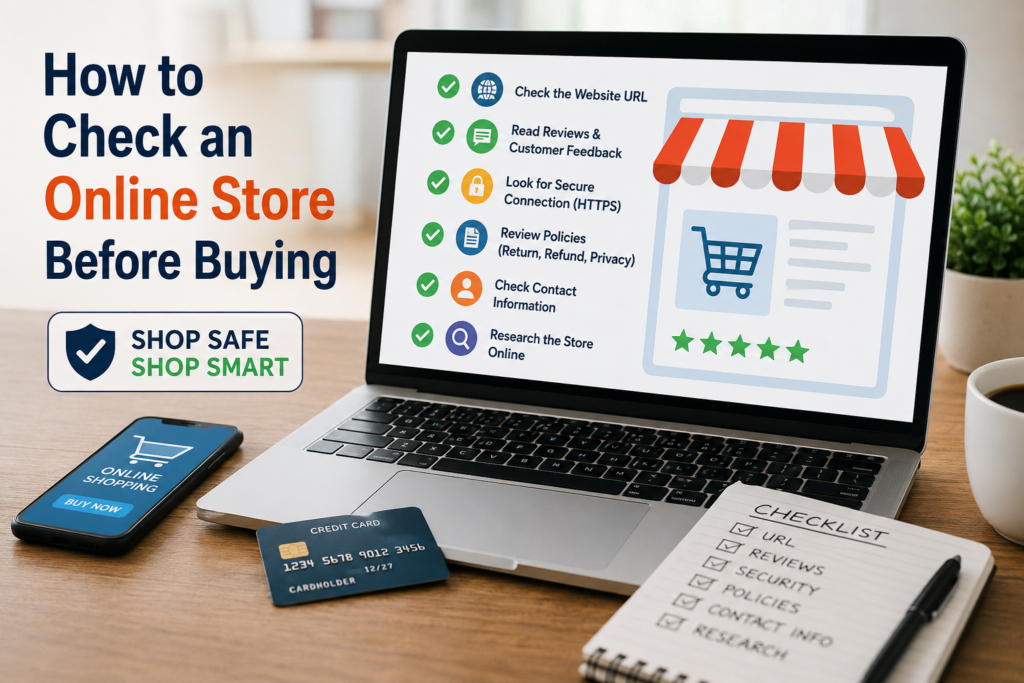
I start with the website address, then look at contact information, return policies, reviews, prices, product descriptions, payment options, and the store’s general reputation. I also watch for pressure tactics and unrealistic offers.
The main lesson I have learned is that I should never let a low price make the decision for me. When a store looks trustworthy after I have checked the important details, I feel much more comfortable placing an order.
Online shopping can be convenient and enjoyable, but being careful is part of being a smart shopper. Before entering my payment details, I always ask myself one simple question: Do I know enough about this store to trust it with my money?
If the answer is no, I wait and do more research. If I still have doubts, I choose another seller. In my opinion, a few extra minutes of research are always better than dealing with a costly online shopping problem later.