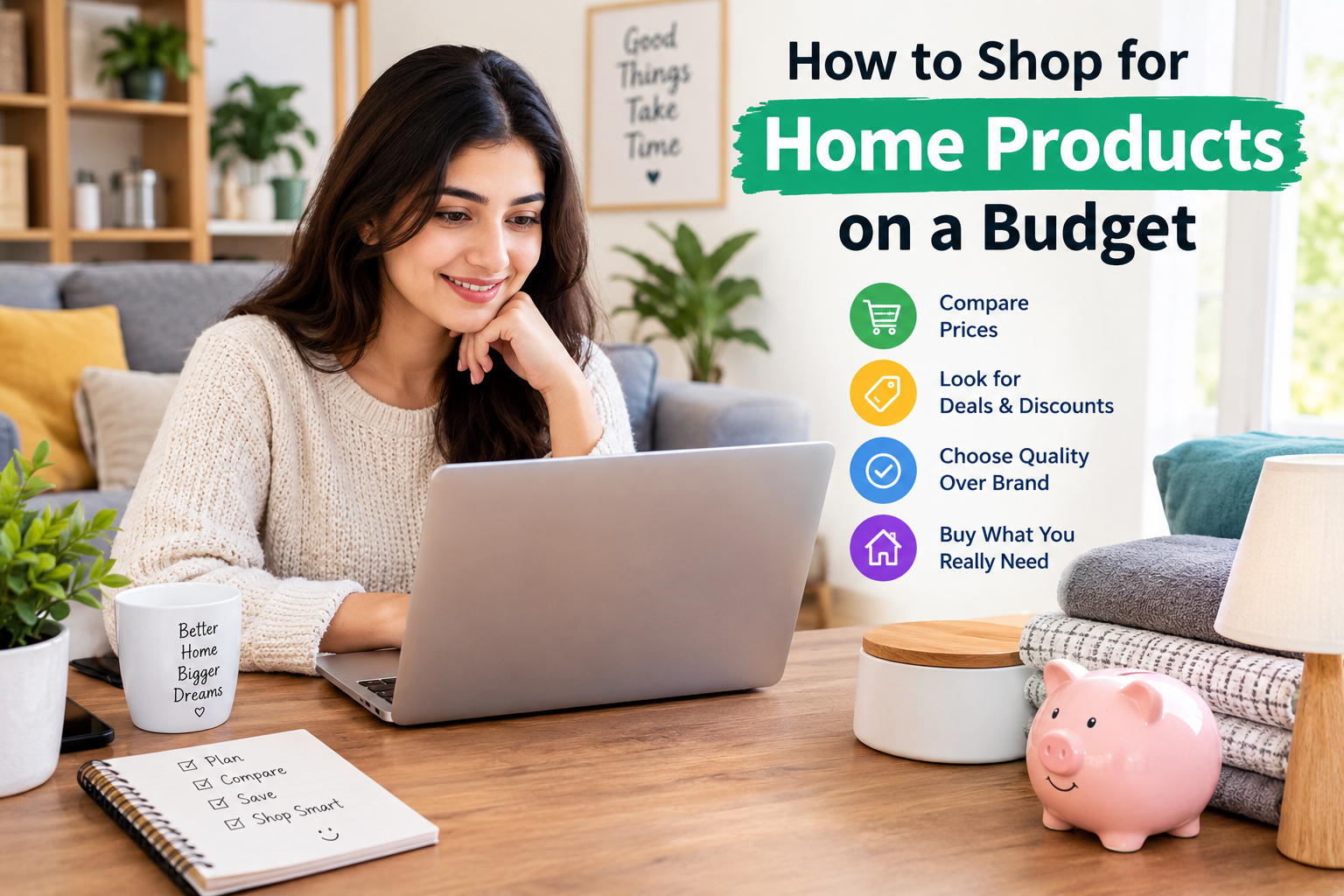
Shopping for home products can be exciting, but it can also become expensive very quickly. Whether I am looking for kitchen items, furniture, storage products, bedding, lighting, or simple home decorations, there are always many options available. The biggest challenge is finding products that are useful and good quality without spending more money than necessary.
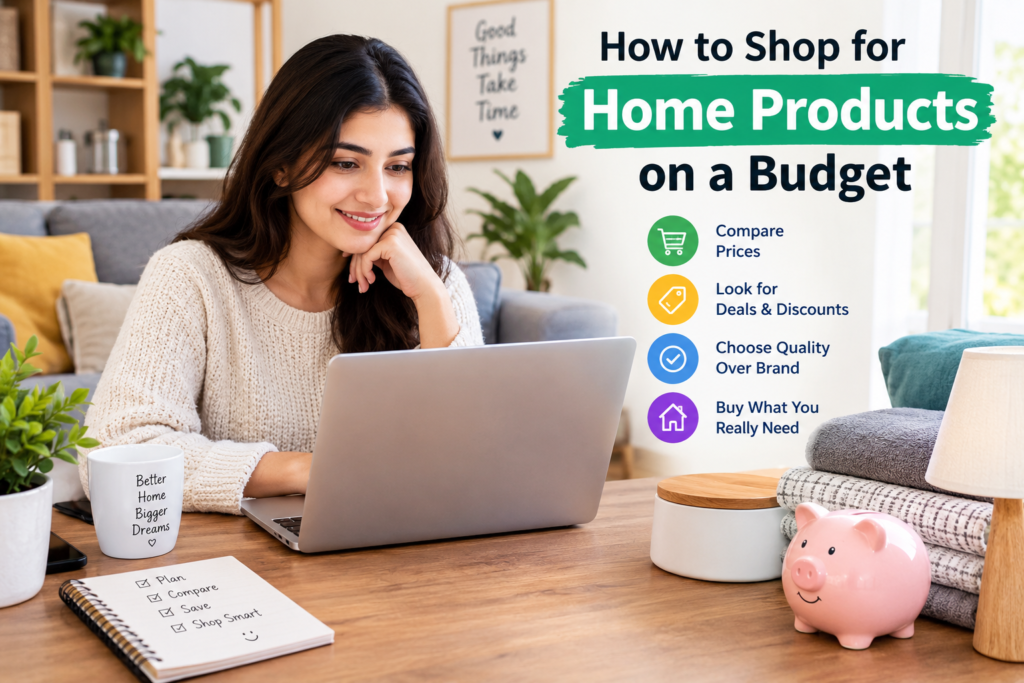
In my experience, shopping for home products on a budget does not mean buying the cheapest products available. Instead, it means understanding what I really need, comparing different options, checking product quality, and spending money carefully. A little planning before shopping can help me avoid unnecessary purchases and make better decisions.
In this article, I will share some practical tips that I use when shopping for affordable home products. These ideas can help families, students, new homeowners, and anyone who wants to save money while making their home comfortable and attractive.
Make a Home Shopping List First
One of the easiest ways to save money is to make a shopping list before buying anything. When I shop without a plan, I often notice products that look attractive but are not really necessary. This can quickly increase my total spending.
Before I start shopping, I look around my home and identify what I actually need. I may need a new storage box, kitchen organizer, bedsheet, lamp, curtain, or cleaning product. Once I know what I need, I write everything down.
I also separate my list into important items and optional items. Important products receive priority because they are necessary for my home. Optional products can wait until I have enough money available.
This simple habit helps me stay focused and reduces impulse shopping.
Set a Realistic Budget
Before shopping for home products, I believe it is important to decide how much I can comfortably spend. A budget gives me a clear limit and makes it easier to avoid unnecessary purchases.
For example, if I have a budget of $100 for home products, I should not start shopping as if I have $200 available. I can divide my budget according to priority. I might spend more on an important item and less on decorative products.
I also try to leave a small amount of money for unexpected needs. Sometimes I discover that an essential product costs slightly more than expected. Having some extra money in my budget can make the shopping process easier.
Compare Prices Before Buying
Price comparison is one of the most useful habits for budget shopping. The same home product can have different prices at different stores and online marketplaces.
When I find something I want to buy, I usually check several sellers before making a decision. I look at the product price, delivery charges, available discounts, and return policy.
A product that looks cheaper at first may become more expensive after delivery charges are added. This is why I prefer to compare the complete cost instead of looking only at the displayed price.
Taking a few extra minutes to compare prices can sometimes save a significant amount of money.
Focus on Quality Instead of the Cheapest Price
When shopping on a budget, it can be tempting to choose the cheapest product available. However, I have learned that the lowest price is not always the best deal.
A very cheap product may have poor materials, weak construction, or a short lifespan. If I have to replace it several times, I may eventually spend more money than I would have spent on a better product.
For example, when buying kitchen containers, furniture, bedding, or storage products, I consider the material and durability. I want something that can serve its purpose for a reasonable amount of time.
My goal is not simply to spend less today. My goal is to get good value for my money.
Look for Discounts and Special Offers
Discounts can make home shopping more affordable when they are used carefully. Many stores offer seasonal sales, clearance deals, bundle offers, and special discounts.
I like to check these offers before buying expensive home products. However, I do not buy something simply because it has a discount. A discounted product is only useful if I actually need it.
For example, if a store offers a large discount on decorative items that I do not need, buying them is still unnecessary spending.
I prefer discounts on products that are already on my shopping list. This way, the discount helps me reduce the cost of something I was planning to purchase anyway.
Consider Secondhand Home Products
Buying secondhand products can also be a useful way to save money. Some home products can be purchased used while still offering excellent value.
Furniture, shelves, tables, chairs, storage units, and some decorative items can sometimes be found in good condition at much lower prices than new products.
Before buying a used item, I carefully check its condition. I look for damage, stains, cracks, missing parts, and signs of poor maintenance. I also consider whether the product can be cleaned or repaired easily.
Secondhand shopping is not suitable for every type of product, but for certain home items it can significantly reduce the overall cost.
Buy According to Your Home Size
Another important point I consider is the size of my home. Buying large products for a small space can waste both money and valuable space.
Before buying furniture or storage products, I measure the available area. I think about where the item will be placed and whether it will make the room difficult to use.
For smaller homes, I prefer products that have multiple purposes. For example, a storage bench can provide seating and storage at the same time.
Choosing products that fit my home properly helps me avoid buying items that later become difficult to use.
Avoid Buying Everything at Once
When setting up a home, it can be tempting to purchase everything at the same time. However, I believe buying gradually can be much easier on the budget.
I start with essential products and slowly add other items when I can afford them. This approach allows me to understand what I actually need after using the space for some time.
Sometimes I initially think I need a certain product, but after living in the room for a few weeks, I realize that I do not need it at all.
Buying slowly gives me time to make better decisions and prevents unnecessary spending.
Choose Simple and Practical Designs
I personally prefer simple home products because they are often easier to use and maintain. Trendy products may look attractive, but their style can become outdated quickly.
Simple furniture, neutral storage products, basic kitchen tools, and practical lighting can remain useful for many years.
When shopping on a budget, I focus on functionality first. If a product looks attractive and also serves a useful purpose, that is a bonus.
A comfortable and organized home does not require expensive decorations. Good planning and practical choices can make a home look pleasant without a large budget.
Check Product Reviews
Product reviews can help me understand what other buyers experienced before purchasing something. I pay attention to reviews that discuss quality, durability, size, material, and actual performance.
I do not rely on one review. Instead, I look at several opinions to understand whether a product consistently performs well.
Photos shared by customers can also be useful because they may show what the product looks like in real homes.
However, I try to remain careful because not every review provides useful information. I focus on detailed reviews that explain both positive and negative experiences.
Think About Long Term Value
One of my favorite budget shopping habits is thinking about long term value. Instead of asking only whether something is affordable today, I ask myself whether it will continue to be useful.
For example, a slightly more expensive storage product may last several years, while a cheaper product may need to be replaced within a few months.
This does not mean I should always buy expensive products. It simply means I should consider durability, usefulness, maintenance, and expected lifespan before making a purchase.
The best budget decision is usually the product that provides the right balance between price and quality.
Avoid Impulse Purchases
Impulse buying can quickly destroy a home shopping budget. Beautiful displays, limited time offers, and attractive advertisements can make us feel that we need something immediately.
When I see an expensive product that was not on my original list, I give myself some time before purchasing it. I ask whether I really need it, whether I already own something similar, and whether the purchase fits my budget.
This small pause can prevent many unnecessary purchases.
Consider Energy Efficient Products
When shopping for appliances and home equipment, I also consider energy use. A product may cost slightly more initially but could save money over time if it uses less electricity.
For products such as lights, fans, refrigerators, and other household appliances, I look at efficiency information when it is available.
The purchase price is only one part of the total cost. Electricity, maintenance, repairs, and replacement costs can also affect how affordable a product really is.
Use What You Already Have
Before buying new home products, I take a look at what I already have. Sometimes an existing item can be cleaned, repaired, reorganized, or used for another purpose.
For example, an old storage container may still be useful after cleaning it. A piece of furniture may look better after a simple repair or a fresh finish.
Using existing products is one of the easiest ways to save money because it requires no new purchase.
Shop With a Long Term Mindset
Budget shopping is not only about finding the lowest price. For me, it is about making thoughtful decisions that provide value.
I try to buy products that solve a real problem, fit my home, match my lifestyle, and provide reasonable quality. I also avoid buying products simply because they are popular or heavily advertised.
A home can be comfortable and beautiful without being filled with expensive products. The most important thing is choosing items that make everyday life easier.
Final Thoughts
Learning how to shop for home products on a budget can make a big difference to household spending. I have found that simple habits such as making a list, setting a budget, comparing prices, checking reviews, looking for discounts, and focusing on quality can help me make smarter shopping decisions.
I also believe that budget shopping should not feel like a restriction. It can actually encourage better choices. When I know exactly what I need and how much I can spend, I become more careful about where my money goes.
The best approach is to focus on value rather than simply looking for the cheapest product. A useful, durable, and reasonably priced home product can be a much better investment than something inexpensive that needs to be replaced quickly.
Whether you are furnishing a new home, improving your current space, or simply replacing everyday household products, you do not need a huge budget to make good choices. With patience, research, and careful planning, it is possible to shop for home products on a budget while still creating a comfortable and practical home.
The key is simple. Buy what you need, compare your options, check quality, avoid unnecessary purchases, and make every part of your budget work for you.