
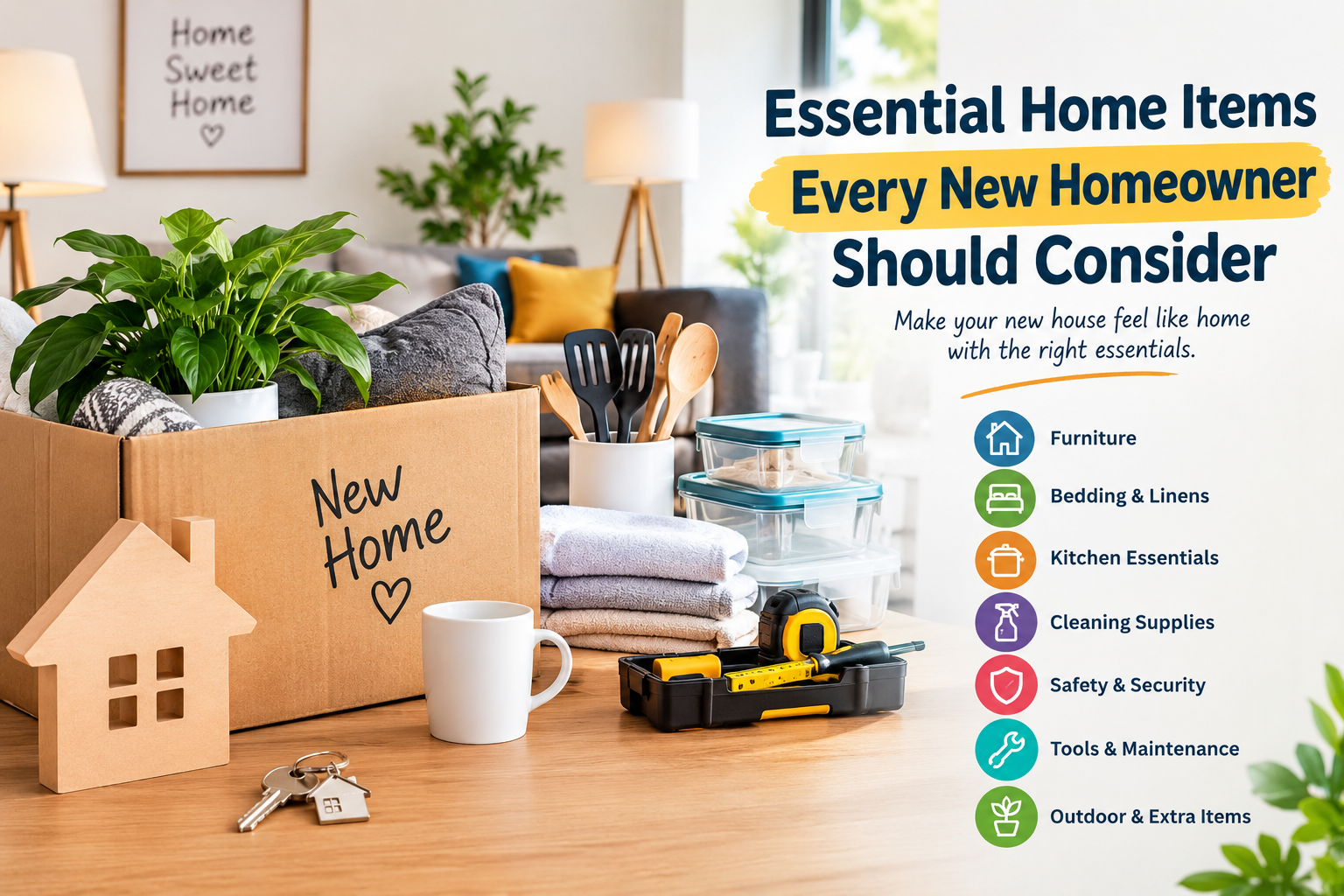
Buying a new home is an exciting experience, but I have found that moving into a new house is only the beginning. Once the keys are in your hand, you quickly realize that there are many things you need to make the home comfortable, organized, safe, and practical. Some items may seem small, but they can make everyday life much easier.
When I think about essential home items for new homeowners, I do not believe everything needs to be purchased at once. It is better to focus on the things you actually need first and then gradually add other items as your lifestyle and budget allow. This approach can also help prevent unnecessary spending.
In this guide, I will share the essential home items every new homeowner should consider, including furniture, kitchen supplies, cleaning products, safety equipment, tools, storage solutions, and other useful household essentials.
1. Basic Furniture
Furniture is one of the first things most new homeowners think about. However, I recommend starting with the furniture that you will use every day.
A comfortable bed should be a top priority because good sleep is important for your daily routine. A sofa or comfortable seating area is also useful for relaxing, watching television, reading, or spending time with family.
Depending on the size of your home, you may also need a dining table, chairs, bedside tables, a coffee table, and basic storage furniture.
I prefer choosing practical furniture instead of buying too many decorative pieces immediately. Once you understand how you use each room, you can decide what additional furniture actually makes sense.
2. Comfortable Bedding and Linens
Bedding is another important category of essential home items. At minimum, I recommend having comfortable bedsheets, pillowcases, pillows, blankets, and suitable bedding for different seasons.
It is useful to keep at least one extra set of bedsheets so you can change them while another set is being washed.
Do not forget bathroom linens either. Towels, hand towels, bath mats, and kitchen towels are simple items that become necessary very quickly after moving into a new home.
Choosing durable and easy to wash fabrics can make household maintenance much easier.
3. Kitchen Essentials
The kitchen is one of the most important areas of any home, so having the right kitchen essentials can make daily life much more convenient.
Basic kitchen items may include plates, bowls, glasses, mugs, spoons, forks, knives, cooking utensils, pots, pans, cutting boards, food storage containers, and a can opener.
I also recommend having a few basic appliances depending on your needs. A refrigerator and cooking appliance are obviously important, while items such as a microwave, electric kettle, blender, or toaster can be added according to your routine.
Food storage containers are particularly useful because they help keep your kitchen organized and reduce food waste.
4. Cleaning Supplies
A new home can become difficult to maintain without basic cleaning supplies. I recommend creating a small cleaning kit before or immediately after moving in.
Some useful items include a broom, dustpan, mop, bucket, microfiber cloths, sponges, brushes, trash bags, and suitable household cleaning products.
You may also need a vacuum cleaner depending on your flooring and personal preferences.
Having cleaning supplies available from the beginning is especially helpful because moving can create dust and mess. I prefer keeping commonly used cleaning products in an easily accessible place rather than storing everything somewhere difficult to reach.
5. A Basic Home Tool Kit
One of the most useful purchases for a new homeowner is a basic tool kit. You do not need a professional workshop, but having a few essential tools can save time when small household problems appear.
A basic tool kit can include a hammer, screwdrivers, measuring tape, pliers, adjustable wrench, utility knife, level, and a selection of screws and wall anchors.
These tools can help with simple tasks such as assembling furniture, tightening loose hardware, hanging pictures, or making minor adjustments.
I believe every homeowner should know how to use basic household tools safely. For complicated electrical, plumbing, or structural work, it is better to contact a qualified professional.
6. Safety and Security Items
Home safety should always be a priority. New homeowners should consider installing or checking smoke alarms and carbon monoxide detectors where appropriate.
A fire extinguisher can also be an important household safety item. It should be stored in an accessible location and used according to the manufacturer’s instructions.
You may also want to consider exterior lighting, reliable door locks, window locks, and other appropriate security measures.
I think it is better to prepare for emergencies before they happen. A little planning can provide peace of mind and help you respond more effectively if something unexpected occurs.
7. First Aid Kit
A basic first aid kit is another item I recommend keeping at home. It can contain useful supplies such as adhesive bandages, sterile gauze, antiseptic supplies, disposable gloves, and other basic first aid materials.
The contents should be appropriate for your household and stored somewhere dry and easy for adults to access.
It is also worth checking the kit occasionally and replacing anything that has been used or has expired.
8. Storage and Organization Items
Storage becomes important surprisingly quickly. Even a large home can feel cluttered when there is no proper place for everyday belongings.
Storage boxes, baskets, drawer organizers, shelves, hooks, and closet organizers can help keep things under control.
I recommend organizing items according to how often you use them. Everyday belongings should be easy to reach, while seasonal or rarely used items can be stored in less accessible areas.
Good organization can make a home feel more comfortable without requiring expensive furniture.
9. Bathroom Essentials
The bathroom needs several basic items from the first day you move in. Shower curtains may be necessary in some bathrooms, while other useful items include bath mats, towels, soap holders, toilet brushes, and storage organizers.
You should also keep basic personal care supplies available before moving day so you do not have to search for them among moving boxes.
Small bathroom organizers can make a significant difference, especially when several people share the same space.
10. Laundry Supplies
Laundry is another everyday responsibility that new homeowners need to plan for.
Depending on your setup, useful laundry items may include a laundry basket, detergent, stain removal products, drying rack, clothes hangers, and an iron or clothes steamer.
I find that having a dedicated laundry basket helps prevent clothes from being left around different rooms. It also makes laundry day more organized.
11. Basic Lighting
Good lighting can make a home more comfortable and functional. While the main rooms may already have lighting fixtures, additional lamps can be useful for bedrooms, reading areas, desks, and other spaces.
It is also sensible to keep a few compatible spare light bulbs available so you are not caught without one when a bulb stops working.
Night lights can be useful in hallways, bathrooms, or stair areas where appropriate.
12. Extension Cords and Power Accessories
Modern homes usually have many devices that require electricity. Depending on your home’s layout, extension cords and power strips may be useful.
However, I believe electrical products should always be used carefully. Avoid overloading outlets or connecting incompatible electrical equipment.
Cable organizers can also help keep charging cables and other cords neat. Keeping electronics organized not only looks better but can make cleaning easier too.
13. Basic Outdoor Items
If your home has a yard, balcony, garden, or outdoor area, you may need additional supplies.
Depending on your property, useful items could include a garden hose, basic gardening tools, outdoor storage, a doormat, and suitable outdoor lighting.
You do not need to buy everything immediately. I would first understand how much maintenance your outdoor space requires and then purchase items accordingly.
14. Kitchen and Food Storage Organization
A well organized kitchen can save time every day. I recommend having containers for storing dry foods and leftovers.
Drawer dividers and shelf organizers can also help make better use of available space.
Labeling containers can be useful if you store many different foods. It can make it easier to find ingredients and keep track of what you already have.
15. Emergency Supplies
Every new homeowner should think about basic emergency preparation. Depending on where you live, this could include flashlights, spare batteries, bottled water, basic emergency supplies, and important contact information.
A flashlight is particularly useful during a power outage. I recommend keeping it somewhere that everyone in the household knows about.
It can also be helpful to keep important documents and household information organized in a secure location.
16. Curtains and Window Coverings
Window coverings can provide privacy and help control the amount of sunlight entering your home.
Depending on your rooms, you may choose curtains, blinds, shades, or another suitable option.
Bedrooms and bathrooms usually benefit from additional privacy, while living areas may need window coverings based on sunlight and the surrounding environment.
I recommend measuring your windows before purchasing anything. This simple step can prevent unnecessary returns or adjustments.
17. Basic Home Maintenance Supplies
New homeowners should also prepare for routine maintenance. Items such as replacement batteries, air filters where applicable, cleaning brushes, lubricants suitable for household use, and basic hardware can be useful.
Keeping a small maintenance box can make it easier to find these items when needed.
I also recommend keeping a simple record of maintenance tasks. Tracking things like appliance servicing, filter replacement, and other routine work can help you keep the home in good condition.
18. Do Not Forget Personal Comfort
After covering all the practical items, I believe it is important to remember comfort. A home should not only function well but also feel welcoming.
Simple additions such as cushions, blankets, plants, artwork, rugs, and personal decorations can make rooms feel more like your own.
There is no need to decorate the entire home immediately. I prefer adding personal touches gradually so that each room develops naturally.
How to Prioritize Home Purchases
When moving into a new home, it is easy to spend more money than expected. My advice is to create three lists.
The first list should contain things you need immediately, such as bedding, basic kitchen supplies, cleaning products, toiletries, and essential furniture.
The second list should contain useful items that can be purchased within the first few weeks, such as storage solutions, additional furniture, tools, and lighting.
The third list should contain optional items that improve comfort or appearance but are not urgent.
This approach can help you manage your budget while still making your home comfortable.
Final Thoughts
Moving into a new home is an exciting milestone, but buying essential home items does not have to happen all at once. In my view, the best approach is to start with practical necessities and gradually add items based on your lifestyle.
Furniture, bedding, kitchen supplies, cleaning products, tools, safety equipment, storage solutions, bathroom essentials, and emergency supplies are some of the most useful categories to consider.
Every home is different, so the ideal shopping list will depend on your space, budget, family size, and daily routine. Instead of buying everything because it appears on a checklist, I recommend thinking about what will genuinely make your life easier.
A well prepared home is not necessarily the one with the most possessions. It is the home where everything you regularly need is available, organized, safe, and easy to use.
By prioritizing essential home items and making thoughtful purchases, you can settle into your new home with greater confidence and enjoy the process of turning an empty space into a comfortable place that truly feels like your own.