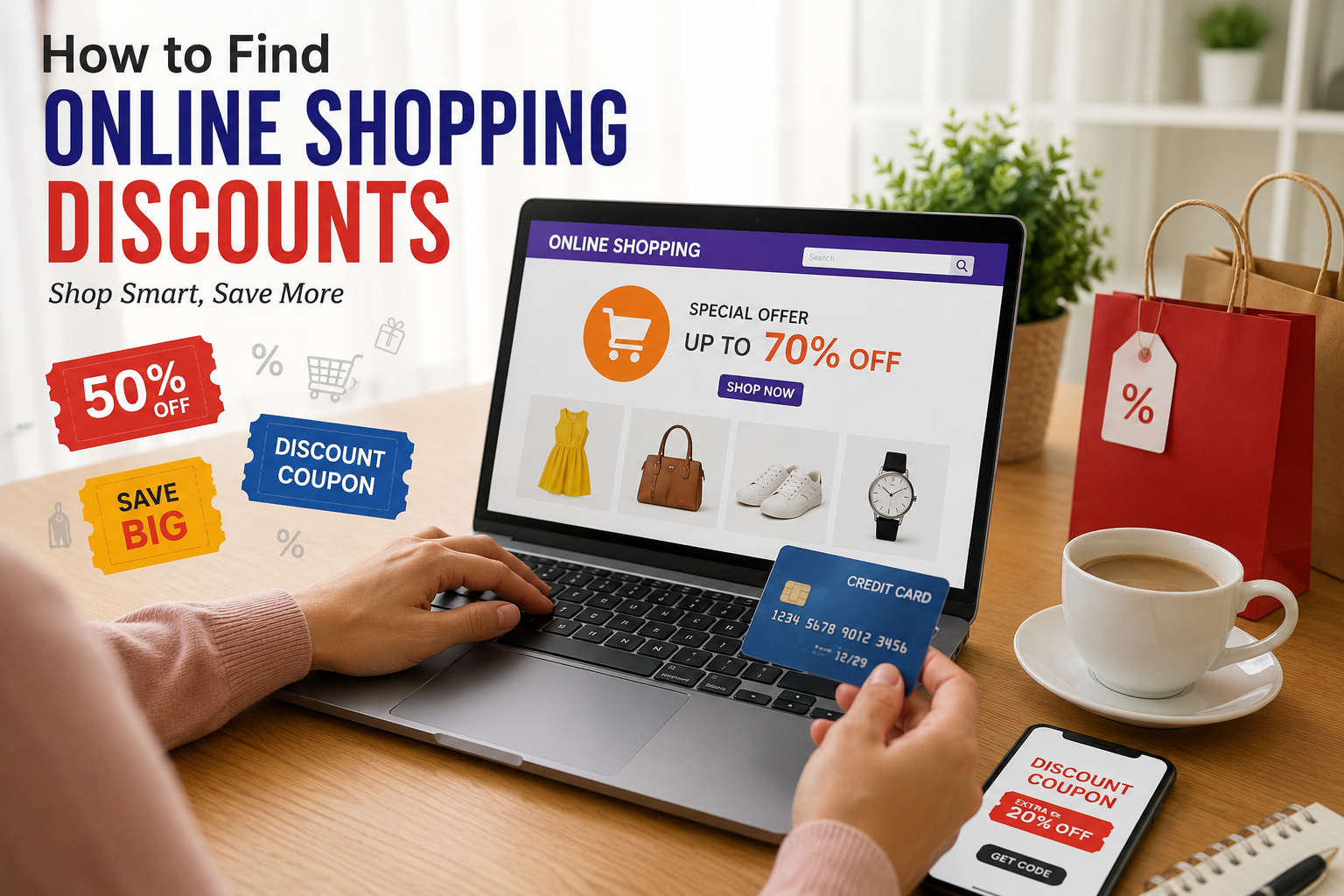
Online shopping has become a normal part of my daily life. I can find almost anything I need without leaving my home, but I have also learned that buying something online does not always mean getting the best price. Many stores offer discounts, special deals, coupons, cashback, and seasonal promotions, but finding the right offer can take a little effort.
In my experience, the biggest mistake shoppers make is buying a product as soon as they see it. I prefer to spend a few extra minutes checking whether I can find the same item at a lower price. Sometimes a simple search can save a surprising amount of money. In this article, I will share the methods I personally find useful for finding online shopping discounts and getting better value from my purchases.
Compare Prices Before Buying
The first thing I do when I want to buy something online is compare prices. I never assume that the first store I visit has the lowest price. Different websites can sell the same product at very different prices.
I usually search for the exact product name and compare several stores. I also check whether the price includes delivery charges because a product that looks cheaper may become more expensive after shipping is added.
Price comparison is especially useful when buying electronics, clothing, home products, and other items that are available from many sellers. Taking a few minutes to compare can help me avoid paying more than necessary.
Look for Coupon Codes
Coupon codes are one of my favorite ways to save money online. Many shopping websites provide discount codes for new customers, returning customers, or special events.
Before completing an order, I usually search for a coupon code related to the store. Some websites display available coupons directly on their homepage, while others send codes through newsletters or mobile applications.
I always check the conditions of a coupon before using it. Some codes only work when I spend a certain amount, while others apply only to selected products. Even a small discount can be useful when combined with another promotion.
Subscribe to Store Newsletters
I know that receiving promotional emails can sometimes feel annoying, but newsletters can be useful when I am planning to buy something. Online stores often send discount codes and special offers to people who subscribe.
Some stores offer a welcome discount immediately after signing up. Others send information about upcoming sales, new promotions, and limited time offers.
I usually subscribe only to stores I actually plan to use. This keeps my inbox manageable while still giving me access to useful deals.
Check the Sale Section
Most online stores have a dedicated sale section. I make a habit of checking this section before looking at full price products.
Sometimes stores reduce prices because they are clearing old inventory, making room for new products, or running a seasonal promotion. The discounted products can still be perfectly useful and may offer much better value.
However, I do not buy something simply because it has a sale label. I first ask myself whether I actually need it. A discount is not really a saving if I spend money on something I would not normally buy.
Shop During Major Sales
Timing can make a big difference when shopping online. Many stores offer larger discounts during special shopping events and seasonal sales.
I usually keep an eye on sales around holidays, the end of a season, and major promotional periods. Electronics, clothing, household products, and other categories may receive significant price reductions during these events.
I also prefer to make a shopping list before a major sale begins. This helps me focus on products I actually need instead of buying random items because the prices look attractive.
Use Cashback Opportunities
Cashback is another method I find helpful. Cashback programs can return a portion of the money I spend after completing an eligible purchase.
The amount may not seem large on one order, but regular shoppers can accumulate meaningful savings over time. Some banks, payment services, and shopping platforms also offer cashback promotions.
Before using cashback, I always check the rules. There may be minimum spending requirements, specific stores, or limited promotional periods. Understanding the conditions helps me know what I am actually saving.
Check the Retailer’s Mobile App
Some online stores offer special discounts through their mobile applications. These promotions may include app only coupons, first purchase offers, free delivery, or limited time discounts.
When I regularly shop from a particular store, I check whether its official app has better deals than the website. Sometimes an app notification also alerts me when a product I am interested in becomes cheaper.
I do not install every shopping app, though. I prefer using apps from stores I trust and making sure my account and payment information are protected.
Leave Items in Your Cart
One technique that sometimes works is leaving an item in the shopping cart without completing the purchase immediately. Some stores may send a reminder email or offer a small discount to encourage customers to finish their orders.
This does not happen with every store, so I do not depend on it. However, if I am not in a hurry to buy something, waiting a little can sometimes result in an additional offer.
I also find this method useful because it gives me time to think about whether I really need the product. A short waiting period can prevent unnecessary purchases.
Follow Brands on Social Media
Many brands announce special promotions through their social media pages. I sometimes follow stores and brands that I regularly shop from so I can see their latest offers.
Some companies share exclusive coupon codes or announce flash sales through social platforms. These promotions may only last for a short time, so following the brand can make it easier to notice them.
At the same time, I try not to let social media promotions convince me to buy things I do not need. I treat them as a source of information rather than a reason to spend money.
Check Free Shipping Offers
A discount is not always about reducing the product price. Free shipping can also make a significant difference to the final cost.
Before placing an order, I check the delivery fee and see whether the store offers free shipping after reaching a certain spending amount. Sometimes adding a small necessary item can qualify the entire order for free delivery.
I always calculate the final amount instead of focusing only on the product price. This gives me a more accurate idea of whether I am getting a good deal.
Use Price Alerts
Price alerts can be useful when I want a product but do not need it immediately. Some shopping platforms allow customers to receive notifications when prices change.
Instead of checking the same product every day, I can set an alert and wait for the price to drop. This works particularly well for products that frequently change in price.
Patience is often one of the easiest ways to save money online. If I know I will need something in the future, I prefer to watch its price instead of buying it immediately.
Check Reviews Before Buying
Finding a low price is important, but I never consider price alone. A cheap product is not necessarily a good deal if the quality is poor.
Before buying, I read customer reviews and look at ratings. I pay attention to comments about product quality, size, durability, delivery, and whether the product matches its description.
For me, the best discount is one that reduces the cost of a product I am actually happy with. Saving money on something that I later regret buying is not a real saving.
Be Careful With Fake Discounts
Not every discount advertised online is as good as it appears. Sometimes a store may show a large percentage reduction, but the original price may not represent the normal selling price.
I prefer to check the actual price history when possible. I also compare the product with other stores before deciding whether the promotion is genuine.
I avoid making quick decisions because of messages that create unnecessary pressure. Phrases suggesting that only a few items remain or that an offer will disappear immediately can encourage impulse buying.
Use Student, New Customer, and Membership Discounts
Depending on the store, different types of customers may receive special discounts. New customers may receive an introductory offer, while members may receive exclusive promotions.
Some websites also provide discounts for students, professionals, or other eligible groups. If I qualify for a special offer, I always check whether I can use it before placing my order.
Membership programs can also be useful for regular shoppers, especially when they provide free delivery or regular discounts. However, I consider the membership cost before joining.
Make a Shopping Budget
The best discount strategy is useless if I spend more than I can afford. I always find it easier to save money when I have a clear shopping budget.
Before shopping, I decide how much I am comfortable spending. This helps me avoid buying extra products simply because they are discounted.
I also separate things I need from things I simply want. This small habit has helped me make better purchasing decisions and reduce unnecessary spending.
Final Thoughts
Finding online shopping discounts does not have to be complicated. In my experience, the most effective approach is to slow down, compare prices, search for coupons, check sales, look for cashback, and pay attention to shipping costs.
I have learned that the goal should not be to find the biggest percentage discount. The real goal is to buy something I genuinely need at a reasonable price.
Online shopping can be convenient and affordable when I shop carefully. I do not rush just because I see a sale banner. Instead, I compare options, check reviews, look for available offers, and think about the final cost before paying.
With a little patience and a few simple habits, anyone can become a smarter online shopper. The next time I plan to buy something online, I know that spending a few extra minutes searching for a better deal can make a real difference to my budget.