Online shopping has become one of my favorite ways to buy things because it saves time and gives me access to a huge variety of products. I can compare different stores, read customer reviews, check prices, and place an order without leaving my home. However, I have also learned that online shopping can quickly become expensive if I do not have a clear budget.
When I shop online with a small budget, I try to focus on getting good value instead of simply looking for the cheapest product. A low price does not always mean a good deal. Sometimes spending a little more on a reliable product can save money in the long run.
In this article, I want to share the simple methods I use to shop online without putting too much pressure on my budget.
Set a Budget Before You Start Shopping
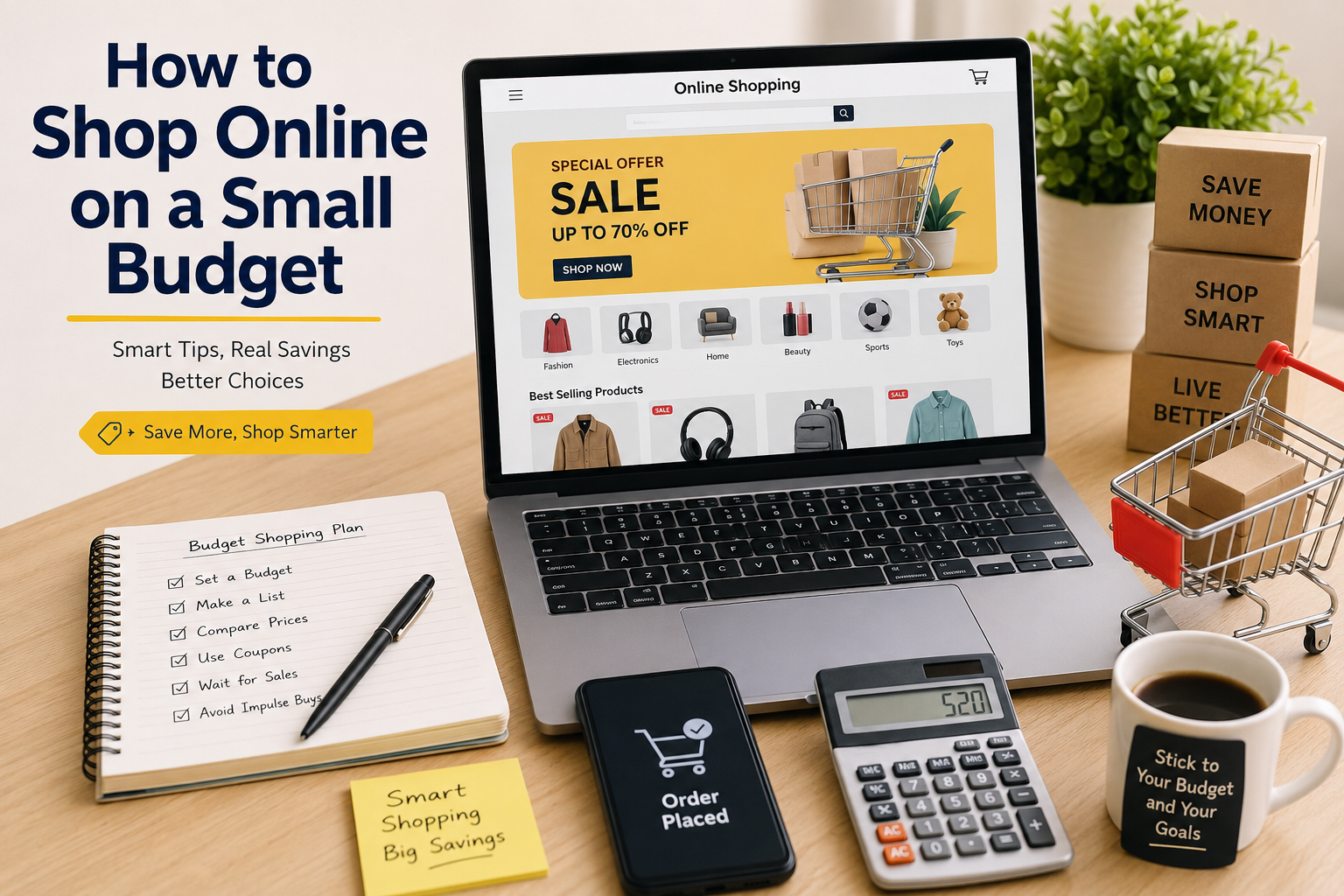
The first thing I do before opening an online shopping website is decide how much I can afford to spend. This simple step helps me avoid buying things just because they look attractive.
For example, if I have a budget of $50 for clothes, I try not to increase it to $70 just because I find another item I like. Having a fixed limit makes my shopping decisions much easier.
I also consider the total cost instead of only looking at the product price. Delivery charges, taxes, service fees, and other costs can increase the final amount. I always check the final price before placing an order.
Make a Shopping List
A shopping list may sound like something useful only for grocery shopping, but I find it equally helpful for online purchases.
Before I shop, I write down what I actually need. If I need a pair of shoes, a phone case, or a household item, I put it on my list. Then I focus on those products instead of browsing endlessly.
This helps me avoid impulse purchases. Online stores are designed to encourage customers to continue browsing, and it is easy to add several unnecessary items to a cart.
A simple list keeps me focused and protects my budget.
Compare Prices on Different Websites
One of the biggest advantages of online shopping is that I can compare prices quickly. I do not usually buy the first product I find.
If I find something I want, I search for the same or similar product on several websites. Sometimes there can be a significant price difference between stores.
However, I do not compare only the product price. I also check delivery charges, return policies, seller ratings, warranty information, and product quality.
A product that costs slightly more but includes free delivery and a better return policy may actually provide better value.
Look for Discounts and Coupons
Coupons can make a noticeable difference when I am shopping on a limited budget. Before completing an order, I usually check whether the store offers a discount code or special promotion.
Some websites provide discounts to new customers, while others offer savings during seasonal sales or special shopping events.
I also pay attention to email newsletters and loyalty programs when they provide genuine benefits. I do not sign up for every promotion because too many marketing messages can encourage unnecessary shopping.
The important thing for me is to use a discount only when I already need the product. A coupon does not save money if it convinces me to buy something I never planned to purchase.
Wait for the Right Sale
Sometimes waiting a few days can help me get a better price. If I do not urgently need something, I prefer to watch the price and wait for a suitable sale.
Many stores offer seasonal discounts, weekend promotions, clearance events, and special offers. I have found that patience can sometimes be more useful than immediately searching for another coupon.
Of course, I do not assume every sale is automatically a good deal. Some products may have their prices changed before a promotion. I compare prices and make sure the final discount is actually worthwhile.
Choose Value Over the Lowest Price
When I shop with a small budget, it can be tempting to choose the cheapest product available. But I have learned that this approach can sometimes cost more.
For example, if I buy a very cheap charger that stops working after a short period, I may have to purchase another one. A slightly more expensive charger from a reliable seller could last much longer.
I therefore consider quality, customer reviews, materials, warranty, and expected lifespan.
My goal is not to spend the least amount possible. My goal is to spend my money wisely.
Read Customer Reviews Carefully
Customer reviews are one of the most useful tools available to online shoppers. Before buying an unfamiliar product, I usually read reviews from people who have already purchased it.
I pay attention to repeated comments about quality, size, durability, performance, packaging, and delivery.
I do not rely on a single review because one person’s experience may not represent the entire product. Instead, I look for common patterns among several reviews.
Photos and videos uploaded by customers can also help me understand what a product actually looks like outside professional advertising pictures.
Check the Return Policy
A cheap product is not necessarily a good purchase if returning it is difficult.
Before ordering something expensive or unfamiliar, I check the store’s return and refund policy. I want to know how many days I have to return the item, whether return shipping costs money, and what condition the product must be in.
This is particularly important when buying clothing, shoes, electronics, or products where size and compatibility matter.
Understanding the return policy gives me more confidence and can prevent unexpected expenses later.
Avoid Unnecessary Add Ons
One habit that helps me stay within my budget is avoiding unnecessary add ons.
When I reach the checkout page, online stores may recommend additional products. Sometimes these recommendations are useful, but many are things I do not actually need.
I ask myself one simple question: would I buy this item if it were not being recommended to me?
If the answer is no, I usually leave it out of my cart.
This small habit can save a surprising amount of money over time.
Consider Used or Refurbished Products
For some categories, buying used or refurbished products can be a smart way to save money.
Electronics are a good example. A refurbished laptop, tablet, or phone from a trustworthy seller may cost considerably less than a new model while still meeting my needs.
I always check the seller’s reputation, warranty, condition, and return policy before considering refurbished products.
For other items, such as furniture, books, or certain household products, secondhand shopping can also provide excellent value.
Use Free Shipping Wisely
Shipping costs can sometimes turn a good deal into an expensive purchase. I always check whether free shipping is available before placing an order.
However, I avoid buying unnecessary products simply to reach a free shipping threshold.
For example, if shipping costs $5 but I need to spend another $20 to qualify for free shipping, buying the extra $20 of unnecessary products is not actually saving me money.
I focus on the total amount I am spending rather than becoming obsessed with free delivery.
Avoid Impulse Buying
Impulse buying is probably one of the biggest challenges when shopping online.
A product can look exciting when I first see it, especially when the website shows phrases such as limited time offer or only a few left. Instead of immediately buying, I sometimes wait.
If I still want the product after a day or two, I consider whether it fits my budget and whether I genuinely need it.
This short waiting period gives me time to think instead of making an emotional decision.
Use a Wishlist
A wishlist is another simple tool I find useful. Instead of immediately purchasing something I like, I save it for later.
After some time, I look at my wishlist again. Sometimes I realize that I no longer want certain products.
Other times, I notice that the price has dropped.
A wishlist turns random browsing into a more controlled shopping process.
Be Careful With Payment Methods
When shopping online, I also pay attention to payment security. I prefer using trusted websites and secure payment methods.
I check the website address carefully and avoid entering payment information on suspicious websites. I also avoid deals that seem unrealistically cheap, especially when the seller has little information or poor reviews.
Saving money is important, but protecting my financial information is equally important.
Keep Track of Your Spending
After making an online purchase, I like to keep track of what I spent. This helps me understand where my money is going.
If I notice that I am repeatedly spending money on unnecessary items, I can change my habits.
A simple monthly shopping budget can be enough. I do not need a complicated financial system. Even writing down purchases in a notebook or basic spreadsheet can make a difference.
Think Before You Click Buy
For me, successful budget shopping comes down to one simple habit: thinking before buying.
I ask myself whether I need the product, whether I can afford it, whether I compared the price, and whether the quality seems reasonable.
If I cannot answer these questions confidently, I wait.
Online shopping is convenient, but convenience should not mean careless spending.
Final Thoughts
Shopping online on a small budget is completely possible when I approach it with a little planning. I do not need to avoid online shopping completely or buy the cheapest products available. Instead, I focus on making better decisions.
Setting a budget, creating a shopping list, comparing prices, using genuine discounts, reading reviews, checking return policies, avoiding impulse purchases, and tracking my spending can all help me save money.
The most important lesson I have learned is that a good online shopping experience is not about buying more. It is about buying what I actually need at a reasonable price.
When I shop with patience and a clear budget, I feel more confident about my purchases and less likely to regret them later. For anyone trying to manage their money carefully, these simple habits can make online shopping much easier and more affordable.