When I want to buy something online, I try not to make my decision just because a product looks attractive or has a good price. There are usually many similar products available, and choosing the right one can become confusing very quickly. I have learned that taking a little time to compare products before buying can save money, reduce disappointment, and help me choose something that actually fits my needs.
Product comparison does not have to be complicated. I do not need to check every single specification or spend hours reading hundreds of reviews. I simply focus on the things that matter most to me and compare the available options carefully. In this article, I will explain how I compare products before buying and how anyone can use the same approach to make better purchasing decisions.
Start by Understanding What You Need
Before comparing products, I first ask myself what I actually need. This is one of the most important steps because it is easy to become interested in features that I may never use.
For example, if I am buying headphones, I think about why I need them. If I mainly want them for watching videos at home, I may not need the most expensive professional model. If I travel frequently, however, battery life, comfort, and noise cancellation may become much more important.
I also think about how often I will use the product. A product that I use every day may be worth spending more money on if it offers better quality and durability. For something I will only use occasionally, a simpler and less expensive option may be enough.
Once I understand my purpose, comparing products becomes much easier.
Set a Realistic Budget
The next thing I consider is my budget. I believe setting a budget before shopping helps me avoid unnecessary spending.
When comparing products, I do not automatically choose the cheapest option. A low price can be attractive, but it does not always mean better value. Sometimes spending a little more can provide better quality, longer durability, or useful features.
At the same time, I do not assume that the most expensive product is automatically the best. Some expensive products include features that I may never use.
I usually create a price range that I am comfortable with and then compare products within that range. This keeps my choices practical and prevents me from being distracted by products that are far beyond my budget.
Compare the Main Features
After deciding what I need and how much I can spend, I compare the main features of each product.
I try not to compare every specification because that can make the decision unnecessarily complicated. Instead, I identify the features that are important for my particular situation.
For a smartphone, I might compare battery life, camera quality, storage, display, performance, software support, and build quality. For a laptop, I may focus on the processor, memory, storage, display, battery life, and overall portability.
The important thing is to compare the same features across all products. This gives me a clearer picture of what each option offers.
Look Beyond the Product Description
Product descriptions are useful, but I do not depend on them alone. A product page is usually designed to present the product in a positive way.
This does not mean the information is false. It simply means I want to look at additional sources before making a final decision.
I check independent reviews, customer experiences, product demonstrations, and comparison articles. I also look for information about common problems that buyers have experienced.
For me, the goal is to understand both the strengths and weaknesses of a product.
Read Customer Reviews Carefully
Customer reviews can be extremely helpful when comparing products. However, I do not look only at the overall star rating.
A product with thousands of positive reviews can still have some problems that are important to me. I usually read a mixture of positive, average, and negative reviews.
Negative reviews can sometimes reveal problems that are not obvious from the product description. For example, customers may mention poor battery performance, uncomfortable design, difficult setup, weak customer support, or durability concerns.
I also pay attention to repeated complaints. One person having a bad experience may not mean much, but if many customers mention the same problem, I take it seriously.
Check the Warranty and Return Policy
Warranty and return policies are often overlooked when people compare prices. I consider them important because they can make a significant difference after the purchase.
Before buying, I check how long the warranty lasts and what it covers. I also look at the seller’s return policy.
A slightly more expensive product from a reliable seller may be a better choice if it comes with better support and a reasonable return period.
I especially pay attention to products that are expensive or likely to require support. Knowing that I can return a product or receive assistance if something goes wrong gives me more confidence.
Compare the Total Cost
The listed price is not always the final cost. I try to consider everything I may need to spend after purchasing the main product.
For example, a device may require accessories, replacement parts, subscriptions, or additional software. A printer might be affordable initially but expensive to operate because of ink costs. A low priced appliance may consume more electricity over time.
This is why I prefer to compare the total cost of ownership instead of only looking at the purchase price.
Sometimes a product that costs more initially can actually be cheaper in the long run.
Consider Product Quality and Durability
Quality is another major factor I consider. I want to know whether a product is likely to last.
I look at the materials used, construction quality, brand reputation, warranty, and long term customer feedback. If a product will be used frequently, durability becomes even more important.
I have found that buying a cheaper product repeatedly can cost more than buying a reliable product once.
Of course, durability can be difficult to judge before buying. This is where long term customer reviews and independent testing can be useful.
Compare Brands, But Do Not Depend Only on Brand Names
Brand reputation can provide useful information, but I do not choose a product simply because I recognize the brand.
Well known brands can produce excellent products, but they can also have weaker models. At the same time, lesser known brands may offer good value.
I compare the actual products instead of assuming that one brand is always better.
I look at product quality, customer service, warranty, reviews, specifications, and price. This gives me a more balanced view.
Check Compatibility
Compatibility is something I always check before buying technology or accessories.
A product may look perfect but still fail to work with the devices or systems I already own.
For example, when buying a computer accessory, I check whether it supports my operating system and connection type. When buying a phone accessory, I make sure it fits my particular phone model.
This simple step can prevent the frustration of receiving a product that cannot be used.
Make a Simple Comparison List
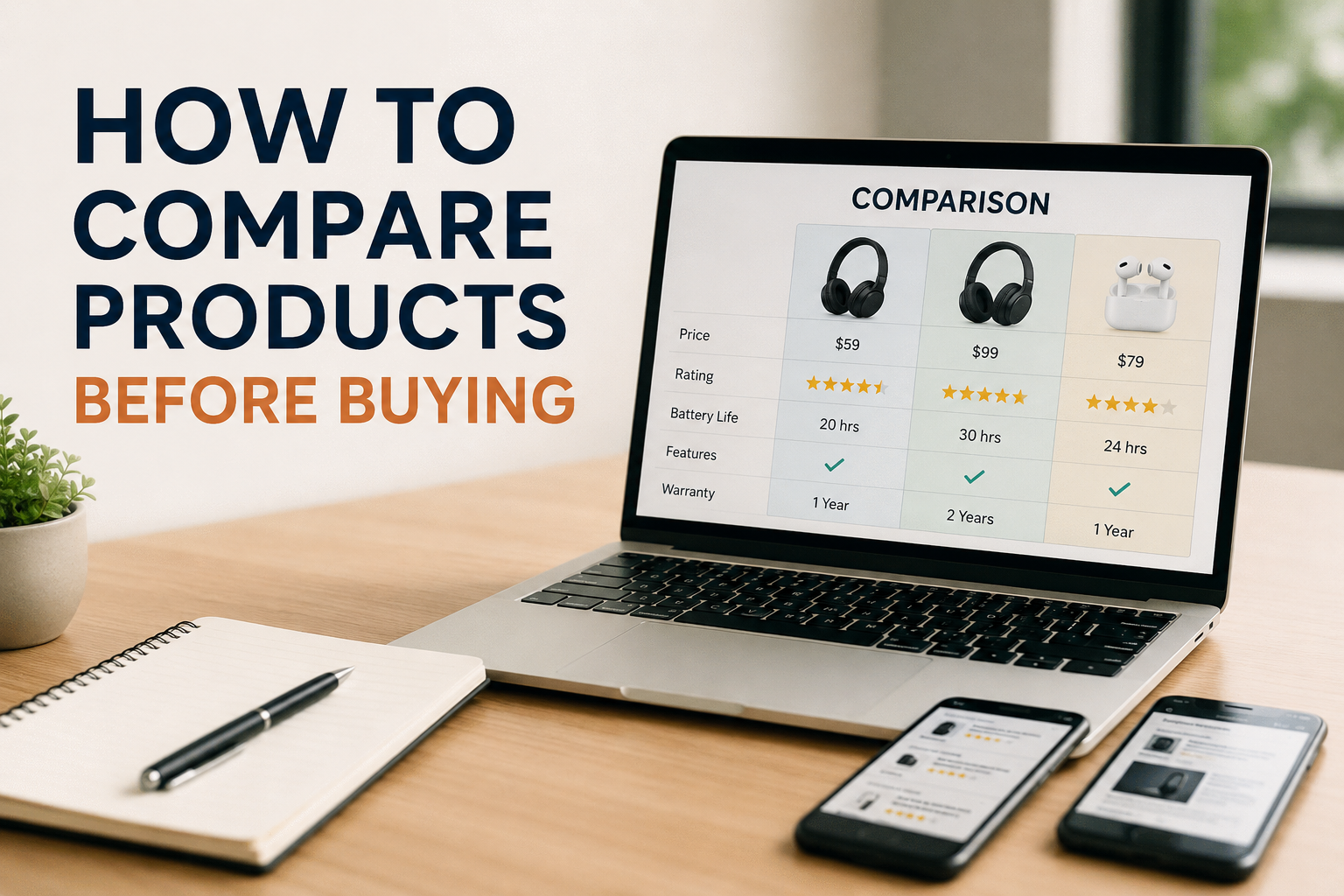
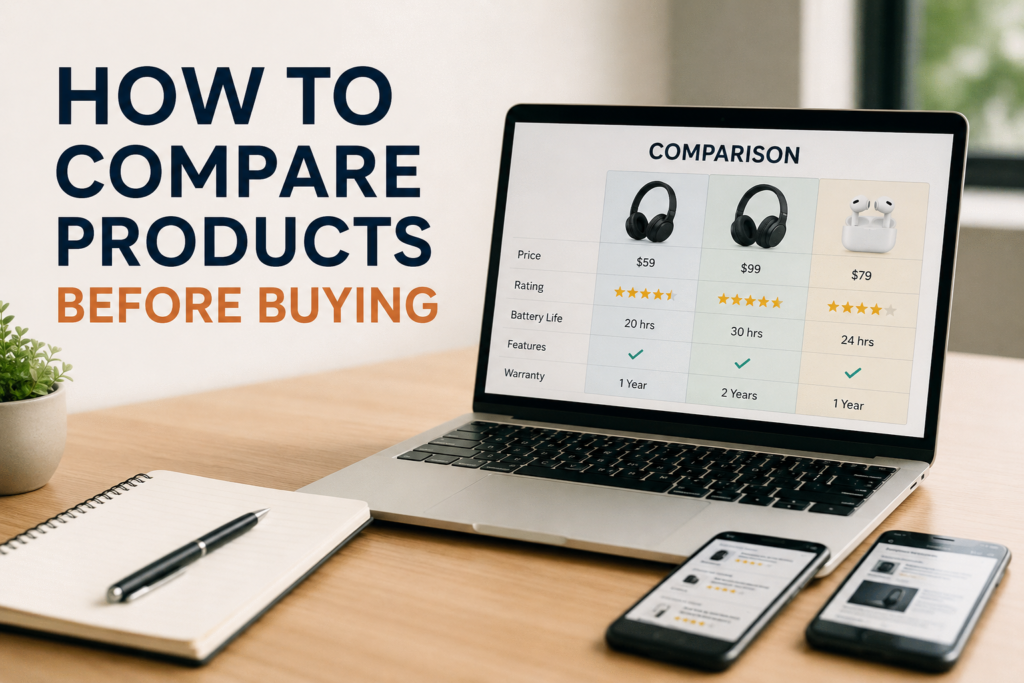
When I have several options, I find it helpful to make a simple comparison list.
I write down the products and compare their important features, price, warranty, reviews, and advantages and disadvantages.
For example, I might use categories such as price, quality, important features, customer rating, warranty, and long term value.
This makes the differences easier to see. Instead of relying on memory, I can look at everything together and make a more logical decision.
Think About Value Instead of Price
One of the biggest lessons I have learned is that price and value are not the same thing.
A cheap product may save money today but could become expensive if it breaks quickly or needs frequent replacement.
A more expensive product may offer better materials, longer life, better performance, and stronger support.
I therefore ask myself a simple question: what am I getting for the money I am spending?
This helps me focus on value instead of becoming obsessed with finding the lowest price.
Watch Out for Marketing Tricks
Online shopping platforms use many techniques to encourage purchases. Limited time offers, large discounts, countdown timers, and phrases such as best seller can make me feel that I need to buy immediately.
I try to slow down and compare the product properly.
A discount is useful only if the product is actually suitable for me. I do not want to buy something simply because the original price looks high and the current price looks like a bargain.
I also compare prices from different sellers because the same product may be available at different prices.
Do Not Ignore Your Personal Preferences
Two products can have almost identical specifications but feel very different in real life.
For example, one laptop may have excellent performance but be heavier than I want. One phone may have a great camera but a design that I do not like. One pair of shoes may have excellent reviews but may not suit my personal comfort preferences.
That is why I believe product comparison should always include personal preferences.
The best product is not necessarily the one with the highest specifications. It is the one that fits my needs most effectively.
Take Your Time Before Making the Final Decision
If I am buying something expensive, I avoid making an immediate decision.
After comparing products, I give myself some time to think. Sometimes I discover that I do not actually need certain features. Other times, I find another product that provides better value.
Taking a short break also helps me avoid emotional purchases.
If I still believe the product is right after careful comparison, I feel much more confident about buying it.
Final Thoughts
For me, comparing products before buying is one of the simplest ways to become a smarter shopper. I do not need to become an expert or research every tiny specification. I simply need to understand my needs, set a budget, compare important features, read customer reviews, check warranty and return policies, and consider long term value.
I also try to remember that the cheapest product is not always the best choice, and the most expensive product is not automatically the best either. What matters most is finding the product that gives me the right combination of quality, usefulness, reliability, and price.
Online shopping gives us access to more choices than ever before. That is a great advantage, but too many choices can also make buying confusing. A simple comparison process helps me narrow those choices and make a decision based on information rather than impulse.
The next time I plan to buy something online, I will take a few extra minutes to compare my options. That small amount of research can make the buying experience easier and can help me feel confident that I am spending my money on something that is genuinely useful to me.