When I buy something online, I always try to look beyond the product pictures and attractive descriptions. A product can look perfect on a screen, but that does not always mean it will meet my expectations when it arrives. Since I cannot physically touch, test, or inspect an online product before buying it, I believe checking its quality carefully is one of the most important parts of online shopping.
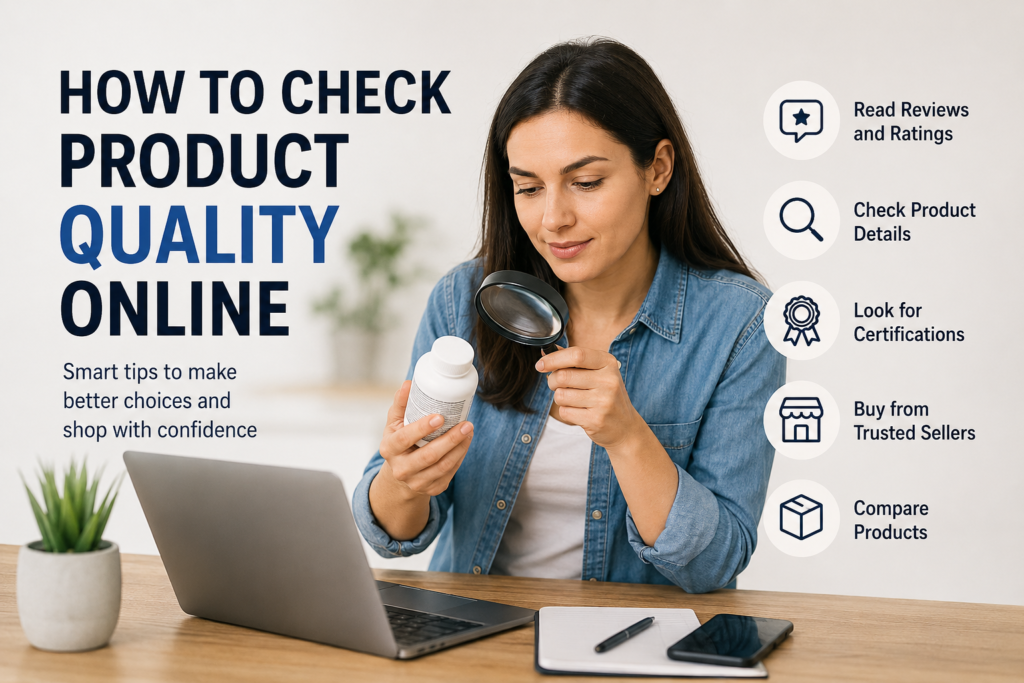
Over time, I have learned that product quality can often be judged by looking at several different things together. Reviews, product specifications, photos, seller information, return policies, and customer feedback can all tell me something about what I am actually buying. In this article, I will share the simple methods I use to check product quality online before spending my money.
Start With the Product Description
The first thing I check is the complete product description. I do not make my decision based only on the product title or a short introduction.
A good product description should explain important details such as materials, dimensions, weight, features, included accessories, capacity, compatibility, and other specifications. If these details are missing, I become more careful before placing an order.
For example, if I am buying a bag, I want to know what material it is made from, how large it is, how many compartments it has, and whether the photographs accurately represent its size.
I also pay attention to the wording. Sometimes descriptions use attractive words such as premium, professional, advanced, or high quality without providing enough information to support those claims. I prefer products where the seller provides specific and useful details.
Look Carefully at Customer Reviews
Customer reviews are one of my favorite ways to understand product quality. I usually read several reviews instead of trusting only the overall rating.
A product with thousands of reviews and a high rating can give me more confidence, but I still want to understand what real customers are saying. I look for comments about durability, materials, performance, appearance, comfort, packaging, and whether the product works as advertised.
I also read negative reviews because they can reveal problems that may not appear in the product description. If several customers complain about the same issue, I take that seriously.
At the same time, I do not assume that every negative review means the product is bad. Sometimes a customer may have received a damaged item, chosen the wrong size, or expected something different from what was actually advertised.
The most useful reviews are usually detailed and specific. Reviews that explain how someone used the product and what happened over time can provide much more information than a simple comment saying that the product is good.
Check Customer Photos and Videos
Product photographs provided by sellers can look excellent because they are often professionally taken. That is why I like checking photographs uploaded by customers.
Customer photos can give me a more realistic idea of the product. They may show its actual size, color, texture, packaging, and appearance in normal surroundings.
When available, I also look for customer videos. Videos can sometimes show how a product works in real life. For example, if I am considering an electronic device, a customer video might show its interface, buttons, sound, size, or actual performance.
I find this especially helpful because professional product photographs do not always show small details that matter when making a buying decision.
Compare Specifications With Similar Products
I rarely judge a product by itself. I prefer comparing it with two or three similar products.
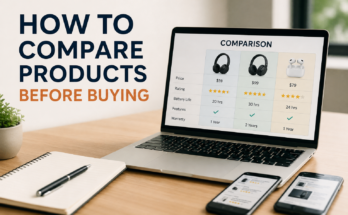
Comparison helps me understand whether the specifications are actually good for the price. For example, if two similar products cost nearly the same amount, I can compare their materials, dimensions, warranty, features, battery capacity, included accessories, and customer ratings.
Sometimes a product appears expensive until I compare its features with alternatives. In other cases, a very cheap product may seem attractive but have weaker materials or fewer features.
For me, the goal is not always to find the cheapest option. I want to find the product that provides a reasonable balance between quality, usefulness, reliability, and price.
Check the Seller Carefully
The seller can have a major effect on the online shopping experience. Even a good product can become a problem if the seller provides poor service.
Before ordering, I check the seller’s rating, number of completed orders, customer feedback, and how long the seller has been active on the platform.
If customers frequently mention poor packaging, incorrect products, delayed shipping, or difficulty getting support, I consider those warning signs.
I also prefer sellers who clearly explain their return and replacement policies. A trustworthy seller should make it reasonably clear what happens if the product arrives damaged, defective, or different from the description.
Pay Attention to the Materials
When I am checking physical products, I always try to find information about the materials used.
Material quality can have a major effect on durability. For example, clothing, furniture, bags, shoes, kitchen products, and electronic accessories can all vary significantly depending on their construction and materials.
Words such as metal, leather, cotton, plastic, glass, or wood are not enough by themselves. I try to find more specific information about the type and quality of the material.
For clothing, I check the fabric composition. For furniture, I look for information about the frame and surface materials. For electronics, I look for details about construction, components, compatibility, and included parts.
The more specific the information is, the easier it becomes for me to judge whether the product matches my expectations.
Check the Size and Dimensions
One of the easiest mistakes to make while shopping online is ignoring product dimensions.
A product can look large or small in a photograph because of the way the picture was taken. I always check the measurements before buying.
If possible, I compare those measurements with something I already own. This gives me a much better idea of the actual size.
This is particularly important for furniture, bags, clothing, appliances, storage products, kitchen equipment, and accessories.
Checking dimensions takes only a few minutes, but it can prevent a lot of disappointment later.
Look for Warranty Information
A warranty can provide useful information about how a manufacturer or seller stands behind a product.
I check whether a warranty is available, how long it lasts, what it covers, and who provides it. I also look at the conditions because not every type of damage may be covered.
A warranty does not automatically prove that a product is excellent, but it can give me additional confidence when combined with strong reviews and clear product information.
For expensive products, I consider warranty details especially important.
Be Careful With Extremely Low Prices
Price is another useful quality indicator, although it should not be treated as proof.
If a product normally costs much more elsewhere but one seller is offering it at an unusually low price, I stop and investigate before buying.
There may be a genuine sale, but there could also be differences in specifications, seller reliability, condition, accessories, or authenticity.
I compare the product with other sellers and check exactly what is included in the purchase. Sometimes a cheaper listing is not actually cheaper once I understand what I am getting.
Check Return and Refund Policies
Before buying online, I always look at the return policy.
Even after doing careful research, I cannot physically inspect the product before delivery. There is always a possibility that the product will not meet my expectations.
A clear return policy gives me more protection. I check the return period, eligibility requirements, refund process, shipping responsibilities, and conditions for damaged or opened products.
I believe this is particularly important for clothing, shoes, electronics, furniture, and other products where quality or fit can be difficult to judge online.
Watch for Suspicious Reviews
Reviews are useful, but I do not blindly trust them.
If many reviews use almost identical wording, appear unusually short, or seem unrelated to the actual product, I become cautious. I also pay attention to reviews that discuss specific experiences rather than simply repeating marketing language.
I try to look at the overall pattern. If hundreds of customers independently mention similar positive qualities, that can be useful. If many customers independently mention the same serious problem, I take that seriously too.
Looking at the balance of feedback is more helpful than focusing on one perfect review.
Check Product Authenticity
For branded products, authenticity is another important consideration.
I check the seller, product packaging, model number, manufacturer information, and other available details. If the product is supposed to be from a well known brand but the listing contains unusual information or an unrealistic price, I investigate further.
I also avoid making decisions based solely on a brand logo shown in a photograph. I want to know whether the seller is authorized or otherwise trustworthy.
Think About Your Own Needs
One thing I have learned is that product quality is not exactly the same for everyone.
A product can be excellent but still be unsuitable for me. That is why I first think about what I actually need.
For example, I may not need the most expensive laptop if I only use it for basic browsing and writing. Similarly, I may not need a professional camera if I mainly take casual photographs.
Before buying, I ask myself whether the product has the features I need, whether it is durable enough for my intended use, and whether the price makes sense for my budget.
Do Not Rush the Purchase
Online shopping makes it very easy to buy something within a few minutes. I try not to let attractive discounts or countdown offers force me into a decision.
If I am unsure about quality, I take some time to compare the product with alternatives. I read more reviews, check specifications, and look at the seller’s information.
Sometimes waiting a little helps me realize that I do not actually need the product. Other times, additional research gives me enough confidence to make the purchase.
I believe a few extra minutes of research can save much more money and frustration later.
Final Thoughts
Checking product quality online does not have to be complicated. I simply try to gather information from several sources before making my final decision.
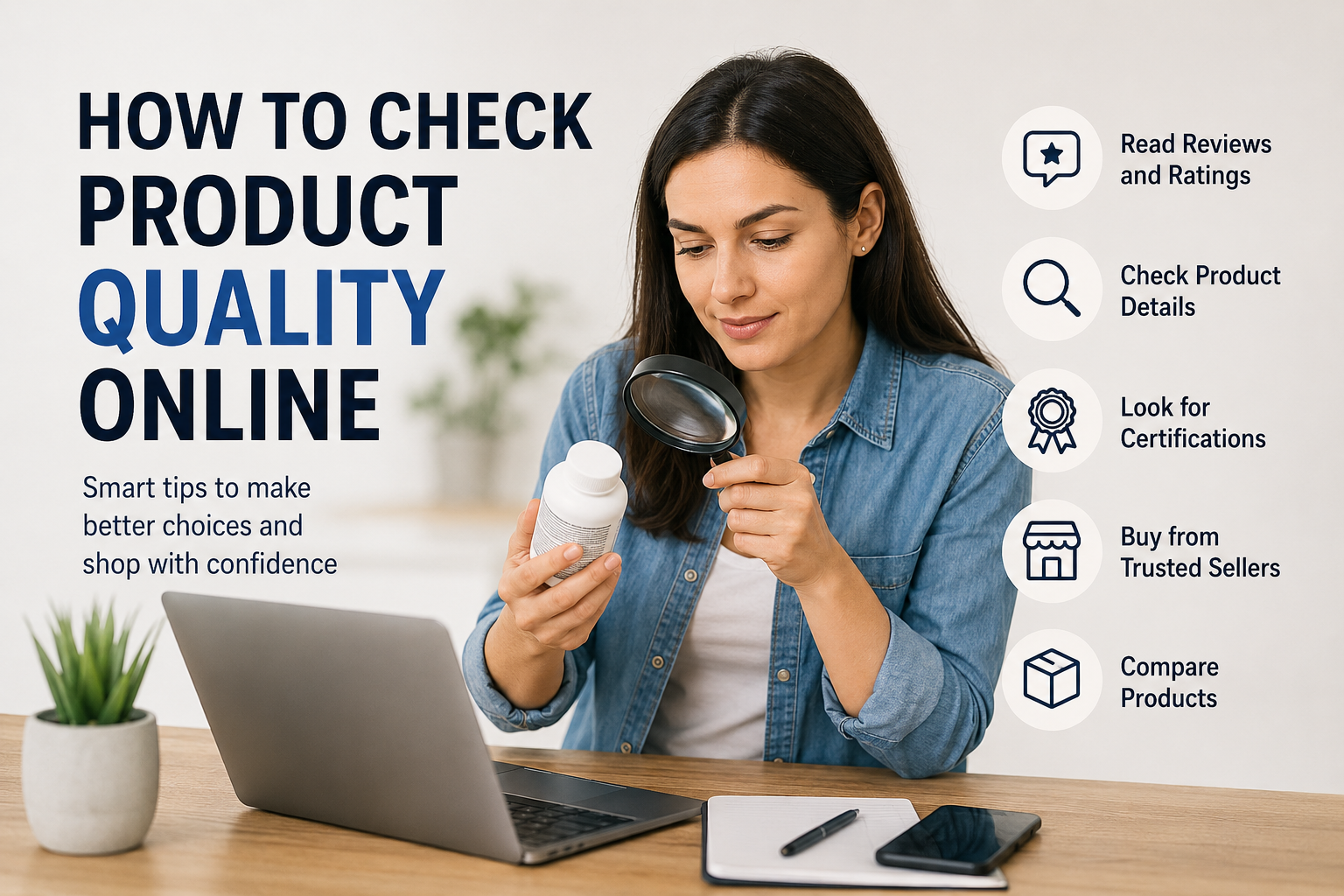
I check the product description, specifications, materials, dimensions, customer reviews, customer photos, seller reputation, warranty, return policy, and price. I also compare similar products and pay attention to repeated complaints.
Most importantly, I do not expect one rating or one review to tell me everything. I look at the complete picture.
In my opinion, smart online shopping is less about finding the most expensive or most popular product and more about understanding exactly what I am paying for. When I take a little time to research before clicking the buy button, I feel more confident about my decision and have a much better chance of receiving a product that actually matches my expectations.