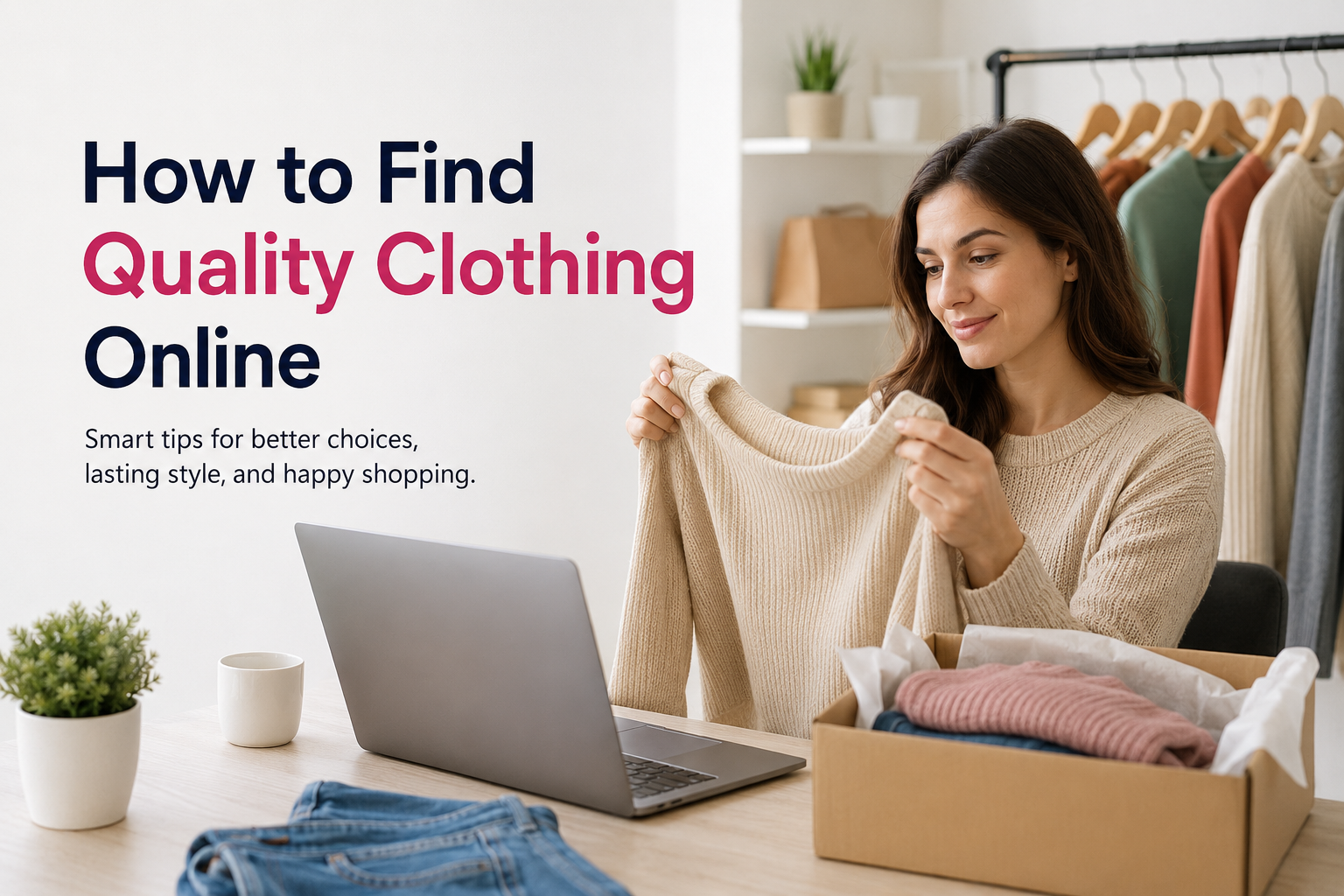
Shopping for clothes online has become one of my favorite ways to find new outfits. I can browse many styles from home, compare prices, read reviews, and take my time before making a decision. However, I have also learned that buying clothes online is not always as simple as looking at a nice picture and clicking the order button. Some clothes look excellent in photographs but feel completely different when they arrive.
For me, the most important thing is learning how to recognize quality before buying. When I pay attention to fabric, measurements, stitching, reviews, product photos, and store policies, I have a much better chance of getting clothes that look good and last longer.
In this article, I will share the things I personally look for when trying to find quality clothing online.
Start With the Fabric
The first thing I check is the fabric. I believe fabric tells me a lot about how a piece of clothing will feel and perform over time.
Online stores usually mention the material in the product description. I always take a moment to read it instead of focusing only on the design. Cotton, linen, wool, denim, and other natural materials can have different qualities depending on how they are produced and blended.
I also pay attention to fabric blends. A cotton blend, for example, may feel different from a shirt made mostly from cotton. A little synthetic material can sometimes improve stretch and durability, while too much may affect comfort.
I do not automatically assume that an expensive fabric means better quality. Instead, I look at the complete description and consider whether the material is suitable for the clothing item.
Look Carefully at Product Photos
Photos are extremely important when shopping online because I cannot physically touch the clothing.
I like to look at every available photo. If possible, I check front, back, side, close up, and detail images. Close up pictures can sometimes help me notice the texture of the fabric, stitching, buttons, zippers, and other details.
I also prefer stores that show clothes on real models as well as product only images. Model photos can give me a better idea of how the garment falls on the body.
At the same time, I try not to judge quality only from professional photography. Bright lighting and careful editing can make almost any product look attractive. That is why I combine photos with other information before making my decision.
Read the Product Description
I used to ignore long product descriptions, but now I consider them one of the most useful parts of an online clothing listing.
A good description should tell me about the material, fit, size, care instructions, design details, and sometimes the manufacturing information.
I pay particular attention to words describing the fit. Terms such as relaxed, slim, regular, oversized, fitted, and loose can make a big difference.
I also check whether the clothing is lined, stretchable, lightweight, thick, or designed for a particular season. These details help me understand what I am actually buying.
If a product has almost no information, I become more cautious.
Check the Size Chart
One of the biggest mistakes I can make while shopping online is choosing my usual size without checking the measurements.
Different brands can have completely different sizing systems. A medium from one store may fit like a small or large from another store.
Before ordering, I compare my measurements with the size chart provided by the seller. For shirts, I may check chest, shoulder, sleeve, and length measurements. For trousers, I look at waist, hip, inseam, and overall length.
I also consider how I want the clothing to fit. If I prefer a relaxed appearance, I may choose differently than someone who likes a fitted style.
Taking a few minutes to check measurements can save me from the trouble of returning an item.
Read Customer Reviews
Customer reviews are another important part of my online shopping process. I do not simply look at the star rating. I actually read what people say.
I especially look for reviews that mention fabric quality, sizing, comfort, color, stitching, and durability.
Photos uploaded by customers can also be helpful because they often show the product in normal lighting. This gives me a more realistic idea of what the clothing looks like outside professional product photography.
I also pay attention when several customers mention the same problem. If many people say that the fabric is very thin or the sizing is smaller than expected, I take that information seriously.
At the same time, I understand that one person’s experience may not be the same as mine. I use reviews as guidance rather than treating every comment as an absolute fact.
Check the Seller or Brand
I believe the seller matters almost as much as the clothing itself.
Before buying something expensive, I like to learn a little about the brand or store. I check how long it has been operating, what customers say about it, and whether the website provides clear contact information.
A professional store usually provides detailed product information and clear policies. It should also explain shipping, returns, exchanges, and refunds.
If a website makes big promises but provides very little information about its products or policies, I become careful.
For me, trust is an important part of buying quality clothing online.
Compare Similar Products
I rarely buy an item immediately if I find it interesting. Instead, I like to compare similar products.
For example, if I am looking for a basic cotton shirt, I may compare several shirts from different stores. I look at their fabric, measurements, reviews, construction details, price, and return policies.
Sometimes I discover that a slightly more expensive shirt offers much better material and construction. In that situation, paying a little more may make sense because I expect the clothing to last longer.
On the other hand, I do not assume that the most expensive option is automatically the best. Comparison helps me understand what I am actually getting for my money.
Pay Attention to Stitching and Construction
When close up photos are available, I inspect the stitching.
Strong and neat stitching is something I associate with better construction. I look at seams, hems, pockets, collars, cuffs, and other areas that receive regular use.
Loose threads do not always mean that a garment is poor quality, but repeated complaints about weak seams can be a warning sign.
Buttons and zippers also deserve attention. For example, a jacket with poor quality hardware may become frustrating even if the fabric itself is good.
Small construction details can make a big difference in how long clothing remains useful.
Think About Clothing Care
Another thing I consider is how easy the clothing will be to maintain.
Some clothes require special washing or drying methods. That may not be a problem if I really love the item, but I think about whether I am willing to give it that extra care.
I usually prefer clothing that fits naturally into my routine. If something can be washed easily and maintained without too much effort, I am more likely to wear it regularly.
Checking care instructions before purchasing can also help prevent accidental damage after the clothing arrives.
Understand the Return Policy
Even after doing careful research, online shopping can sometimes go wrong. The clothing may not fit, the color may look different, or the material may not feel the way I expected.
That is why I always check the return and exchange policy before ordering.
I look for information about the return period, condition requirements, shipping costs, exchanges, refunds, and any exceptions.
A good return policy gives me extra confidence because I know what options I have if the product does not meet my expectations.
Be Careful With Extremely Cheap Clothing
Low prices can be attractive, especially when I am shopping on a limited budget. However, I have learned that an unusually cheap price deserves a closer look.
Sometimes a low price is a genuine discount. Other times, the product may use cheaper materials or have weaker construction.
Instead of avoiding inexpensive clothing completely, I compare the price with the material, reviews, photos, and seller information.
My goal is not always to find the cheapest item. I want to find something that gives me good value for the money.
Consider the Purpose of the Clothing
Before buying, I ask myself where and how I will wear the item.
A beautiful shirt may not be useful if it does not match anything I already own. A trendy jacket may look great online but may not suit my everyday lifestyle.
I find it easier to choose quality clothing when I think about practicality. If I can wear something regularly, combine it with several outfits, and maintain it easily, I consider it a better purchase.
Quality is not only about how long clothing lasts. For me, it is also about how useful the clothing is in my daily life.
Avoid Buying Only Because of Trends
Trends can be fun, but I try not to let them control every purchase.
When shopping online, there are always new styles competing for attention. I sometimes find myself wanting something simply because I have seen it everywhere.
Before buying, I ask whether I genuinely like the item and whether I expect to wear it for a reasonable amount of time.
Classic designs and versatile colors can often provide more value because they work with different outfits and remain useful beyond a particular trend.
Final Thoughts
Finding quality clothing online does not have to be difficult. In my experience, the key is to slow down and research before purchasing.
I check the fabric, study product photos, read descriptions, compare measurements, and look carefully at customer reviews. I also consider the seller, return policy, construction, care instructions, and overall value.
Most importantly, I try not to make decisions based only on attractive pictures or low prices. A good online purchase is one that fits well, feels comfortable, suits my lifestyle, and remains useful after the excitement of receiving it disappears.
With a little patience and attention, I believe anyone can become better at finding quality clothing online. The more carefully I shop, the easier it becomes to recognize products that are worth my money and avoid purchases that I may regret later.