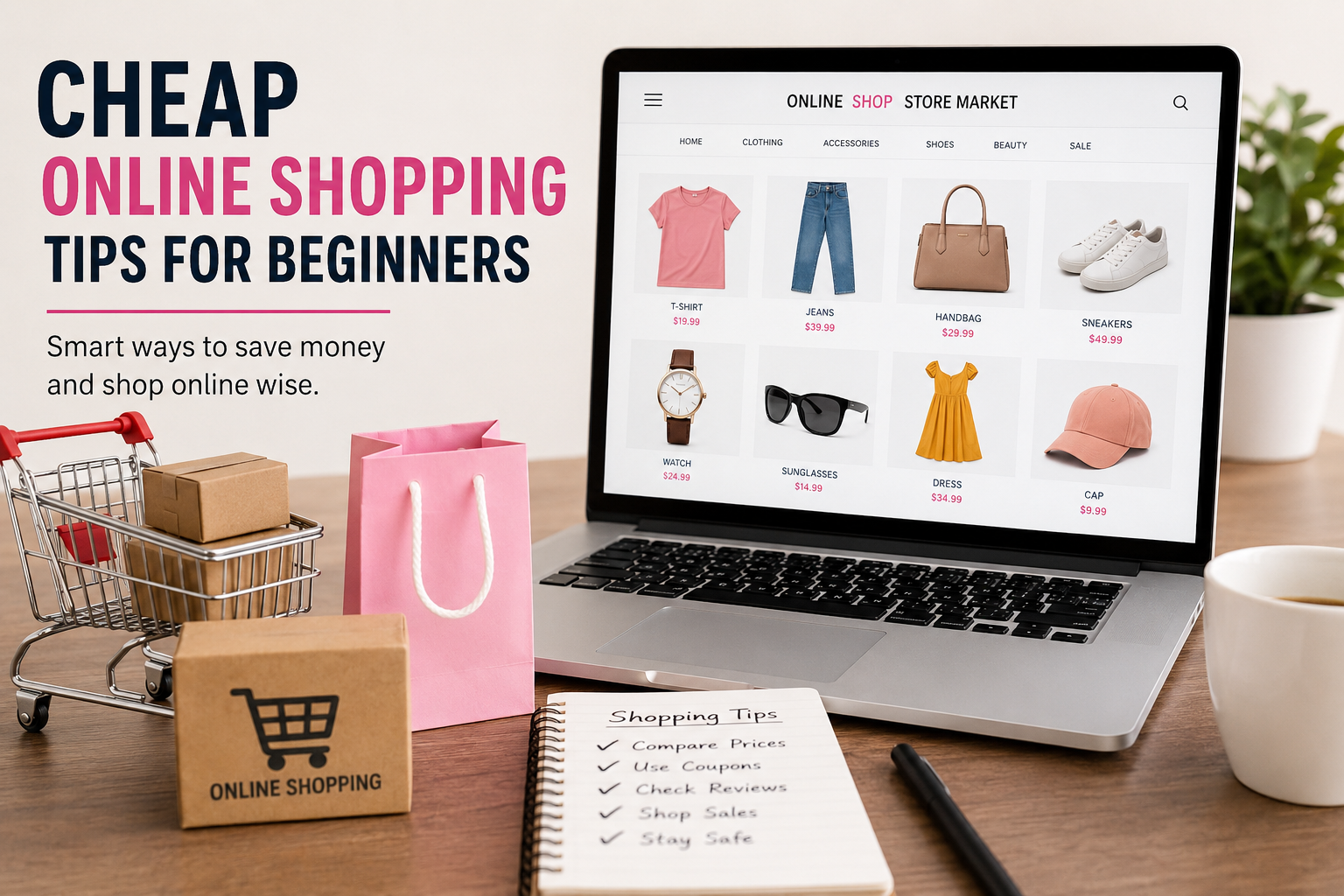
Online shopping has become one of my favorite ways to find products without spending hours walking through different stores. I can compare prices, read reviews, look at different options, and place an order from home. However, I have also learned that online shopping does not always mean cheap shopping. Sometimes a product may look affordable at first, but delivery charges, taxes, extra fees, or unnecessary purchases can make the final price much higher.
For beginners, learning how to shop online wisely can make a big difference. In my experience, the best approach is not simply looking for the lowest price. It is about finding a good product at a reasonable total cost while avoiding mistakes. In this article, I want to share some simple cheap online shopping tips that beginners can use to save money and make better purchasing decisions.
Start by Knowing What You Need
Before I buy anything online, I try to decide exactly what I need. This sounds simple, but it can prevent many unnecessary purchases.
Online stores are designed to show us hundreds of interesting products. When I start browsing without a clear purpose, I can easily end up adding things to my cart that I did not originally need.
For example, if I need a pair of shoes, I focus on shoes instead of spending time looking at clothes, accessories, and other products. Having a simple shopping goal helps me stay within my budget.
I also recommend writing down the product you need and the maximum amount you are willing to spend. This small habit can make online shopping much more controlled.
Compare Prices Before Buying
One of the biggest advantages of shopping online is that comparing prices is easy. I never assume that the first price I see is the best price.
The same or similar product may be available from several online stores at different prices. Before placing an order, I usually check a few stores and compare their offers.
Price comparison should also include delivery costs. A product that costs less may become more expensive after shipping is added. That is why I prefer to compare the final amount rather than just the product price.
Sometimes I also find that a slightly more expensive product has free delivery, making it cheaper overall.
Look for Coupons and Discounts
Coupons can be an easy way to reduce the cost of online shopping. Many stores offer discount codes for new customers, seasonal sales, newsletters, or special events.
Before completing an order, I like to check whether the store has an available coupon. Some websites automatically apply discounts, while others require a code during checkout.
I do not recommend buying something simply because there is a coupon. A discount only saves money when the product is actually needed.
For example, spending $50 to save $10 is not really saving money if I would not have purchased the product without the discount.
Check the Total Price Before Paying
This is one of the most important lessons I have learned from online shopping. The price displayed on a product page is not always the final amount.
Before paying, I check the complete order summary. I look at the product price, shipping cost, taxes, service charges, and any other additional fees.
Sometimes an item looks extremely cheap until I reach the checkout page. If the additional charges are too high, I may look for another seller.
Taking a few seconds to check the final price can prevent unpleasant surprises.
Read Customer Reviews Carefully
Cheap products can be tempting, but a low price does not automatically mean good value. I always try to read customer reviews before buying unfamiliar products.
Reviews can help me understand the actual quality of an item. Customers often mention things that are not obvious from product photographs, such as size, material, durability, packaging, or performance.
I prefer reading several reviews instead of depending on one comment. I also pay attention to reviews that include photographs because they can provide a better idea of what the product actually looks like.
At the same time, I do not believe every review blindly. Very short or overly positive comments may not provide much useful information.
Check the Product Details
Another mistake beginners can make is buying a product without reading its description carefully.
Pictures can sometimes make products appear larger, better, or different from what they really are. Before ordering, I check measurements, materials, colors, features, sizes, and other important details.
For clothing, I pay special attention to the size chart. Different brands can use different measurements, so choosing the same size I normally wear does not always guarantee a good fit.
For electronics, I check specifications and compatibility before purchasing.
Spending a few minutes reading product information can save money because returning the wrong product can be inconvenient and sometimes expensive.
Take Advantage of Seasonal Sales
Sales can be useful when I already know what I want to buy. Online stores often offer discounts during holidays, special shopping events, end of season periods, and clearance sales.
However, I try not to become too excited by large percentage discounts. A product marked as 50 percent off is not necessarily a good deal if the original price was unusually high.
I compare the sale price with prices from other stores before deciding.
Another useful strategy is to make a list of products I expect to need in the future. If one of those products becomes genuinely cheaper during a sale, I can buy it at the right time.
Avoid Buying Just Because Something Is Cheap
This is probably my favorite rule for saving money online.
A cheap product is not a bargain if I do not need it.
Sometimes I see products priced at only a few dollars and feel tempted to buy them. But several small purchases can quickly become a large expense.
I try to ask myself three questions before buying.
Do I really need this product?
Will I actually use it?
Would I still want it if there were no discount?
If the answer is no, I usually leave it in the cart.
Check Return and Refund Policies
Before buying from an unfamiliar online store, I always check its return and refund policy.
A product can look perfect online but may arrive in a different size, condition, or quality than expected. Knowing the return rules gives me more confidence before making a purchase.
I check how many days I have to return the product, whether return shipping costs money, and whether refunds are offered through the original payment method.
Some cheap products may not be worth returning if the return shipping cost is too high. Understanding these rules before ordering helps me make a better decision.
Be Careful With Unknown Online Stores
Saving money is important, but online safety is equally important.
I avoid entering payment information on websites that look suspicious or have very little information about the business. Before buying from an unfamiliar store, I look for customer feedback, contact information, secure payment options, and clear policies.
I also avoid clicking random shopping links received through suspicious messages or emails.
A product that is extremely cheap may not be worth the risk if the website itself cannot be trusted.
Use a Shopping List
A shopping list is a simple tool that can help control spending.
When I make an online shopping list, I separate essential products from things I simply want. This makes it easier to decide what should be purchased immediately and what can wait.
A list can also help me take advantage of free shipping thresholds without buying random products. If I already need several household items, I can combine them into one order when it makes financial sense.
The important thing is not to add unnecessary products just to reach a free shipping amount.
Watch Out for Fake Discounts
Not every discount is a real bargain.
Some stores may show a high original price and then advertise a large discount. The final price may not actually be much lower than the normal market price.
For expensive purchases, I prefer checking prices over time or comparing several retailers.
This is especially useful for electronics, furniture, appliances, and other products where prices can vary significantly.
Consider Quality and Long Term Value
Sometimes spending a little more can actually save money.
For example, if I buy a very cheap product that breaks quickly, I may need to purchase the same item again. A slightly more expensive product with better quality may last much longer.
This does not mean choosing the most expensive option. Instead, I look for a balance between price, quality, reviews, and expected durability.
For me, the best deal is usually the product that provides good value for the money rather than simply having the lowest price.
Avoid Impulse Shopping
Online shopping makes impulse purchases very easy. A product can be added to a cart in seconds, and sometimes the checkout process takes less than a minute.
When I am unsure about a purchase, I sometimes wait before ordering. If I still want the product after some time and it fits my budget, I can reconsider it.
This simple waiting period has helped me avoid many unnecessary purchases.
Use Secure Payment Methods
When shopping online, I also pay attention to payment security. I prefer using trusted payment methods and avoid sharing sensitive financial information unnecessarily.
I also keep records of important orders, especially for expensive purchases. Saving the order confirmation and receipt can be useful if there is a problem with delivery or a refund.
Good online shopping is not only about finding cheap prices. It is also about protecting your money and personal information.
Final Thoughts
Cheap online shopping is possible, but I believe smart shopping is more important than simply searching for the lowest price. The cheapest product is not always the best deal, and a large discount does not always mean real savings.
For beginners, I recommend starting with simple habits. Know what you need, set a budget, compare prices, check delivery costs, read reviews, understand return policies, and think carefully before completing an order.
I have found that these small habits make online shopping much easier and more affordable. Instead of buying something just because it looks cheap, I try to focus on value, quality, and whether the purchase is actually useful.
With a little patience and careful research, anyone can become a smarter online shopper. The goal is not to avoid spending money completely. The goal is to spend money wisely and get the best possible value from every purchase.