Living in a small home can be comfortable and enjoyable, but I believe it requires a little more thought when it comes to buying things. In a large house, it is easy to find a place for an extra chair, another cabinet, or a large kitchen appliance. In a small home, every inch matters. A product that looks attractive in a store may become a problem once it takes up valuable space.
For me, choosing useful products for a small home is not about buying fewer things just for the sake of having less. It is about choosing products that genuinely make everyday life easier. I prefer items that serve a clear purpose, fit comfortably into my available space, and ideally offer more than one function.
Start by Understanding Your Space
Before buying anything, I think the first step should always be understanding the space you already have. I like to look around each room and identify areas that are being wasted or used poorly. Sometimes a small corner can become useful storage, while sometimes the best decision is simply to leave an area open.
I recommend measuring the available space before purchasing furniture or larger household products. Measurements can save you from making an expensive mistake. A product may look small in an online photograph, but it can feel surprisingly large when placed inside a compact room.
I also consider door openings, walking paths, windows, electrical outlets, and existing furniture. A product should not only fit physically. It should also allow me to move around comfortably.
Choose Products With More Than One Purpose
One of my favorite ways to save space is to choose products that can perform multiple functions. In a small home, I do not want every item to have only one job if another option can do two or three jobs.
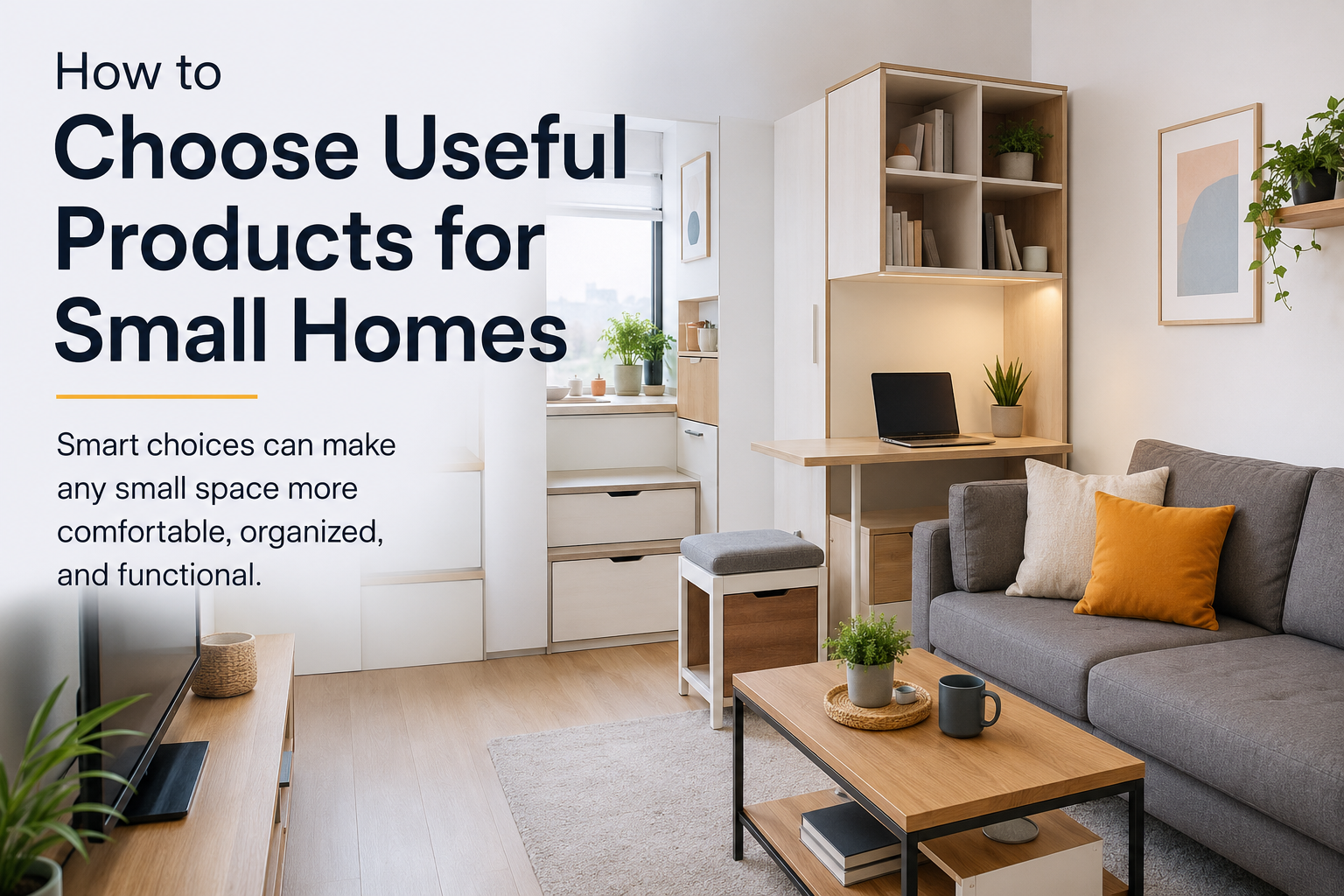
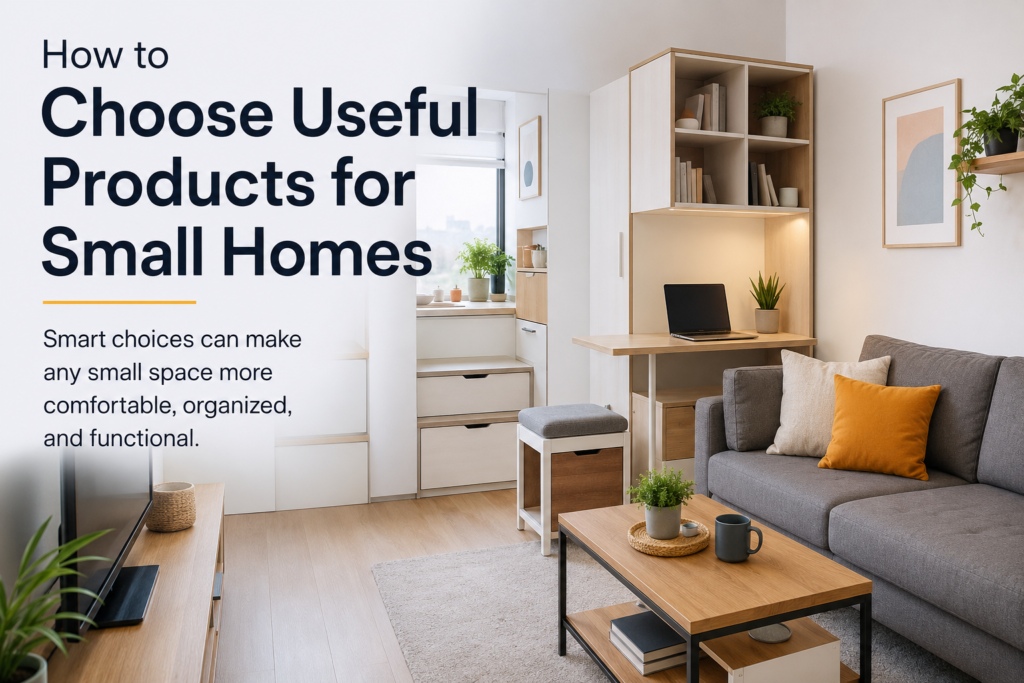
For example, an ottoman with hidden storage can provide seating while also giving me a place to store blankets, books, or other small items. A coffee table with shelves can provide a surface for everyday use while offering additional storage underneath.
A sofa bed can also be useful when the living room needs to serve as a guest room. Similarly, a folding dining table can provide enough space for meals without permanently occupying a large part of the room.
When I look at a product, I ask myself whether it can solve more than one problem. If the answer is yes, I consider it much more valuable for a small home.
Pay Attention to Size
Size is one of the most important things I consider before purchasing anything for a compact home. A product does not have to be extremely small, but it should be appropriate for the room.
For example, a huge sofa may make a small living room feel crowded. A compact sofa with a comfortable design can provide the same basic purpose without dominating the entire room.
The same idea applies to beds, dining tables, bookshelves, desks, and storage cabinets. I try to choose furniture that provides enough functionality without using unnecessary floor space.
I also believe that visual size matters. Furniture with simple designs and open areas underneath can sometimes make a room feel more spacious than heavy furniture that reaches all the way to the floor.
Think Vertically
When floor space is limited, I think it makes sense to look upward. Walls provide valuable storage opportunities that are often ignored.
Wall mounted shelves can hold books, plants, decorations, kitchen supplies, or everyday items. Tall cabinets can provide considerable storage while using relatively little floor space.
In the kitchen, vertical storage can be particularly useful. Shelves, wall organizers, and hanging solutions can keep frequently used items accessible without filling every countertop.
However, I would avoid covering every available wall with storage. A small home can quickly start feeling crowded if every surface is filled. I prefer to create a balance between storage and open space.
Choose Storage Products Carefully
Storage products can be extremely helpful, but I believe buying storage without considering what will actually be stored can create another problem.
Before purchasing storage boxes, baskets, organizers, or cabinets, I first think about the items I need to organize. This helps me choose the right size and type.
Clear containers can be useful when I want to quickly see what is inside. Baskets can be better for items that do not need to be displayed. Drawer organizers can help keep small objects in order.
I also like products that can fit underneath beds, inside cabinets, or on top shelves. These spaces can provide extra storage without taking away much usable living space.
Look for Foldable Products
Foldable products are another option I find useful in small homes. They allow me to create extra space when needed and return the room to its normal condition afterward.
A folding chair can be stored away when guests leave. A folding table can be opened during meals and put away when it is no longer needed. Foldable laundry solutions can also be helpful when there is limited room.
The important thing is to make sure the product is easy to fold and store. If something is difficult to use, I may eventually stop using it even if it seemed like a good idea when I purchased it.
Consider Products That Are Easy to Store
I think storage should be considered at the same time as the product itself. Before buying something, I ask where I will keep it when I am not using it.
For example, a cleaning tool may be useful, but if it has no practical storage location, it can become an obstacle. The same applies to kitchen appliances, exercise equipment, seasonal decorations, and extra household items.
Products that can be folded, stacked, nested, or stored inside other items are often more practical for compact homes.
Avoid Buying Products Just Because They Look Good
A beautiful product can be tempting, especially when shopping online. However, I have learned that appearance alone is not a good reason to buy something.
I prefer to think about how often I will actually use the item. If a product looks impressive but serves little practical purpose, it may not deserve valuable space in my home.
This does not mean that small homes should be boring. I still like attractive furniture and decorations. I simply prefer products that combine appearance with usefulness.
Check Quality Before Price
Price is obviously important, but I do not believe the cheapest product is always the best choice. In some cases, buying a low quality product means replacing it sooner, which can eventually cost more money and create more clutter.
I usually look at materials, construction, customer feedback, warranty information, and expected durability before making a purchase.
At the same time, I do not think every small home product needs to be expensive. There are many affordable products that can work very well. The key is to compare quality and usefulness rather than focusing only on the price tag.
Read Reviews Before Buying Online
When shopping online, I always think reviews are worth checking. Product photographs can sometimes give an unrealistic impression of size, quality, or usefulness.
I pay attention to reviews that mention measurements, durability, ease of assembly, storage capacity, and everyday use. Customer photographs can also provide a better idea of how a product looks in a real home.
I also look for repeated complaints. One negative review may not mean much, but if many customers mention the same problem, I take it seriously.
Choose Simple Designs
I personally prefer simple products for small rooms. Complicated designs can make an already limited space feel visually busy.
Simple furniture with clean shapes can help a room feel organized. Neutral colors can also make it easier to combine different products without creating a cluttered appearance.
This does not mean everything needs to look plain. A colorful cushion, small plant, artwork, or decorative item can add personality without taking much space.
Think About Daily Convenience
A useful product should make everyday life easier. I believe this is one of the most important factors when choosing items for a small home.
For example, a storage cabinet that is difficult to open is not very useful. A kitchen organizer that requires moving several things before reaching one item can become frustrating. A table that blocks a walking path may technically fit but can make daily life uncomfortable.
I try to imagine using the product every day rather than simply looking at it in a shop or online listing. This helps me understand whether it will actually improve my routine.
Consider Your Lifestyle
Every home is different because every person’s lifestyle is different. A product that is perfect for one person may be unnecessary for another.
If I work from home, I may value a compact desk. If I cook frequently, I may need smart kitchen storage. If I often have guests, flexible seating may be more important.
This is why I believe there is no universal list of perfect products for small homes. The best choices are the ones that match the way I actually live.
Avoid Unnecessary Multiples
Small homes can quickly become cluttered when we own several versions of the same thing. I try to check what I already have before buying another similar product.
For example, I do not need multiple kitchen gadgets that perform almost identical tasks. I also do not need several storage containers if the ones I already own are enough.
Before purchasing something new, I ask myself whether it fills a genuine gap or simply adds another item to my collection.
Make Every Purchase Intentional
For me, the best approach to shopping for a small home is to make every purchase intentional. Instead of asking whether something is attractive or affordable, I ask whether it is useful, practical, durable, appropriately sized, and easy to store.
I also try to think about the long term. A product should ideally remain useful even if my needs change slightly.
Small homes can be wonderful places to live when the available space is used thoughtfully. The goal is not to fill every corner. In my opinion, the goal is to create a home where everything has a purpose and where there is still enough open space to feel comfortable.
Final Thoughts
Choosing useful products for a small home does not have to be difficult. I believe it mainly comes down to understanding my space and being more selective about what I bring into it.
I look for products that save space, provide multiple functions, offer practical storage, and match my daily routine. I measure before buying, read reviews when shopping online, consider quality, and avoid products that create unnecessary clutter.
A small home does not need to feel limited. With thoughtful choices, even a compact space can feel comfortable, organized, attractive, and practical. For me, the best product is not necessarily the biggest, cheapest, or most stylish one. It is the product that earns its place in my home by making everyday life a little easier.