
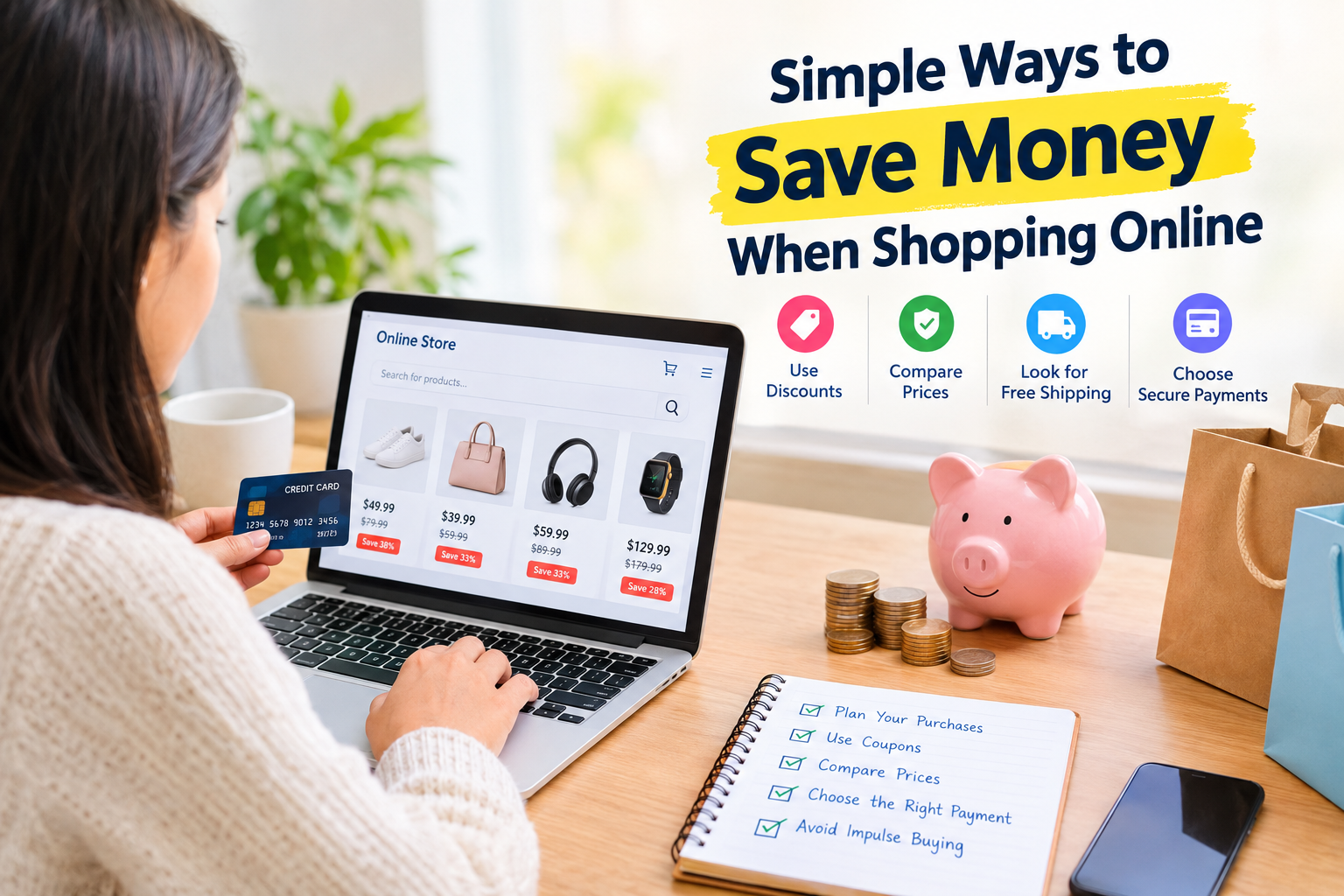
Online shopping has become a normal part of everyday life. I personally find it very convenient because I can compare products, check prices, read reviews, and place an order without leaving home. However, I have also learned that online shopping can make it very easy to spend more money than planned.
With so many discounts, special offers, free shipping deals, and attractive products available, it is easy to add things to the cart without thinking carefully. That is why I believe learning how to save money when shopping online is just as important as finding the products we need.
The good thing is that saving money does not always require complicated strategies. A few simple shopping habits can help reduce unnecessary spending while still allowing you to enjoy the convenience of online shopping. In this article, I will share some simple ways to save money when shopping online based on practical ideas that anyone can use.
Make a Shopping List Before You Start
One of the easiest ways to save money online is to decide what you actually need before opening a shopping website. I have found that browsing an online store without a clear purpose can quickly lead to impulse purchases.
Before shopping, I recommend making a simple list. Write down the products you need and try to stay focused on those items.
For example, if you need a pair of shoes, decide what type of shoes you need, what size you require, and approximately how much you want to spend. This makes it easier to ignore unrelated products that appear while browsing.
A shopping list gives you a clear purpose and can help prevent unnecessary purchases.
Compare Prices Before Buying
Price comparison is one of the most useful online shopping habits. The same product may be available from several sellers at different prices.
I always recommend checking more than one store before making an important purchase. Sometimes a product that looks like a great deal on one website can be found at a lower price somewhere else.
When comparing prices, do not look only at the product price. Check shipping costs, taxes, delivery charges, and other fees as well. A product with a lower listed price may actually cost more after additional charges are included.
Taking a few extra minutes to compare prices can make a noticeable difference over time.
Look for Online Coupons
Coupons and discount codes can help reduce the final cost of an online order. Many shopping websites provide promotional codes for new customers, seasonal sales, special events, or specific product categories.
Before completing an order, I usually recommend checking whether the store has an available coupon or promotional offer.
However, it is important not to buy something simply because a coupon is available. Saving money means spending less on something you actually need, not spending money just to use a discount.
A discount is useful when it reduces the price of a planned purchase.
Take Advantage of Free Shipping
Shipping costs can sometimes make an inexpensive online purchase much more expensive. That is why free shipping is another important factor to consider when shopping online.
Some stores offer free shipping when customers spend a certain amount. Others provide free delivery during special promotions.
I recommend checking the shipping cost before placing an order. If free shipping requires you to spend slightly more, compare the additional amount with the cost of delivery. Do not purchase unnecessary products simply to reach a free shipping limit.
Sometimes waiting for a free shipping promotion can be a better option.
Avoid Impulse Shopping
Impulse shopping is one of the biggest reasons people spend more than they planned. Online stores are designed to make browsing easy, and product recommendations can encourage customers to keep shopping.
If I see something interesting online, I prefer to give myself some time before purchasing it. For inexpensive items, waiting a few hours may be enough. For expensive products, I may wait a day or longer.
This simple habit gives me time to decide whether I really need the product.
If I still want the item after waiting, I can research it and compare prices before buying. If I forget about it, I know it probably was not necessary.
Use a Budget for Online Shopping
Having a monthly shopping budget can make online spending much easier to control. You do not need a complicated financial system. A simple amount that you are comfortable spending can be enough.
For example, you might decide that you will spend a certain amount on clothing, household products, electronics, or other non essential items each month.
Once you reach your planned limit, avoid making additional purchases unless something is genuinely necessary.
I believe a shopping budget is especially useful because small purchases can add up quickly. An inexpensive item may not seem important by itself, but several small orders can become a large expense.
Check Reviews Before Buying
Saving money is not only about finding the lowest price. It is also about avoiding poor quality products.
Before purchasing something online, I recommend reading customer reviews and checking product ratings. Reviews can provide useful information about quality, size, durability, performance, and whether the product matches its description.
Buying a cheap product that breaks quickly is not really saving money. In some cases, spending a little more on a reliable product can provide better value in the long term.
Look for detailed reviews instead of relying only on star ratings.
Consider the Total Cost
Sometimes online stores make a product look cheaper by displaying a low starting price. However, the final cost can be higher after shipping, taxes, service charges, or other fees.
That is why I always recommend checking the complete order total before paying.
For example, a product might be advertised at a low price, but expensive delivery could make the final cost much higher. Another seller might offer the same product at a slightly higher price with free shipping.
The final amount you pay is what really matters.
Use Wish Lists Instead of Buying Immediately
Wish lists can be helpful when you find products that interest you but do not need immediately.
Instead of adding everything to your shopping cart and purchasing it, you can save products to a wish list. Later, you can check whether the price has changed or whether you still want the item.
This is a simple way to create a cooling off period between seeing a product and buying it.
I find this especially useful during large online sales because there can be hundreds of attractive offers. Saving products first gives me more time to decide which ones are actually worth buying.
Shop During Major Sales Carefully
Sales can provide genuine opportunities to save money, but they can also encourage unnecessary spending.
Before a major sale, I recommend making a list of products you already planned to purchase. Then compare their prices during the sale.
Do not assume that every product marked as a sale item is automatically a good deal. Compare the current price with prices from other sellers and consider the product’s quality.
A sale is useful when it helps you purchase something you already need at a lower price.
Check Return and Refund Policies
A return policy may not seem like a money saving tool, but it can protect you from wasting money on unsuitable products.
Before buying clothing, electronics, furniture, or other expensive items, check the store’s return and refund rules.
Make sure you understand how long you have to return the product and whether return shipping costs are involved.
Knowing the return policy can help you make safer purchasing decisions and reduce the risk of being stuck with something you cannot use.
Do Not Save Payment Details Everywhere
Another simple habit I recommend is being careful about saving payment information on shopping websites.
When payment details are saved, completing a purchase can become extremely easy. This can encourage quick purchases because there are fewer steps between seeing a product and paying for it.
For better spending control, some shoppers may prefer entering payment details manually when making purchases. More importantly, always shop through reputable websites and use secure payment methods.
Saving money is valuable, but protecting your financial information is equally important.
Use Cashback and Reward Programs Wisely
Some online stores and payment services offer cashback or reward programs. These can provide additional savings when used responsibly.
However, cashback should never be a reason to buy something you do not need.
For example, spending extra money just to receive a small cashback reward does not really save money. The best approach is to use cashback when you were already planning to make the purchase.
Over time, legitimate rewards can reduce the effective cost of regular purchases.
Avoid Buying Just Because Something Is Cheap
One lesson I have learned about shopping is that a cheap product is not always a good purchase.
If you spend money on something you do not need, you have still spent money. A low price does not automatically make an item valuable.
Before buying, I recommend asking yourself a few simple questions.
Do I actually need this product?
Will I use it regularly?
Is the quality good enough?
Can I find it at a better price?
Would I still buy it if there were no discount?
These questions can help reduce unnecessary spending.
Keep Track of Your Online Purchases
Finally, keeping track of online purchases can help you understand where your money is going.
You can use a simple notebook, spreadsheet, budgeting application, or another method that works for you. Record what you purchase and how much you spend.
After a month, review your spending. You may notice patterns that were not obvious before.
For example, you might discover that you spend too much on clothing, food delivery, accessories, or small household items. Once you understand your spending habits, it becomes easier to make better decisions.
Final Thoughts
Learning how to save money when shopping online does not mean avoiding online shopping completely. In my opinion, it is about becoming a smarter and more careful shopper.
Simple habits such as comparing prices, using coupons, checking shipping costs, creating a budget, reading reviews, avoiding impulse purchases, and checking return policies can make online shopping more affordable.
The most important thing is to focus on value rather than simply looking for the lowest price. A good purchase should meet your needs, fit your budget, and provide reasonable quality.
Online shopping can be convenient and affordable when you approach it with a plan. By making a few small changes to the way you shop, you can reduce unnecessary spending and keep more money in your pocket. Over time, these simple shopping habits can make a meaningful difference to your monthly budget.