Choosing the right product can be difficult when there are so many options available. Whether I am buying electronics, clothing, kitchen items, furniture, sports equipment, or everyday products, I always try to think about my budget before making a final decision. A product may look attractive because of its features or appearance, but that does not always mean it is the right choice for me.
In my experience, the best product is not necessarily the most expensive one. It is the product that gives me the features, quality, reliability, and usefulness I actually need while staying within my budget. Learning how to choose the right product for your budget can help you avoid unnecessary spending and make smarter shopping decisions.
Start With a Clear Budget
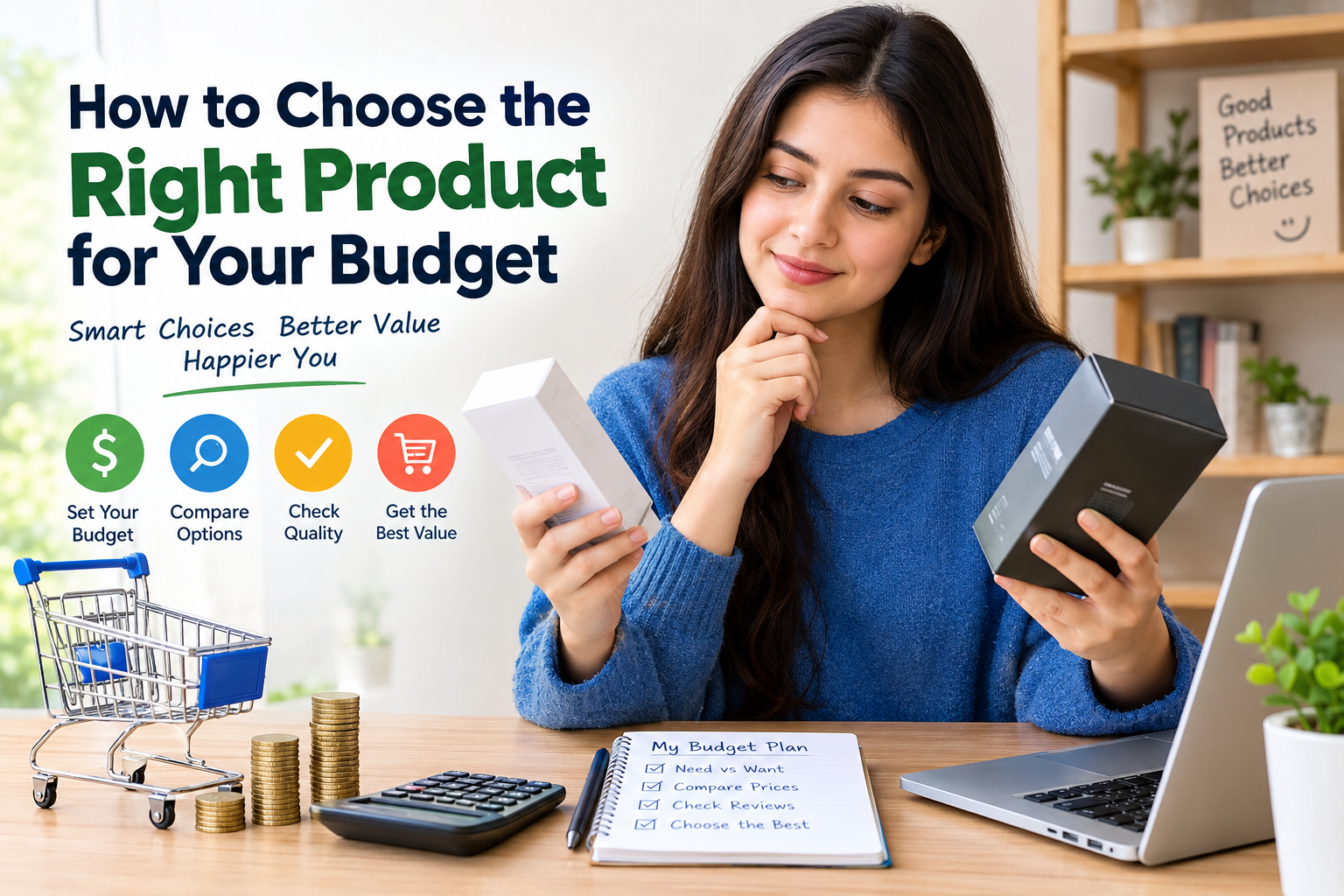
The first thing I do before shopping is decide how much I can comfortably spend. Having a clear budget makes the buying process much easier because it immediately removes products that are too expensive.
For example, if I have a budget of $100 for a new product, I do not start by looking at products that cost $300. Doing this can make cheaper options seem less attractive even when they are perfectly suitable for my needs.
I also like to leave a small amount of extra money in my budget for additional costs. Sometimes a product may require accessories, delivery charges, maintenance, or other expenses. Thinking about the total cost helps me avoid surprises later.
Understand What You Actually Need
Before comparing products, I ask myself why I need the product. This simple question can prevent a lot of unnecessary spending.
Sometimes shoppers buy products because they have impressive features rather than because those features are useful. I believe it is better to focus on practical needs.
For example, if I need a laptop mainly for browsing the internet, writing documents, watching videos, and basic work, I may not need the most powerful model available. Spending extra money on advanced features that I will rarely use may not provide good value.
Understanding your needs helps you separate important features from features that simply look impressive.
Compare Products Within Your Price Range
Once I know my budget and requirements, I start comparing products in a similar price range. I find this much more useful than comparing the cheapest product with the most expensive product.
I usually make a small list of products that fit my budget. Then I compare their important features, quality, reviews, warranty, and overall value.
Price should be an important factor, but it should not be the only factor. A slightly more expensive product may offer better quality and last much longer. In that situation, paying a little more could actually save money over time.
Focus on Value Instead of Price
One of the biggest lessons I have learned while shopping is that low price does not always mean good value.
A cheap product can become expensive if it needs to be replaced quickly. On the other hand, a reasonably priced product that lasts for several years may provide much better value.
When I compare products, I think about what I am getting for my money. I consider durability, performance, materials, features, warranty, and expected lifespan.
This approach helps me choose a product based on value rather than simply choosing the lowest price.
Check Product Quality
Quality is another important factor when choosing the right product for your budget. I always try to understand what a product is made from and how well it is designed.
Depending on the product, quality can mean different things. For clothing, it could mean better fabric and stitching. For electronics, it could mean reliable performance and good construction. For furniture, it could mean strong materials and durable joints.
A product does not have to be premium to be good quality. There are many affordable products that offer excellent quality when you take the time to compare them.
Read Customer Reviews
Customer reviews can be extremely useful when I am unsure about a product. Reviews can show how a product performs after real people have used it.
I do not rely on one review. Instead, I try to read several reviews and look for common opinions.
If many customers mention the same problem, I take that seriously. If most customers are satisfied with the quality and performance, that gives me more confidence.
I also pay attention to reviews that explain how the product was used. A product may be excellent for one purpose but unsuitable for another.
Compare the Important Features
It is easy to become distracted by long lists of product features. I prefer to identify the features that actually matter to me.
For example, if I am buying a phone, I may focus on battery life, camera quality, storage, performance, display quality, and software support. I do not necessarily need every advanced feature offered by expensive models.
The same idea applies to almost every category. I believe the best approach is to identify three or four important features and compare products based on them.
This makes the buying decision simpler and prevents me from paying for features I do not need.
Consider Long Term Costs
The purchase price is only part of the cost of owning a product. I always try to think about possible long term expenses.
Some products require replacement parts, batteries, accessories, subscriptions, maintenance, or special supplies. These expenses can add up over time.
For example, two products may have similar prices, but one may be cheaper to maintain. In that situation, the second product could be the better choice for my budget.
Thinking beyond the initial purchase helps me make a more realistic decision.
Do Not Ignore the Warranty
A warranty can add significant value to a product. When I am comparing products with similar prices, I often look at the warranty and customer support offered by the manufacturer or seller.
A good warranty can provide additional confidence because unexpected problems may be covered.
I also check what the warranty actually includes. A longer warranty is not automatically better if it has many limitations.
Understanding the warranty terms can help me avoid problems after purchasing the product.
Avoid Buying Only Because of Discounts
Discounts can be helpful, but I do not believe every discounted product is a good deal.
A product is not automatically worth buying simply because its price has been reduced. If I do not need it or if the quality is poor, I am still spending money unnecessarily.
Before purchasing a discounted product, I ask myself whether I would buy it at its current price if there were no discount label.
This simple habit can help control impulse spending.
Compare Prices From Different Sellers
When I find a product I like, I usually compare prices from different sellers. The same product can sometimes have different prices depending on the store.
I also look beyond the displayed price. Shipping costs, taxes, return policies, and warranty coverage can affect the final cost.
Sometimes the cheapest seller is not actually the cheapest option after adding delivery and other charges.
Comparing the complete purchase cost gives me a clearer picture of which option provides the best value.
Think About How Often You Will Use It
Another question I find useful is how often I will use the product.
If I expect to use something every day, spending a little more on comfort, quality, and durability may make sense. If I will only use it occasionally, an affordable option may be more suitable.
For example, someone who exercises every day may benefit from investing in good quality sports equipment. Someone who exercises only once in a while may not need the most expensive equipment available.
The right choice depends on how the product fits into your lifestyle.
Give Yourself Time Before Buying
I have found that waiting before making a purchase can improve shopping decisions. If something is not urgently needed, I give myself some time to think.
During this time, I can compare other products, read reviews, check prices, and decide whether I really need the item.
Waiting also reduces emotional buying. Sometimes I realize that I wanted something simply because it looked attractive or because I saw an advertisement.
A little patience can save money.
Know When Spending More Makes Sense
Sticking to a budget does not always mean choosing the cheapest option. Sometimes spending a little more can be a smarter financial decision.
If a product is more durable, easier to use, safer, or significantly better suited to my needs, I may consider increasing my budget.
The important thing is to make that decision carefully. I do not increase my budget simply because a more expensive product has extra features. I increase it when the additional cost provides meaningful benefits.
Make a Simple Comparison List
One of my favorite ways to simplify shopping is to create a small comparison list. I write down the product name, price, important features, quality, reviews, warranty, and expected lifespan.
This lets me see the differences clearly instead of trying to remember everything.
A simple comparison list is especially useful when several products look almost identical. It can reveal which product offers the best combination of price and quality.
Final Thoughts
Learning how to choose the right product for your budget is mainly about making thoughtful decisions. In my opinion, successful shopping is not about finding the cheapest product or buying the most expensive one. It is about finding the product that provides the right balance between price, quality, features, and usefulness.
I always recommend starting with a realistic budget and then identifying what you actually need. After that, compare products, read customer reviews, check quality, consider long term costs, and look at warranty options. Most importantly, avoid buying something simply because it is discounted or popular.
When you take your time and focus on value, you can make better purchasing decisions without putting unnecessary pressure on your finances. A smart shopping decision should leave you feeling that you spent your money wisely. That is what choosing the right product for your budget is really about.