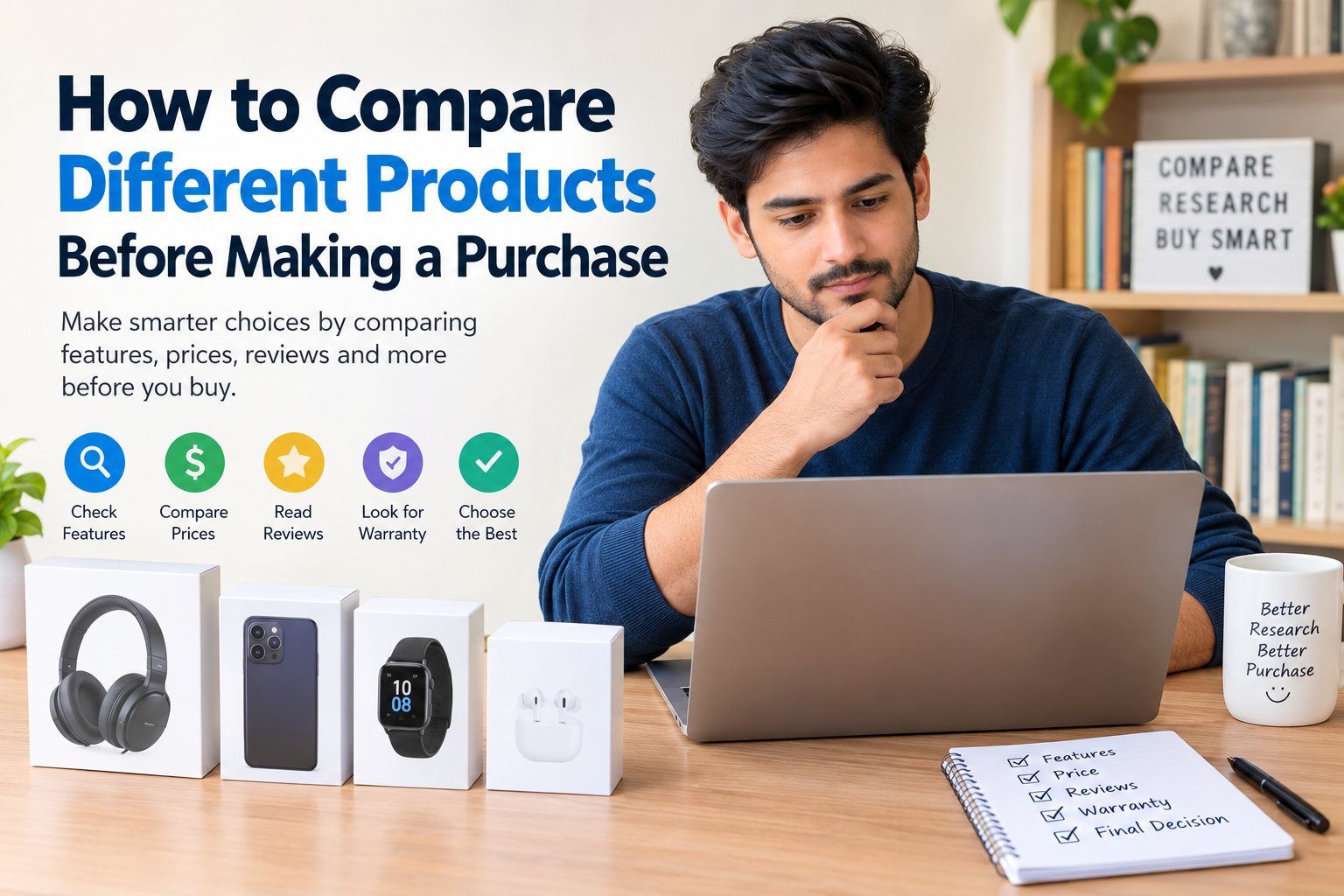
When I am planning to buy something, I try not to make a decision just because a product looks attractive or has a low price. There are usually many similar products available, and each one can have different features, quality, reviews, and prices. This is why I believe learning how to compare different products before making a purchase is one of the best ways to become a smarter shopper.
Product comparison does not have to be complicated. You do not need to spend hours researching every small detail. You simply need to know what matters to you, compare the important features, check the real cost, and understand what other customers think about the product.
In this guide, I will explain how I compare different products before buying them and how you can use the same simple process to make better purchasing decisions.
Start by Understanding What You Need
Before comparing products, I think the first thing to do is understand exactly what you need. Many people start by looking at products without deciding what they actually want. This can make shopping confusing because every product seems to have something interesting.
For example, if I need a new pair of headphones, I first think about how I will use them. Do I need them for music, online classes, phone calls, gaming, or travel? Once I understand my main purpose, it becomes easier to decide which features are important.
Make a simple list of your requirements before you start comparing. You can divide them into essential features and optional features. Essential features are things you cannot compromise on, while optional features are nice to have but not necessary.
This simple step can save both time and money.
Compare the Main Features
The next step is to compare the main features of each product. I do not recommend comparing every specification because some specifications may not have any real effect on your daily experience.
Instead, focus on features that directly affect how you will use the product.
For example, when comparing smartphones, you might look at battery life, storage, camera quality, display, performance, software support, and charging speed. When comparing laptops, you might focus on processor performance, RAM, storage, screen quality, battery life, and portability.
Try to create a small comparison list. Write down the most important features and check how each product performs in those areas.
This makes the decision much easier because you can see the differences instead of trying to remember them.
Check the Product Quality
Price is important, but I believe product quality should always be considered before making a purchase. A cheap product may look attractive at first, but if it stops working quickly, you may end up spending more money replacing it.
When comparing products, look at the materials, construction, reliability, and expected lifespan. If you are buying something that you plan to use regularly, durability becomes even more important.
For physical products, pay attention to the quality of the materials and how the product is designed. For electronics, consider build quality, software support, battery performance, and manufacturer reputation.
A product that costs slightly more but lasts significantly longer can sometimes provide better value than a cheaper alternative.
Compare Prices Carefully
One of the easiest mistakes to make is comparing only the advertised price. I always try to look at the complete cost before deciding which product is actually cheaper.
The final price may include delivery charges, accessories, taxes, installation costs, or other expenses. Sometimes a product looks inexpensive until you realize that important accessories are sold separately.
For example, if two products have similar prices but one includes everything you need while the other requires additional purchases, the first product may actually offer better value.
I recommend writing down the total expected cost of each option. This gives you a more realistic comparison.
Read Customer Reviews
Customer reviews can be extremely useful when you are trying to compare different products. They can tell you about experiences that may not be obvious from the product description.
When I read reviews, I do not focus only on the overall rating. I look at what people are actually saying about the product.
Pay attention to repeated comments. If many customers mention the same problem, it may be something worth considering. Similarly, if many buyers consistently praise the same feature, that can give you more confidence in the product.
However, I also avoid trusting every review blindly. Some reviews may be too emotional, too short, or based on unrealistic expectations.
Look for detailed reviews from people who have actually used the product for some time. These reviews are often more helpful than simple ratings.
Check the Warranty
Warranty is another important factor that I believe shoppers should never ignore. A warranty can provide valuable protection if the product develops a problem after purchase.
When comparing products, check how long the warranty lasts and what it covers. A longer warranty can sometimes indicate that the manufacturer has greater confidence in its product.
Also check the warranty conditions. Some warranties cover manufacturing defects but do not cover accidental damage. Knowing these details before buying can prevent unpleasant surprises later.
For expensive products, warranty and after sales support can be just as important as the initial price.
Consider the Brand Reputation
Brand reputation can help when you are comparing similar products. A well known brand is not automatically better, but its history can provide useful information.
I usually look at how a company has performed with previous products. Does it provide good customer service? Does it offer software updates when needed? Are replacement parts easy to find? Do customers generally have positive experiences?
A brand with a good reputation may provide better support if something goes wrong.
At the same time, I do not think shoppers should reject lesser known brands automatically. Some smaller brands offer excellent products at competitive prices. The important thing is to research the specific product instead of judging only by the brand name.
Compare the Product’s Long Term Value
When I compare products, I try to think beyond the first day of ownership. A product should not only be good when you purchase it. It should continue to provide value over time.
Think about maintenance, replacement parts, accessories, energy consumption, software updates, and expected lifespan.
For example, an inexpensive printer might have a low purchase price but expensive ink. Another printer may cost more initially but use cheaper supplies. In that situation, the second option could be more economical over several years.
This is why I believe long term value is often more important than the cheapest initial price.
Look at the Return Policy
Before purchasing a product, especially online, check the return policy. This is something many shoppers forget until there is a problem.
A clear return policy gives you more flexibility if the product arrives damaged, does not match its description, or simply does not meet your expectations.
Check how many days you have to return the product and whether there are any conditions. Some stores require the product to be unused, while others allow returns after testing the product.
Also check whether return shipping costs are your responsibility.
Knowing the return policy before buying can make the shopping experience much safer.
Do Not Be Influenced by Appearance Alone
Good looking products can attract attention, but appearance should not be the main reason for buying something.
I have found that it is better to compare practical factors such as performance, quality, comfort, durability, and usefulness.
A product may look modern and impressive but fail to provide the features you actually need. Another product may look simple but perform much better.
Try to separate appearance from performance. If the product looks good and performs well, that is great. But performance should usually come first.
Compare Products From Different Stores
Another useful step is checking different sellers. The same product can sometimes have different prices depending on where you buy it.
Compare the price, shipping cost, seller reputation, warranty, return policy, and delivery time.
Do not automatically choose the cheapest seller. A slightly higher price from a reliable seller may be worth paying if you receive better customer service and stronger purchase protection.
I also recommend checking whether the product is genuine, especially when shopping online.
Create a Simple Comparison Table
One of the easiest ways to compare products is to create a basic comparison table.
You can include columns for price, features, quality, reviews, warranty, return policy, and long term value. Then give each product a simple score.
For example, you could rate each category from one to five. This does not need to be a complicated mathematical system. The purpose is simply to organize your thoughts.
Once everything is written down, you may notice that the product you initially preferred is not actually the best option for your needs.
Avoid Buying Just Because of a Discount
Discounts can be useful, but they can also encourage unnecessary purchases. A product being 30 percent cheaper does not automatically mean it is a good deal.
Before buying a discounted product, ask yourself whether you actually need it. Then compare its discounted price with similar products.
Sometimes sellers advertise large discounts based on an earlier price that does not represent the normal market price. Looking at several stores can help you understand whether the discount is genuinely valuable.
A real bargain is a product that provides good quality and useful features at a reasonable total cost.
Give Yourself Time to Decide
For expensive purchases, I prefer not to make a decision immediately. Taking some time gives you the opportunity to research alternatives and think about whether the purchase is necessary.
If I am unsure between two products, I usually return to my original requirements and ask which one solves my problem better.
This helps prevent emotional buying.
For small everyday purchases, you may not need extensive research. But for expensive electronics, appliances, furniture, or other major purchases, spending extra time comparing options can save you money later.
Final Thoughts
Learning how to compare different products before making a purchase can make shopping much easier and more practical. Instead of choosing the first product you see, you can make a decision based on your actual needs.
In my view, the best product is not always the most expensive one or the one with the most features. It is the product that gives you the right combination of quality, useful features, price, reliability, warranty, and long term value.
Start by understanding what you need. Compare important features, check the total price, read customer reviews, research the brand, look at the warranty and return policy, and consider how the product will perform over time.
Most importantly, do not allow advertisements, discounts, or attractive designs to make the decision for you. Take a little time to compare your options and choose based on value rather than excitement.
A few minutes of careful research before making a purchase can help you avoid disappointment and make your money go further. With a simple product comparison process, you can become a more confident and informed shopper every time you buy something.