Introduction
Online shopping has made it easier than ever to buy clothes from the comfort of home. With just a few clicks, we can explore different styles, compare prices, and order clothing from local and international stores. However, one common problem many shoppers face is choosing the right clothing size. Sometimes, the clothes look perfect in pictures but do not fit properly when they arrive.
In my opinion, choosing the right clothing size when shopping online requires more attention than simply selecting small, medium, or large. Different brands follow different sizing standards, and the same size can fit differently depending on the design, fabric, and style of a garment. That is why I believe checking measurements, reading customer reviews, and understanding a store’s size chart are essential steps before placing an order.
In this article, I will explain how to choose the right clothing size when shopping online, avoid common sizing mistakes, and make smarter purchasing decisions.
1. Always Check the Clothing Size Chart
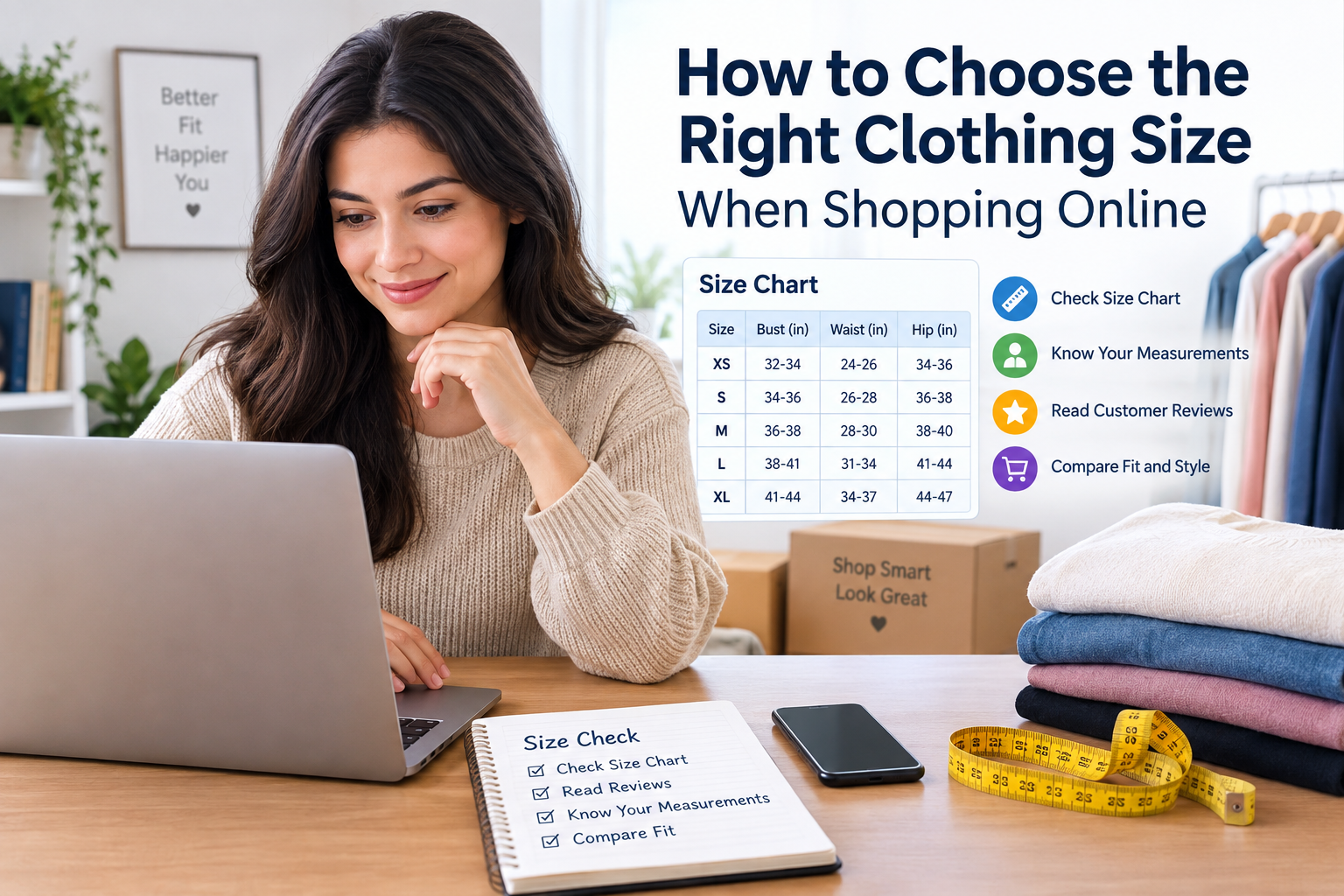
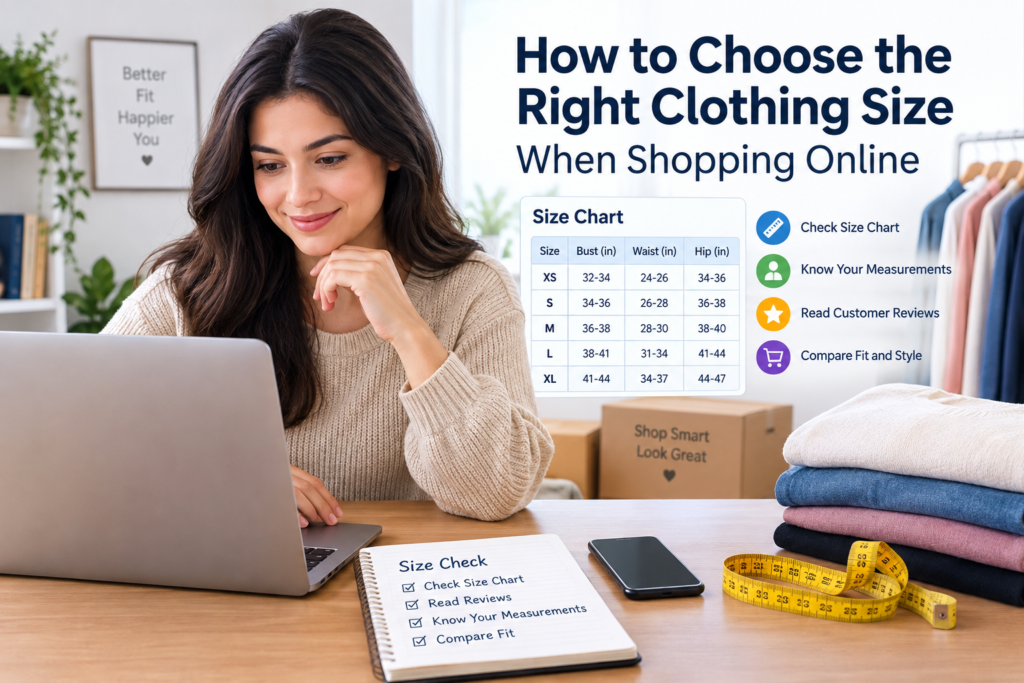
The first thing I recommend when shopping for clothes online is checking the size chart provided by the seller. Many people choose their usual size without looking at the measurements, which can lead to disappointment.
A size chart usually includes measurements such as chest, bust, waist, hips, shoulders, and inseam. These measurements help shoppers understand how a particular garment is designed to fit.
For example, one brand’s medium shirt might have a chest measurement of 38 inches, while another brand’s medium shirt might measure 40 inches. Although both shirts carry the same size label, their actual fit can be different.
I believe shoppers should always use the size chart for the specific product they want to purchase rather than relying on a general sizing guide. If a store provides separate charts for shirts, trousers, dresses, and jackets, use the chart that matches your selected item.
This simple habit can reduce sizing mistakes and make online clothing shopping much easier.
2. Take Your Body Measurements Correctly
Another important step is knowing your actual body measurements. Many shoppers remember their usual clothing size but do not know their chest, waist, or hip measurements. Having these details available can make choosing the correct size much easier.
You can measure yourself at home with a flexible measuring tape. It is helpful to wear lightweight clothing or take measurements over your usual thin undergarments.
Here are some important measurements to know:
Chest or bust: Wrap the measuring tape around the fullest part of your chest or bust while keeping it level.
Waist: Measure around your natural waist, which is generally the narrower area between your ribs and hips.
Hips: Measure around the fullest part of your hips while standing naturally.
Shoulders: Measure across the back from one shoulder edge to the other when the garment’s shoulder fit is important.
Inseam: Measure from the upper inner thigh down to the point where you want your trousers to end, or measure a well fitting pair of trousers.
Do not pull the measuring tape too tightly because this can produce inaccurate results. It should sit comfortably against your body.
I suggest writing down your measurements and updating them when necessary. This makes it easier to compare your body measurements with clothing size charts whenever you shop online.
3. Understand That Sizes Differ Between Brands
One of the biggest mistakes in online clothing shopping is assuming that every brand uses the same sizing system. In reality, clothing sizes can vary considerably between manufacturers, retailers, and countries.
For example, a medium size from one fashion brand may fit comfortably, while a medium from another brand may feel too tight around the shoulders or waist.
International shopping can make this even more confusing because sizing systems differ between countries. A US size, UK size, and European size may not correspond directly to one another.
My advice is to focus on measurements rather than the size label alone. If you are purchasing clothing from an unfamiliar brand, check its specific size guide and compare the measurements with clothes that already fit you well.
It is also worth checking whether the seller provides separate sizing information for regular, slim, relaxed, or oversized fits.
Understanding these differences can help you avoid unnecessary returns and select clothes that suit your body and personal style.
4. Read Customer Reviews Before Buying
Customer reviews are another useful source of information when choosing the right clothing size online. Product descriptions and size charts provide measurements, but reviews can explain how the clothes fit in real life.
Some customers mention that a shirt runs smaller than expected, while others report that a dress has a loose fit or trousers have longer legs than usual.
I recommend looking for reviews that discuss sizing, fabric quality, comfort, and overall fit. If several customers independently mention that an item runs small, this may be a useful reason to examine the size chart more carefully.
Customer photographs can also help you understand the garment’s appearance, length, and general fit. However, remember that people have different body shapes and preferences, so another customer’s experience may not match yours exactly.
Do not rely on a single review. Instead, look for repeated comments from several buyers.
In my view, combining customer feedback with your own measurements is one of the most practical ways to make an informed clothing purchase.
5. Choose the Right Fit for Your Body Shape
Choosing the correct clothing size is not only about measurements. It is also about how you want your clothes to fit.
Some people prefer fitted shirts and slim trousers, while others feel more comfortable wearing relaxed clothing. Neither preference is wrong. The important thing is selecting a size and style that provide comfort and suit the occasion.
For example, a fitted shirt should generally sit comfortably around the shoulders and chest without excessive pulling. A relaxed T shirt should provide enough room for movement without looking unnecessarily oversized.
When buying jeans, consider the waist, hips, thigh area, and leg length. For dresses, pay attention to the bust, waist, hips, and overall length.
I believe shoppers should consider their usual style before ordering. If you prefer loose clothing, a regular fit might feel too restrictive even when the measurements technically match your body.
Always check whether the product is described as slim fit, regular fit, relaxed fit, or oversized. These terms can help you understand the intended appearance of the garment.
6. Check the Fabric and Material
Fabric plays an important role in how clothing fits and feels. Two garments with similar measurements can fit differently because their materials have different levels of stretch, thickness, and flexibility.
For example, cotton clothing with little or no elastane may have less stretch than a garment made with a stretchy cotton blend. Denim with added stretch may feel more flexible than traditional rigid denim.
Before ordering, read the product description to learn about the fabric composition. Look for information about stretch, thickness, lining, and care instructions.
If you are buying a fitted garment made from a nonstretch material, accurate measurements are especially important. For stretchy clothing, you should still follow the size chart because excessive tightness can affect comfort and appearance.
Another factor worth considering is shrinkage. Some fabrics may shrink if washed or dried incorrectly. Following the manufacturer’s care instructions can help maintain the original fit.
My recommendation is to consider both the measurements and the fabric rather than choosing a size based on appearance alone.
7. Compare the Measurements With Clothes You Already Own
One easy way to choose the right clothing size when shopping online is to compare the product measurements with a garment that already fits you comfortably.
For this method, take a similar item from your wardrobe and lay it flat on a clean surface. Measure the relevant areas, such as the chest width, shoulder width, waist, or inseam.
Then compare those measurements with the product details provided by the online store.
Remember that sellers may list garment measurements or body measurements, and these are not necessarily the same. A garment’s chest width measured flat is usually half its circumference, so check the seller’s measurement instructions before making comparisons.
This method is especially useful when buying familiar items such as T shirts, hoodies, jeans, and casual trousers.
I find this approach practical because it gives shoppers a real reference point. Instead of guessing what a medium or large might look like, you can compare the new item with clothing you already enjoy wearing.
8. Understand Different International Sizing Systems
If you frequently order clothing from international websites, learning about different sizing systems can help you shop more confidently.
Some retailers use US sizing, while others follow UK, European, or Asian sizing conventions. These systems may differ, and conversions are not always consistent across brands or garment types.
For this reason, avoid assuming that your usual size in one country will automatically work in another.
Instead, check the seller’s international size chart and use the measurements listed for the specific garment. If a website offers a size conversion tool, treat it as a starting point rather than a guarantee.
Pay particular attention to clothing purchased from unfamiliar international sellers. Their sizing recommendations may be based on different standards or intended fits.
I recommend saving your measurements in both inches and centimeters if you shop across different websites. This small step can make comparing international size charts much simpler.
9. Check the Return and Exchange Policy
Even after checking measurements and reviews, it is possible to receive clothing that does not fit as expected. That is why I believe checking the return and exchange policy is an important part of online shopping.
Before placing an order, find out whether the seller accepts returns for incorrect sizing. Check the return period, exchange conditions, shipping charges, and any restrictions on particular products.
Some retailers provide free exchanges, while others require customers to pay return shipping costs. Certain discounted or customized products may also have different return conditions.
Understanding these rules before purchasing can prevent unnecessary stress later.
It is also wise to check whether the seller offers customer support for sizing questions. If you are uncertain about two sizes, asking the retailer for clarification may help you make a better decision.
I suggest keeping the packaging and tags intact until you have checked the garment’s fit, especially if the return policy requires items to remain in their original condition.
10. Be Careful When Choosing Between Two Sizes
Sometimes your measurements fall between two sizes on a chart. In this situation, the best choice depends on the garment’s design, fabric, and intended fit.
For example, if you are buying a fitted shirt made from nonstretch fabric, you may need to consider whether the larger size provides more comfortable movement. For stretchy leggings, the manufacturer’s sizing guidance may help you decide which option will provide the intended fit.
Do not automatically choose the larger size or the smaller size without considering the product details.
Look at the garment’s cut, fabric composition, customer reviews, and measurement recommendations. If the seller provides advice for customers between sizes, follow that guidance where appropriate.
It is also important to consider your comfort preferences. Someone who enjoys a relaxed fit may make a different choice from someone who prefers close fitting clothing.
My advice is to make the decision based on the actual garment rather than a general rule that applies to every type of clothing.
11. Avoid Common Online Clothing Size Mistakes
Many sizing problems happen because shoppers rush through the purchasing process. A few simple habits can help prevent these mistakes.
First, avoid choosing a size based only on the model shown in the product photographs. Models have different body proportions, and the same garment may look different on you.
Second, do not assume that a higher price guarantees better sizing accuracy. Always check the product information, regardless of the brand’s reputation.
Third, avoid ignoring product reviews that repeatedly mention fitting problems. These comments may reveal details that are not obvious from the photographs.
Fourth, do not forget to check clothing length. A shirt may fit well around the chest but be too short, while trousers may fit the waist but have unsuitable leg lengths.
Finally, avoid ordering several sizes without checking the seller’s return conditions. This can create unnecessary costs if returns are restricted or shipping is expensive.
Taking a few extra minutes to review these details can make the entire shopping experience more convenient.
12. Create a Personal Clothing Size Guide
One of the most useful habits for frequent online shoppers is maintaining a personal clothing size guide.
You can create a simple note on your phone containing your chest, waist, hip, shoulder, and inseam measurements. You can also record the sizes that fit you best across different brands.
For example, you might find that one brand’s medium T shirts fit comfortably, while another brand’s large shirts provide a better fit. Keeping this information can save time when you purchase from the same retailers again.
You can also note whether you prefer regular or relaxed fits and whether particular fabrics feel comfortable.
Remember to update your measurements when necessary and continue checking product specific size charts. A personal guide is helpful, but it does not replace the manufacturer’s current sizing information.
In my opinion, this simple system can make repeat purchases easier and help you shop with greater confidence.
Conclusion
Choosing the right clothing size when shopping online becomes much easier when you understand your measurements, check size charts, read customer reviews, and consider the fabric and fit of each garment.
In my view, the most important rule is to avoid relying on size labels alone. Clothing sizes vary between brands, and a size that fits perfectly in one store may not provide the same result elsewhere.
Before placing an order, take a few minutes to compare your measurements with the seller’s guide, examine the product description, and review the return policy. These small steps can help you avoid common mistakes and make more informed shopping decisions.
Online clothing shopping should be convenient, affordable, and enjoyable. By following these practical tips, you can improve your chances of finding clothes that fit comfortably, match your personal style, and offer good value for your money.