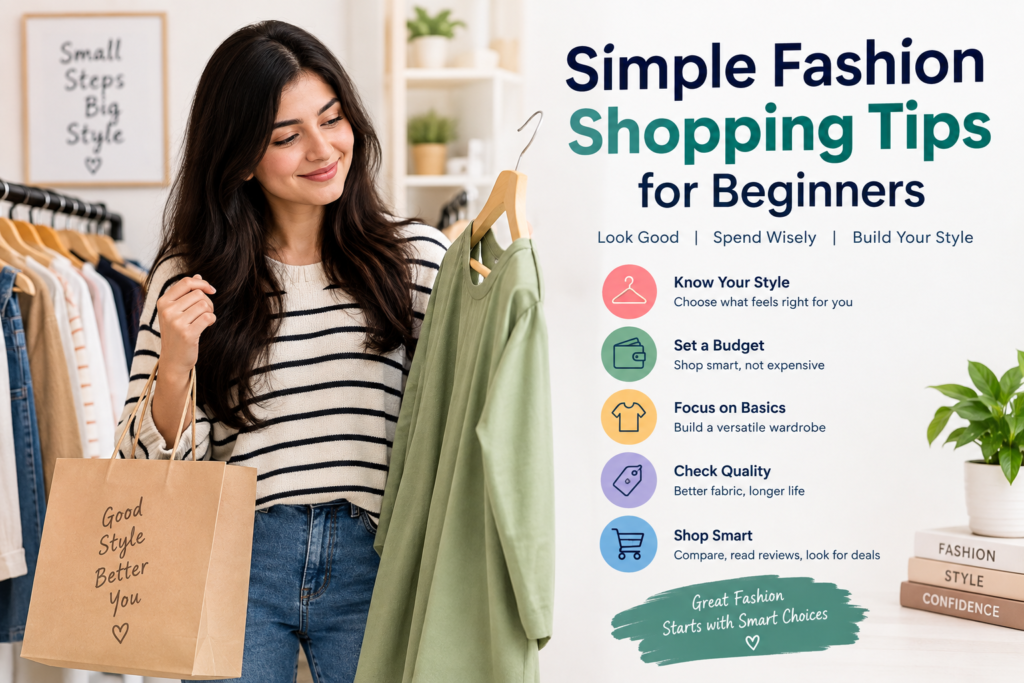
Fashion shopping can feel confusing when you are just starting. There are so many clothing styles, colors, brands, prices, and trends that it can be difficult to know what is actually worth buying. In my opinion, good fashion shopping is not about buying the most expensive clothes or following every new trend. It is about understanding your personal style, choosing useful pieces, and spending your money carefully.
If you are a beginner, you do not need a huge wardrobe to look good. A few comfortable and versatile clothes can be much more useful than a closet full of items you rarely wear. In this guide, I am sharing some simple fashion shopping tips that can help beginners shop with more confidence and avoid common mistakes.
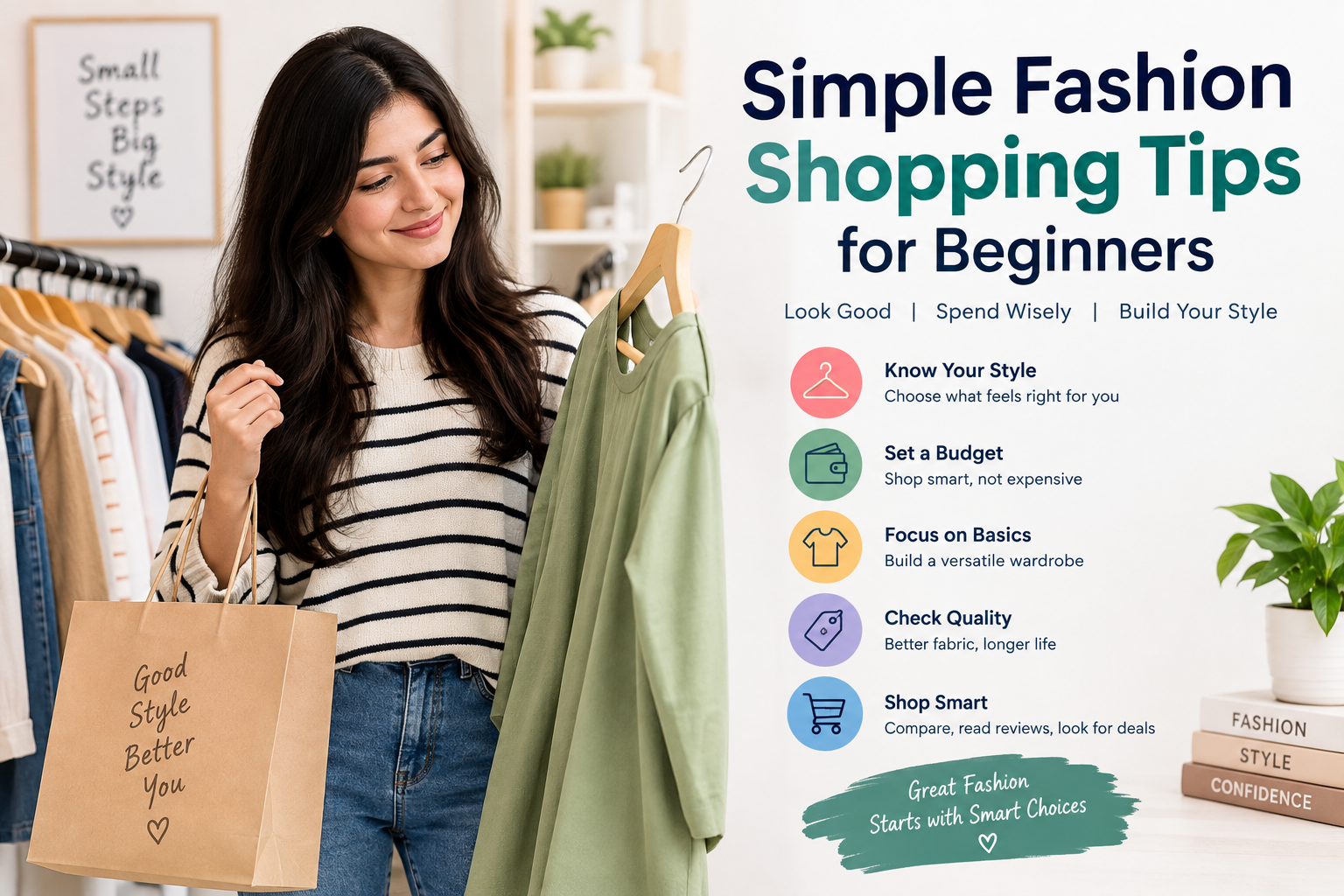
Understand Your Personal Style
The first thing I recommend before going shopping is understanding what kind of clothes you actually like. Many beginners make the mistake of buying something simply because it looks good on another person.
Fashion is personal. What works for one person may not feel comfortable or suitable for someone else.
Think about the clothes you already enjoy wearing. Do you prefer simple outfits, casual clothing, classic styles, sporty looks, or something more modern? Looking at your existing wardrobe can give you a good idea of your personal fashion style.
You can also save pictures of outfits you like. After collecting several examples, you may notice common patterns in the colors, clothing types, and styles you prefer.
Set a Fashion Shopping Budget
One of the most important fashion shopping tips for beginners is to create a budget before shopping.
It is easy to get excited when you see attractive clothes in a store. Without a budget, you may end up spending much more than you planned.
Before shopping, decide how much money you are comfortable spending. Then divide your budget according to what you actually need.
For example, if you need everyday clothes, you may want to spend more on basic shirts, trousers, or comfortable shoes rather than buying several fashionable pieces that you may only wear occasionally.
A good budget does not mean buying the cheapest clothes available. It means making thoughtful decisions about where your money should go.
Make a Shopping List
I personally find that making a simple shopping list can make fashion shopping much easier.
Before leaving home or opening an online store, think about what you actually need. Maybe you need two everyday shirts, one pair of trousers, or a comfortable jacket.
Write these items down.
A shopping list helps you stay focused. It can also reduce impulse purchases because you already have a clear idea of what you are looking for.
If you see something attractive that is not on your list, take a moment before buying it. Ask yourself whether you really need it or whether you simply like it because you saw it while shopping.
Focus on Basic Clothing First
Beginners should usually start with basic clothing because these pieces are easy to combine with different outfits.
Simple shirts, jeans, trousers, neutral sweaters, comfortable shoes, and versatile jackets can become the foundation of a wardrobe.
The advantage of basic clothing is that you can create many different outfits without owning a large number of clothes.
For example, one simple pair of jeans can work with several different shirts. A neutral jacket can also be worn with many outfits.
In my opinion, building a useful wardrobe starts with versatile pieces before adding more fashionable or unusual items.
Choose Clothes That Fit Properly
Price and brand are not the only things that matter when buying clothes. Fit is extremely important.
Even an expensive item may not look good if it does not fit properly.
When shopping in a physical store, try clothes on whenever possible. Check whether you can move comfortably, whether the shoulders sit correctly, and whether the clothing feels comfortable when you walk or sit.
When shopping online, carefully check the size chart. Do not automatically choose the same size from every brand because sizing can vary between manufacturers.
I also recommend checking the return policy before buying clothing online. This gives you more flexibility if the item does not fit as expected.
Pay Attention to Fabric Quality
Another important fashion shopping tip is to check the fabric.
You do not always need premium materials, but you should look for clothing that feels comfortable and suitable for its intended use.
Check the fabric label and consider how the item will be washed and maintained. Some clothes may require special care, while others are easier to wash and wear regularly.
Also examine the stitching, buttons, zippers, and seams. Small details can tell you a lot about how carefully a garment has been made.
A slightly more expensive item can sometimes be a better purchase if it is comfortable, durable, and likely to remain useful for a long time.
Do Not Follow Every Fashion Trend
Fashion trends can be fun, but I do not think beginners should build their entire wardrobe around them.
Trends can change quickly. Something that is extremely popular today may become less popular later.
Instead of buying every trending item, consider whether it fits your personal style and whether you will continue wearing it.
You can still include trendy pieces in your wardrobe, but balance them with classic clothing that remains useful over time.
This approach can help you save money while still allowing you to enjoy fashion.
Compare Prices Before Buying
One of the easiest ways to become a smarter fashion shopper is to compare prices.
If you find a particular type of clothing you like, check different stores and online shops before making your final decision.
The same type of item may have different prices depending on the store, brand, material, or current promotion.
However, price should not be the only factor. Compare the quality, fit, fabric, customer reviews, and return policy as well.
The cheapest item is not always the best value.
Avoid Impulse Shopping
Impulse shopping is one of the biggest problems beginners can face.
You may see a beautiful shirt or jacket and immediately feel that you need it. Before purchasing, try waiting for a little while.
Ask yourself a few simple questions.
Do I really need this?
Can I wear it with clothes I already own?
Will I probably wear it regularly?
Does it fit my budget?
If you cannot answer these questions positively, it may be better to leave the item and think about it later.
This simple habit can prevent unnecessary spending.
Think About Your Existing Wardrobe
Before buying anything new, consider what you already have.
A new item should ideally work with several pieces in your existing wardrobe.
For example, if you already own several casual shirts and jeans, buying another similar item may not add much value. Instead, you might benefit more from a different piece that helps create new outfits.
This is one reason I believe beginners should shop for outfits rather than individual items.
Instead of asking, “Do I like this shirt?” ask, “How many outfits can I create with this shirt?”
That small change in thinking can make shopping much more practical.
Choose Comfortable Clothes
Looking stylish is important, but comfort should not be ignored.
If clothing looks great but feels uncomfortable, you may not wear it often.
Consider your daily routine when shopping. If you spend most of your day walking or working, comfortable clothing may be more useful than something designed only for appearance.
Shoes are especially important. Make sure they provide enough comfort for the activities you plan to do.
Good fashion should make you feel comfortable and confident rather than restricted.
Learn to Shop During Sales
Sales can be a great opportunity to save money, but beginners should still shop carefully.
A discount does not automatically make something a good purchase.
Before buying a discounted item, ask whether you would have wanted it at its original price. If the answer is no, the discount may simply be encouraging you to spend money.
I prefer using sales to buy items I already need. This makes discounts more useful because I am saving money on planned purchases rather than buying things simply because they are cheaper.
Read Reviews When Shopping Online
Online fashion shopping can be convenient, especially when you do not have time to visit stores.
However, you cannot physically touch or try the clothing before buying it.
This is why customer reviews can be helpful.
Look for comments about sizing, fabric, comfort, color, and overall quality. Photos from customers can also give you a better idea of how the product looks outside professional product photography.
Remember that individual experiences can differ, so look for common patterns rather than relying on one review.
Take Care of Your Clothes
Smart fashion shopping does not end when you make the purchase.
Taking care of your clothes can help them last longer.
Follow the washing instructions on the label. Avoid washing clothes unnecessarily, store them properly, and repair small problems when possible.
Taking care of clothing can save money because you will not need to replace items as frequently.
In my view, a good wardrobe is not just about buying quality clothing. It is also about maintaining what you already own.
Final Thoughts
Fashion shopping becomes much easier when you stop thinking about buying more and start thinking about buying better.
As a beginner, focus on understanding your personal style, setting a realistic budget, making a shopping list, choosing comfortable clothing, checking quality, and avoiding unnecessary impulse purchases.
You do not need hundreds of clothes to create a good wardrobe. A small collection of useful, comfortable, and versatile pieces can give you plenty of outfit options.
My biggest advice is to shop according to your own lifestyle rather than trying to copy everyone else. Fashion should help you express yourself and feel confident. Once you understand what works for you, choosing clothes becomes simpler, more enjoyable, and much more affordable.