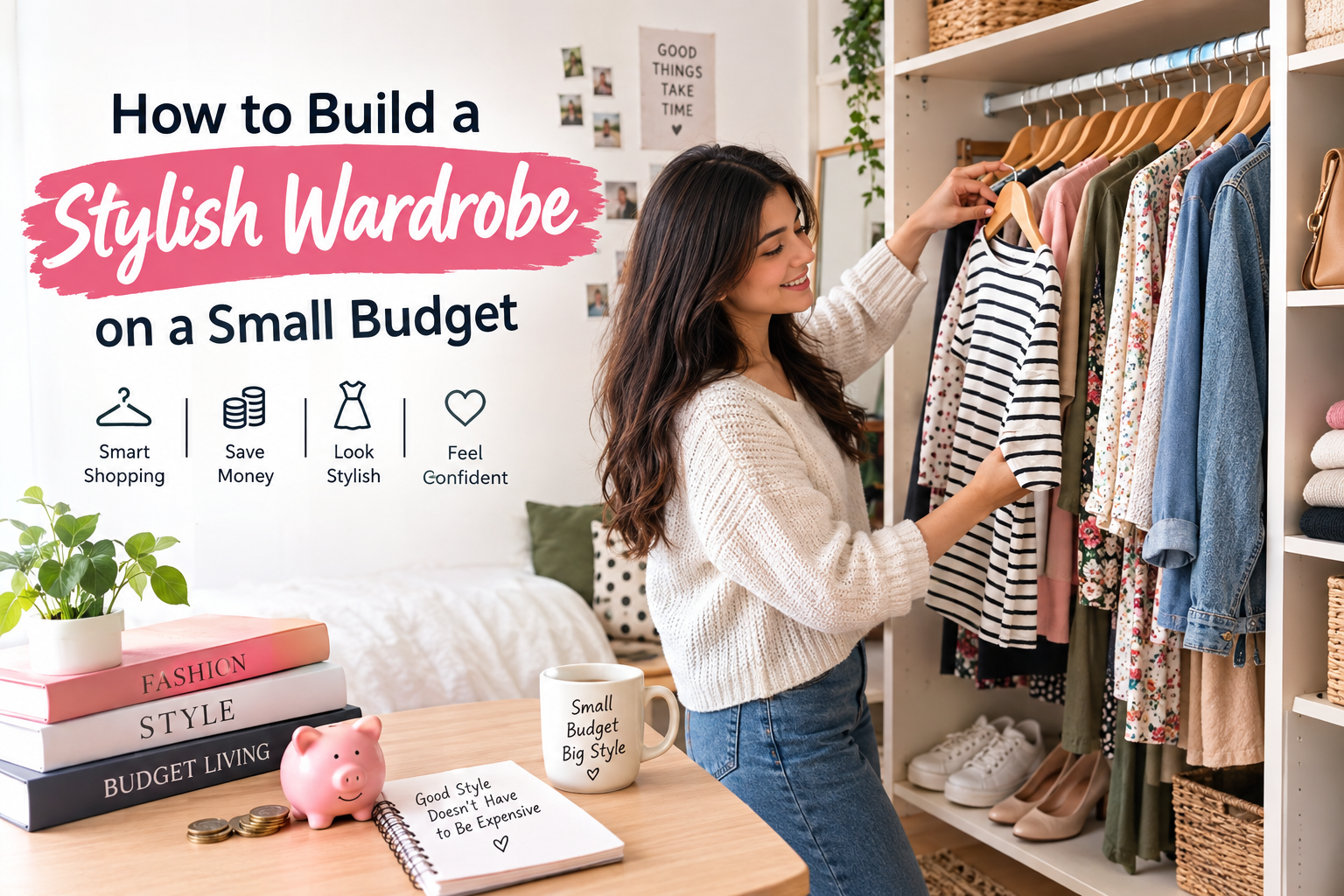
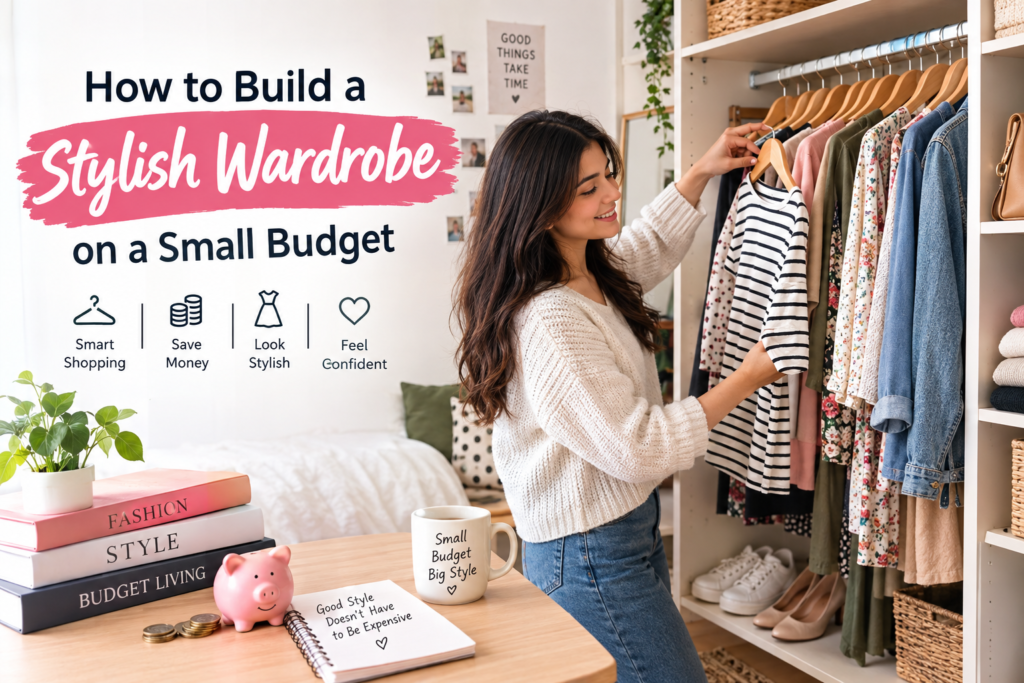
Building a stylish wardrobe does not always require a lot of money. In my opinion, having good style is more about knowing what suits you, choosing useful clothing, and shopping carefully than buying expensive brands. I have found that a small budget can actually encourage better choices because it makes you think before spending money on something you may only wear once.
A stylish wardrobe should make getting dressed easier. It should contain clothes that you genuinely like, pieces that work well together, and items that fit your daily lifestyle. You do not need a huge collection of clothes to look fashionable. With some planning and smart shopping habits, you can create a wardrobe that looks attractive while keeping your spending under control.
Start by Understanding Your Personal Style
Before buying anything, I recommend thinking about your personal style. Look at the clothes you already own and identify the colors, designs, and fits that you wear most often.
Some people prefer simple and classic clothing, while others enjoy colorful outfits and modern trends. Your wardrobe should reflect your personality instead of copying every fashion trend you see online.
I believe this step can save a lot of money. When you understand your personal style, you become less likely to buy clothes simply because they look good on someone else.
Think about the clothes you feel most comfortable wearing. Do you prefer jeans and simple shirts? Do you enjoy dresses? Do you like neutral colors or brighter shades? Your answers can help you create a more focused wardrobe.
Check Your Existing Wardrobe
One of the easiest ways to build a stylish wardrobe on a small budget is to use what you already have.
Before going shopping, take everything out of your wardrobe and look at it properly. You may discover clothes that you forgot about or pieces that can be styled in completely different ways.
Separate your clothing into three groups. Keep the clothes you wear regularly, identify pieces that need small repairs, and put aside items that no longer fit your lifestyle.
Sometimes a shirt can look completely different when worn with another pair of trousers or a different jacket. A simple dress can also be changed with shoes, a handbag, or accessories.
This process helps you understand what you actually need instead of buying more clothes unnecessarily.
Create a Simple Wardrobe Checklist
Once you know what you already own, make a list of essential clothing items you are missing.
For example, you may need a comfortable pair of jeans, a few simple tops, one versatile jacket, comfortable shoes, and clothing suitable for special occasions.
I find that making a shopping list is one of the best budget shopping habits. Without a list, it is easy to become distracted by sales and attractive displays.
Your goal should be to purchase pieces that can be worn in several different ways.
A simple top that works with jeans, trousers, skirts, and layers is usually more valuable than a fashionable item that only works with one outfit.
Choose Versatile Clothing
When your budget is limited, versatility becomes extremely important.
I prefer clothing that can create several different outfits. For example, a plain white or neutral shirt can be worn with jeans for a casual look, trousers for a more polished appearance, or under a jacket for a smarter outfit.
The same principle applies to trousers, skirts, dresses, sweaters, and jackets.
Before purchasing something, I suggest asking yourself how many outfits you can create with it using clothes you already own. If you can immediately think of several combinations, it may be a good investment.
This approach helps you build a practical and stylish wardrobe without spending too much.
Focus on Quality Instead of Quantity
A small budget does not mean you should always choose the cheapest clothing available.
Sometimes a very cheap item may lose its shape, color, or quality after only a few washes. Buying several poor quality pieces can eventually cost more than purchasing one reliable item.
When shopping, pay attention to stitching, fabric quality, buttons, zippers, and overall construction.
I personally believe it is better to have fewer clothes that you enjoy wearing than a wardrobe full of items that do not last.
You do not need luxury brands to find quality clothing. Many affordable stores offer simple and durable pieces if you take the time to check them carefully.
Use Neutral Colors as Your Foundation
Neutral colors can make budget wardrobe planning much easier.
Colors such as black, white, navy, beige, gray, brown, and cream are generally easy to combine. You can use these colors as the foundation of your wardrobe and add brighter colors through accessories or a few statement pieces.
For example, a neutral pair of trousers can work with several different tops. A simple black jacket can also be worn with many outfits.
This does not mean your entire wardrobe needs to be neutral. If you love bright colors, you should definitely include them. The important thing is to choose colors that work well together.
Shop During Sales Carefully
Sales can be useful when you are trying to build a stylish wardrobe on a small budget, but I do not believe every sale is a good deal.
A discount does not automatically mean you are saving money. If you purchase something you do not need simply because it is discounted, you are still spending money.
I recommend checking your wardrobe and shopping list before looking at sales. If you find an item you genuinely need at a lower price, that can be a smart purchase.
Always ask yourself whether you would still want the item if it were not on sale.
Consider Thrift and Secondhand Shopping
Secondhand shopping can be an excellent option for people who want affordable fashion.
Thrift stores, local markets, online resale platforms, and secondhand clothing shops can sometimes offer interesting pieces at much lower prices than traditional stores.
The key is patience. You may need to look through several items before finding something suitable.
When buying secondhand clothing, check the condition carefully. Look for stains, damaged stitching, missing buttons, broken zippers, and signs of excessive wear.
If the item is clean, comfortable, in good condition, and fits your style, it can become a valuable addition to your wardrobe.
Learn Basic Outfit Coordination
You do not need to be a professional stylist to create attractive outfits.
Start by learning a few simple combinations. Pair fitted clothing with something slightly relaxed. Combine basic colors with one interesting piece. Use accessories to add personality to simple outfits.
For example, jeans and a plain shirt can look basic by themselves. Adding a nice belt, clean shoes, a simple watch, or a jacket can completely change the appearance.
I believe styling skills are more valuable than constantly buying new clothes. Once you learn how to combine your existing pieces, you can create more outfits without increasing your shopping budget.
Invest in Useful Accessories
Accessories can make a simple wardrobe feel much more interesting.
A few useful accessories may include a handbag, belt, watch, scarf, sunglasses, or simple jewelry. You do not need dozens of accessories.
Choose pieces that match several outfits. A versatile handbag or simple belt can be used regularly and may provide more value than an expensive statement accessory that you rarely wear.
Accessories are also a relatively affordable way to experiment with different styles.
Take Care of Your Clothes
One of the most overlooked ways to save money on clothing is taking better care of what you already own.
Follow washing instructions and avoid washing clothes unnecessarily. Fold items properly and hang suitable garments so they maintain their shape.
Repair small problems instead of immediately replacing the item. A loose button, small tear, or minor stitching problem can often be fixed easily.
Good clothing care can extend the life of your wardrobe and reduce the need for frequent shopping.
Avoid Buying Clothes Just Because They Are Trending
Fashion trends can be fun, but following every trend can become expensive.
A trend may look exciting today and feel outdated a few months later. Instead of replacing your wardrobe every season, I recommend choosing timeless pieces and adding only a few affordable trendy items when you genuinely like them.
Classic clothing can remain useful for years.
This approach gives you more freedom because you are not constantly worried about whether your clothes are currently popular.
Set a Monthly Clothing Budget
Having a specific clothing budget can make shopping much easier.
Decide how much money you can comfortably spend on clothing each month or season. Once you reach that limit, avoid unnecessary purchases until your next budget period.
I also recommend saving for important purchases rather than using all your money immediately.
For example, if you need a good quality pair of shoes, you may decide to save for them instead of buying several cheaper pairs that you do not really want.
Budgeting gives you control over your spending while still allowing you to enjoy fashion.
Build Your Wardrobe Slowly
There is no need to complete your entire wardrobe in one shopping trip.
In my opinion, building a stylish wardrobe slowly is one of the smartest approaches for anyone on a limited budget.
Start with the essentials. Once those are covered, gradually add pieces that improve your outfit options.
Over time, you can develop a wardrobe that represents your personal style without putting unnecessary pressure on your finances.
The most important thing is to avoid comparing your wardrobe with people who have completely different budgets.
Final Thoughts
Building a stylish wardrobe on a small budget is completely possible. You do not need expensive designer clothing or a huge collection of outfits to look good.
From my point of view, the best approach is to understand your personal style, check what you already own, create a practical shopping list, choose versatile clothing, focus on quality, and avoid unnecessary purchases.
Smart shopping is not about spending the least amount of money possible. It is about getting the most value from the money you do spend.
When you learn how to combine clothes, care for them properly, and shop with a clear purpose, even a small wardrobe can offer plenty of stylish outfit options.
Good style is ultimately about confidence and making thoughtful choices. With patience and a little creativity, you can build a wardrobe that looks great, feels comfortable, and fits comfortably within your budget.